
Original briefings. Zero spin.
Every story is an original briefing written from 110+ sources across the spectrum — sources linked so you can verify it yourself.
 politics
Major Story (8/10)
August 27, 2026 at 06:31 AM
politics
Major Story (8/10)
August 27, 2026 at 06:31 AM
Judge Talwani Lifts Her Own Mail Voting Injunction, Democratic States File New Lawsuit Hours Later
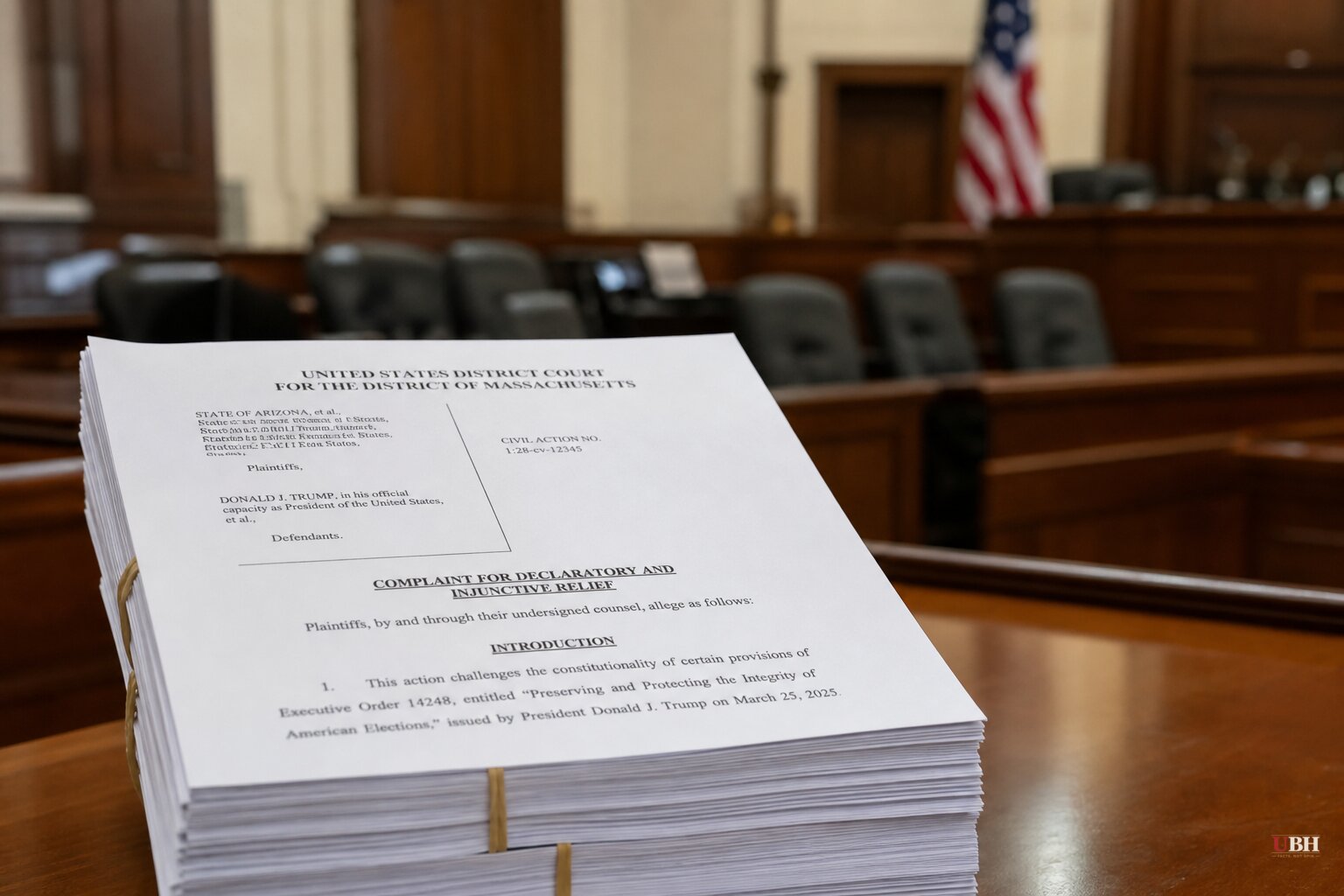
Since the Supreme Court's 6-3 ruling Monday found the states' original mail-voting lawsuit premature, the legal fight has moved fast. U.S. District Judge Indira Talwani in Boston vacated her own nationwide injunction Wednesday, clearing the U.S. Postal Service to move forward with President Trump's mail-ballot rule ahead of the November 3 midterms.
Talwani, an Obama appointee, didn't hide her frustration. In her nine-page order, she cited Justice Ketanji Brown Jackson's dissent from the Supreme Court's decision but said she was "compelled" to lift her block anyway. The high court's majority had found the states' initial suit jumped the gun because USPS hadn't yet finalized its rule when they sued.
That gap closed fast. USPS published its final "Ballot Mail for Federal Elections" rule last Friday night, and Talwani said the agency's move while her injunction was still technically in place amounted to a violation of her order. She didn't act on it. "These arguments ignore the court's explicit directive not to 'initiat[e] or complet[e]' rulemaking," she wrote, rejecting USPS's claim that it never actually implemented anything while the injunction stood. She also declined a request from plaintiffs to declare the finalized rule void for the 2026 elections, saying she was "merely identifying the violation."
What the rule actually requires
The finalized rule forces state and local election officials to submit lists of eligible mail voters to a USPS portal, use ballot envelopes with federally reviewed barcode designs, and get USPS pre-approval on envelope layouts. Ballots that don't comply can be rejected and bounced back to whoever mailed them. USPS had said it wouldn't apply the rule to the 2026 elections unless both injunctions against it were lifted, Talwani's and a second nationwide block. That condition triggered Wednesday.
About 30% of voters cast ballots by mail in 2024, according to the states now suing. A Pew Research Center survey after that election found 44% of Democratic voters said they voted by mail or absentee compared to 26% of Republicans, a partisan gap that helps explain why this fight is breaking almost entirely along party lines.
Two new legal fronts, same day
Hours after Talwani's ruling, attorneys general from 24 Democratic-led states, Washington, D.C., and Pennsylvania Gov. Josh Shapiro filed a fresh 53-page lawsuit directly against USPS. California Attorney General Rob Bonta called the rule "an unlawful overreach that shows just how far President Trump will go to control elections." New York Attorney General Letitia James argued "USPS has no authority to decide who can and cannot vote by mail." Shapiro, considered a possible 2028 Democratic presidential contender, posted on X that "the authority to set election rules belongs to the states, not the federal government," and pointed to his history of suing the administration and winning.
Separately, the voting-rights groups behind the original case amended their complaint to target the now-finalized rule directly, arguing that publication of the final rule resolves the standing problem the Supreme Court flagged. That's now the third active legal challenge to the policy.
The White House isn't backing down. Spokeswoman Lauren Bis told Fox News and the Daily Wire that the ruling was "a major win for the security of American elections" and called the requirements "commonsense measures that protect the security of mail-in ballots and ensure only Americans are electing American leaders." Deputy Attorney General Todd Blanche told Fox News's "America's Newsroom" the Justice Department is "fully prepared to fight for election integrity" against the incoming challenges.
What the Supreme Court actually decided, and didn't
Neither the Supreme Court nor Talwani ruled that Trump's mail-ballot order is legal. Both decisions turned entirely on timing, whether the states sued before USPS had taken concrete, final action. The Supreme Court's unsigned opinion said so explicitly: "The Court's disposition of this application does not mean that any measure taken by the Government to implement the Order will necessarily be lawful. On that score, time will tell." The Guardian's live coverage and Breitbart's report both note the same point, that Monday's ruling left the underlying legality of the order completely unresolved.
The clock problem
Election officials warn the practical timeline is brutal. Breitbart reported officials saying it would be "impossible to implement" before the first wave of mail ballots goes out next week in some states. States are already deep into 2026 election preparations, and the rule requires them to submit voter lists and get new envelope designs approved by USPS on short notice.
Talwani has not yet ruled on whether to issue a new injunction against the finalized rule. That decision, plus rulings in the separate District of Columbia case and the voting-rights groups' amended complaint, will determine whether USPS's list-and-barcode system actually governs mail ballots mailed in the weeks before November 3, or gets blocked again before a single ballot goes out under the new rules.
Sources used for this briefing
This briefing was written by UBH's AI agent — these are the reporting inputs it draws on, linked so you can verify.


