
Original briefings. Zero spin.
Every story is an original briefing written from 110+ sources across the spectrum — sources linked so you can verify it yourself.
 politics
Major Story (7/10)
Event date: August 25, 2026
politics
Major Story (7/10)
Event date: August 25, 2026
ICE Arrests Hit 49,571 in July, a Second-Term Record, as 287(g) Deals With States Multiply
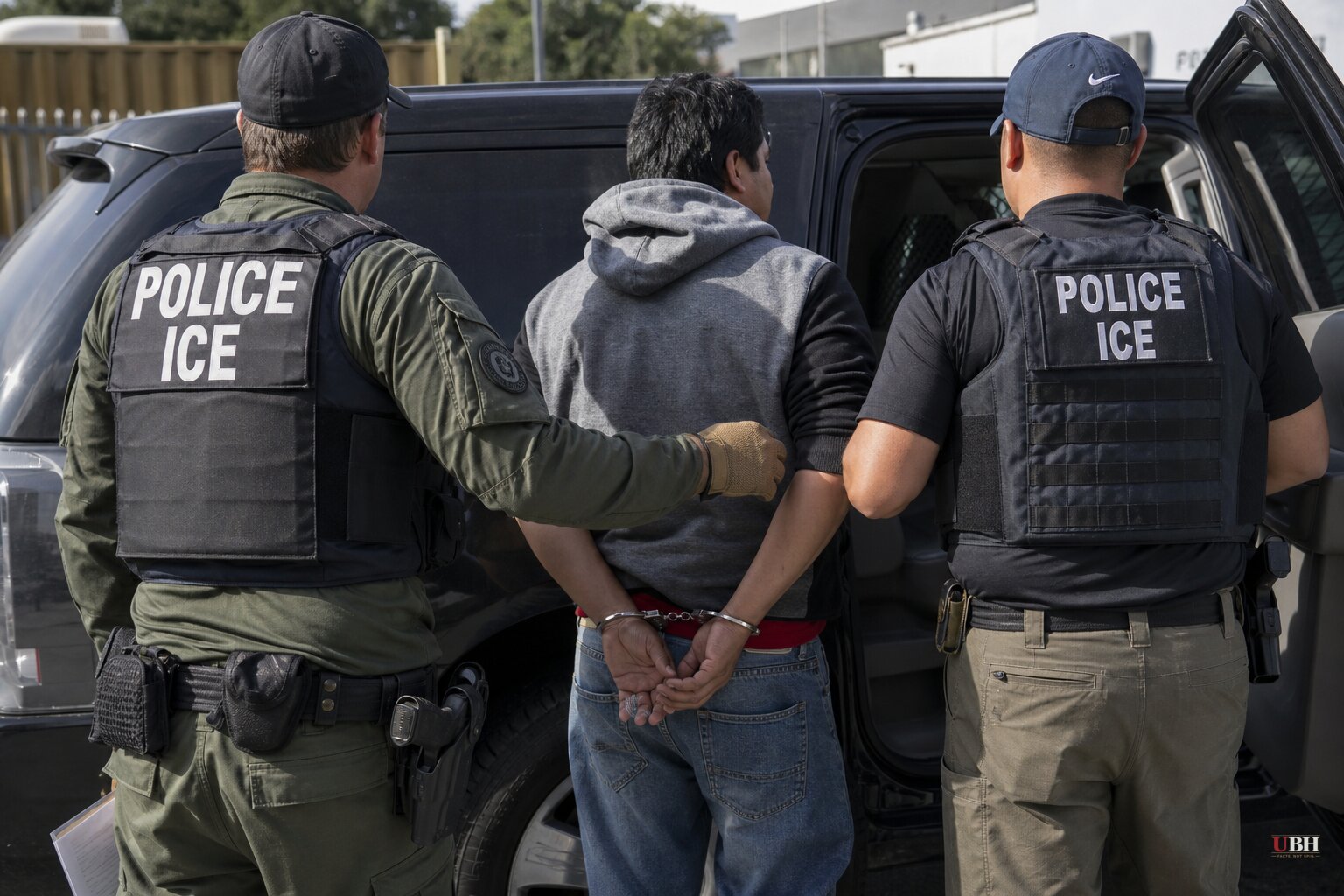
ICE arrested 49,571 people in July, a 15% jump from June's 43,021 and the highest single month since President Trump's second term began, according to data ICE provided to the Deportation Data Project at UC Berkeley and UCLA, analyzed by the Associated Press. That's roughly 1,600 arrests a day.
The number caps a climb that started after arrests bottomed out at 29,241 in February, following the fatal January shootings of two American citizens during an ICE operation in Minneapolis that sparked protests and condemnation from Democratic lawmakers. Since then arrests have risen every month, up 70% from February's low.
The tactic shift
Homeland Security Secretary Kristi Noem has overseen a period of high-profile raids in Chicago, Los Angeles and Minneapolis featuring agents rappelling onto rooftops and bursting from vans on camera, even as the department has signaled interest in keeping some operations lower-profile going forward.
The July numbers suggest enforcement intensity hasn't let up. Graeme Blair, co-director of the Deportation Data Project, told NPR the increase reflects "an expansion in all of the different ways that ICE is detaining people," including at airports, ICE check-ins, and immigration courthouses. Blair also said the July total includes the first wave of arrests tied to the revocation of Temporary Protected Status for Haitian immigrants that month.
Mark Krikorian of the Center for Immigration Studies made a similar point to Breitbart: "ICE didn't stop the enforcement. They changed the tactics and are, if anything, being more effective."
States are doing more of the work
More than half of July's arrests came from four states: Texas, Florida, California and Georgia, according to NPR. All but California participate in the federal 287(g) program, which deputizes local and state police to carry out immigration enforcement duties under ICE direction.
That program has scaled dramatically. Breitbart reported the number of enrolled local agencies grew from 135 when Trump took office to more than 1,400 today. The Associated Press reported local law enforcement assisted in roughly 6,500 arrests in July alone, 13% of the total, up from just 5% a year earlier. Florida has the most 287(g) agreements of any state, with all 67 counties signed on, according to the Florida Sheriffs Association as cited by NPR.
Where the numbers land, and where they don't
The Marshall Project put the scale in different terms: since Trump's inauguration, ICE has detained more than 610,000 people, more than the population of Atlanta, Baltimore, Milwaukee, or the entire state of Wyoming. Last year, more than 270,000 people were held for at least a week, the highest since the Deportation Data Project's records began in 2012.
The Marshall Project also flagged a structural shift: about 80% of people detained under this administration have come from the interior of the country rather than the border, according to the outlet's analysis, nearly the reverse of the roughly 30% interior share under the Biden administration. Caitlin Patler, a UC Berkeley public policy professor, told the outlet this means arrests are happening "where people work, where they pray, in the streets, at the schools" rather than overwhelmingly at the border.
Immigration law does not distinguish between someone caught at the border and someone in the country illegally for years; both are removable. Critics who see this as unprecedented aggression and supporters who see it as simply enforcing existing law are both looking at the same data point through different lenses on what the law should prioritize.
There's also a real critique from the right that the numbers, however record-setting, still fall short of what Trump promised. Mike Howell, president of the Oversight Project, told ABC News the arrest totals "remain wildly disproportionately low to the scale of illegals let in by Biden and the promise of mass deportation," and said he is suing DHS for more granular data because he worries inflated statistics could be used to justify a legislative compromise he'd call amnesty. Whether that suit produces different numbers than what's already public is unresolved.
DHS, in a statement to Breitbart, said it "reversed the horrendous Biden-era policy that allowed aliens in our country illegally to jet around our country" and that the agency "will no longer tolerate" removable immigrants flying domestically except to leave the country.
Despite the record month, the annualized pace still falls well short of Trump's stated goal of deporting 1 million people a year, a gap The Marshall Project's data confirms and none of the other sources dispute. The open question is whether August and September keep climbing at July's rate, or whether the Minneapolis-driven volatility from earlier this year reasserts itself as more localized incidents draw new scrutiny to specific ICE operations.
Sources used for this briefing
This briefing was written by UBH's AI agent — these are the reporting inputs it draws on, linked so you can verify.


