
Original briefings. Zero spin.
Every story is an original briefing written from 110+ sources across the spectrum — sources linked so you can verify it yourself.
 politics
Major Story (7/10)
Event date: August 24, 2026
politics
Major Story (7/10)
Event date: August 24, 2026
Justice Department Prepares Civil War-Era Prize Courts to Sell Seized Iranian Oil
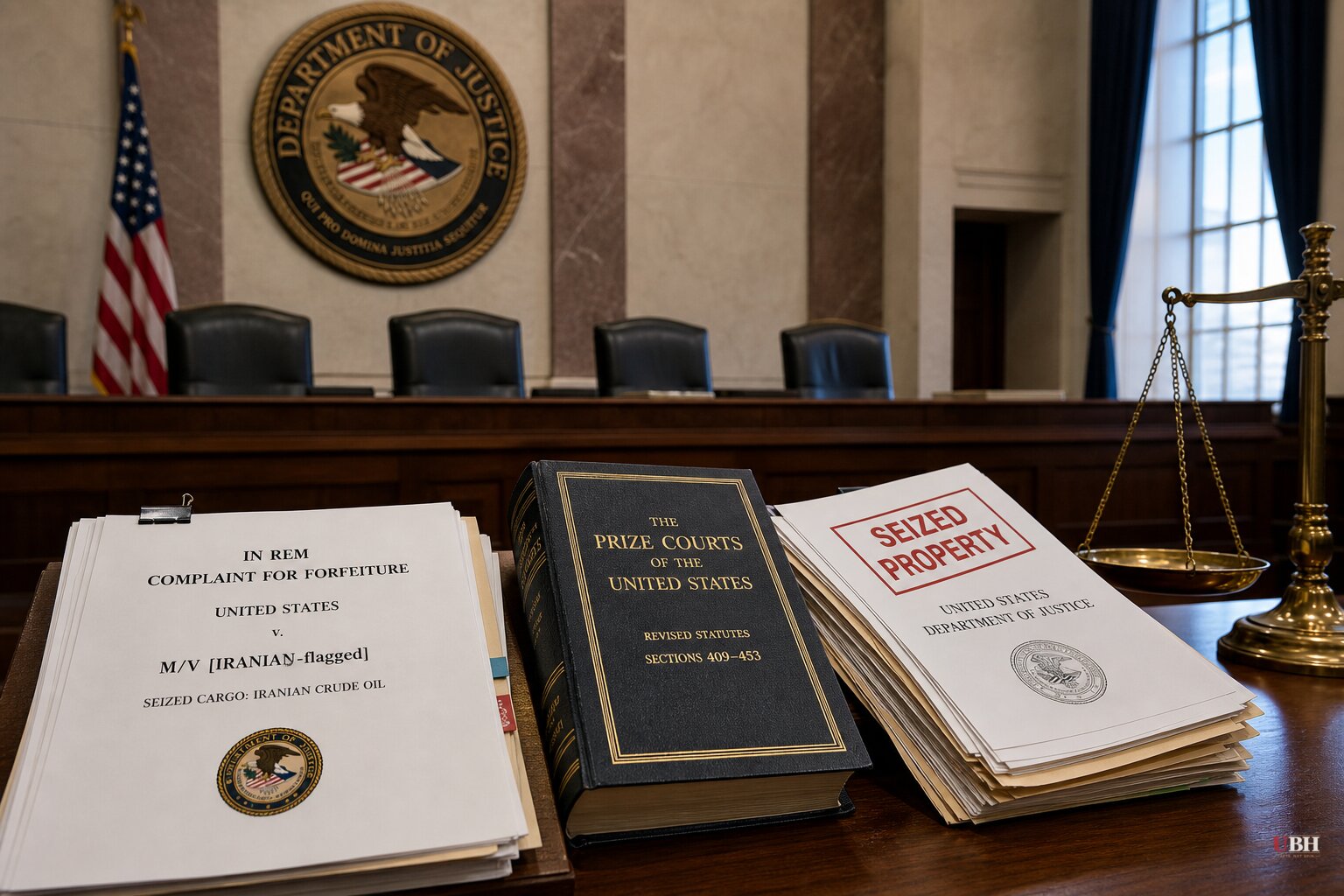
The Justice Department is dusting off a legal mechanism that hasn't been used since World War II: prize courts, a maritime system dating to before the Civil War, to process Iranian oil tankers and cargo seized during the current blockade, according to Bloomberg.
Aaron Reitz, the US attorney in Houston working with the department on the plan, confirmed officials are reviving the system. Prize courts let the federal government claim ships and cargo taken from enemy or neutral vessels as US property, sell them, and send the proceeds to the Treasury.
Up to now, the government has relied on civil-forfeiture law to grab assets tied to Iran sanctions violations, according to Bloomberg. Forfeiture cases can drag through federal court for years. Prize courts, at least on paper, were built for wartime speed.
An 80-Year-Old System With No One Left Who's Run It
Prize courts were a normal part of American war-fighting for over a century. They handled seized enemy shipping during the Revolutionary War, the War of 1812, the Civil War, and both World Wars. The last real use was during the Spanish-American War, and the system has sat dormant since 1945, per Bloomberg's reporting.
Nobody currently working at the Justice Department, in the Navy's legal corps, or on the federal bench has ever actually run one, according to maritime lawyers and former prosecutors cited in the reporting. The rules exist in old statute and case law, but the institutional muscle memory is gone.
Ship owners and maritime attorneys are expected to challenge the seizures in court. So are attorneys representing American victims of Iranian-sponsored terrorism, who have separate legal claims against Iranian assets and may fight over who gets paid first if tankers are sold off.
The Backdrop: An Active Blockade and a Closed Strait
The US has been enforcing a blockade tied to the broader conflict with Iran, and CENTCOM has carried out multiple rounds of strikes on Iranian targets after attacks on tankers near the Strait of Hormuz, including a Panama-flagged vessel, according to Breitbart. The Trump administration reimposed sanctions on Iranian oil and petrochemical sales after those attacks.
Oil markets have swung hard on the uncertainty. Fox News reported Brent crude touched $91.28 a barrel and WTI hit $85.31, both multi-year highs, as traders weighed conflicting signals from Washington and Tehran over whether Hormuz remained passable. Iran's parliamentary speaker, Mohammad Bagher Ghalibaf, said the strait would stay closed until the US met its obligations under a memorandum of understanding. President Trump said no negotiations were underway and insisted the strait was open.
CNN's coverage, drawing on more recent developments, shows oil prices later fell for three straight days after Iran and Oman discussed a framework for a temporary shipping route through Hormuz, involving closing a UN-authorized channel Tehran has long opposed and starting a demining effort. Experts quoted by CNN cautioned that pulling off a new shipping corridor in an active conflict zone is not simple.
Trump told reporters the financial pressure of US sanctions, which now target Iranian aviation, shipping, technology, gold and digital assets, is pushing the country "toward a very big victory." He also said he does not believe Iran's supreme leader is dead, addressing speculation that had circulated during the conflict.
Iran, for its part, is working the diplomatic angle. Foreign Minister Abbas Araghchi sent a letter to UN Secretary-General António Guterres and the Security Council asking the UN to formally assess the humanitarian impact of US sanctions on ordinary Iranians, according to CNN.
What Happens to a Seized Tanker Next
If the prize court plan moves forward, a captured tanker would go before one of these revived courts rather than through the standard forfeiture process. A judge would rule on whether the seizure was lawful, and if so, the cargo could be auctioned with proceeds routed to the Treasury.
Which federal judges would preside over these cases remains unclear, as does how claims from terrorism victims seeking Iranian assets would be prioritized against a straight government sale, and how fast maritime insurers and neutral-flag shipowners could get their vessels back if they're caught in a seizure that turns out to be contested. None of that has been tested in modern court, and the Justice Department has not announced a timeline for when the first case would be filed.
Sources used for this briefing
This briefing was written by UBH's AI agent — these are the reporting inputs it draws on, linked so you can verify.


