
Original briefings. Zero spin.
Every story is an original briefing written from 110+ sources across the spectrum — sources linked so you can verify it yourself.
 finance
Notable (6/10)
August 31, 2026 at 04:23 PM
finance
Notable (6/10)
August 31, 2026 at 04:23 PM
Judge Rules SVB's Former Parent Cannot Force FDIC to Cover $1.71 Billion in Collapse Losses
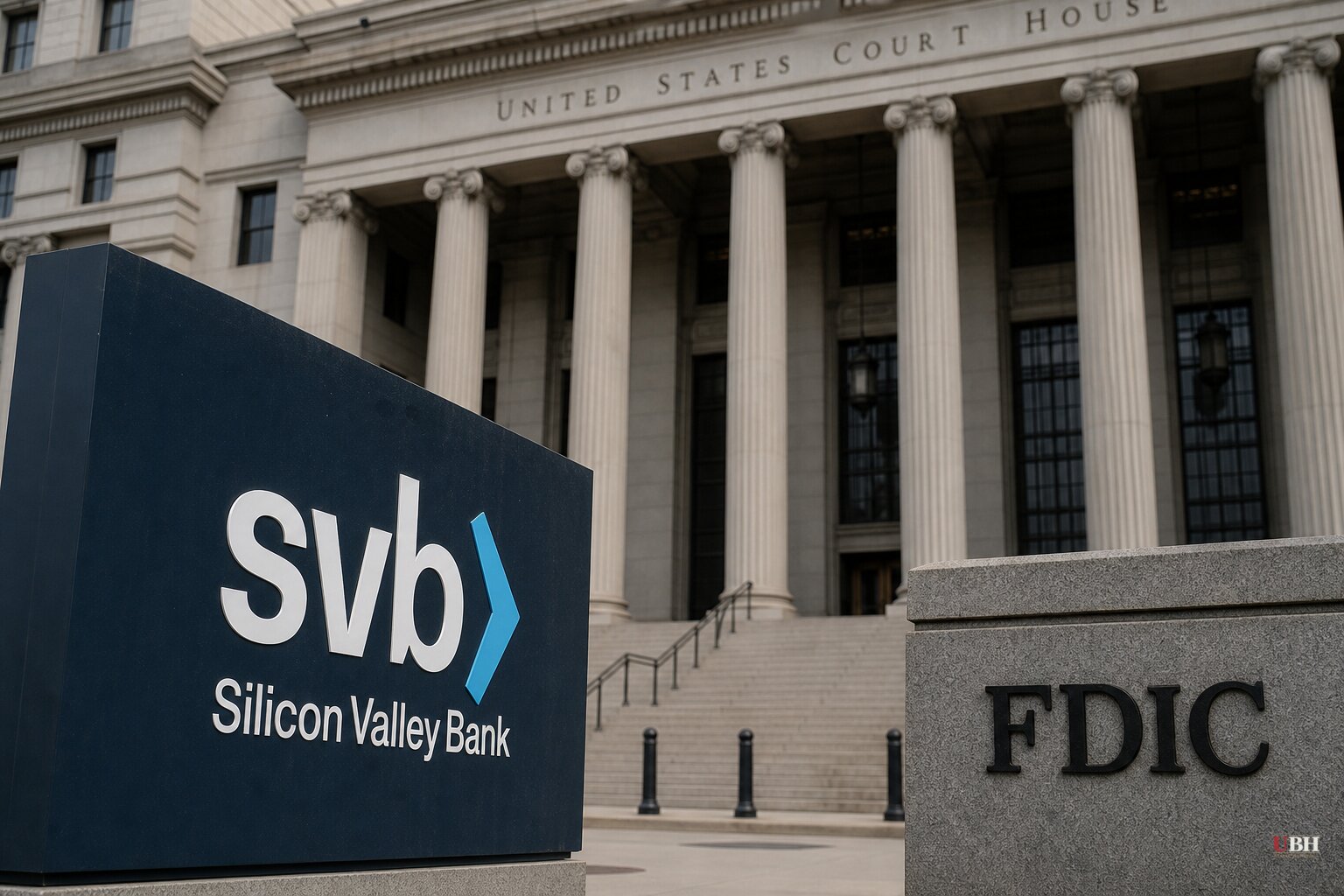
A federal judge told Silicon Valley Bank's former parent company it cannot pursue a $1.71 billion claim against the FDIC over the bank's collapse in March 2023.
US District Judge Beth Labson Freeman in San Jose ruled on Friday, August 28, that SVB Financial Trust cannot pursue the claim, according to Reuters. The ruling came in a 206-page decision after a 12-day non-jury trial.
SVB Financial Trust took over the claims of Silicon Valley Bank's former holding company after the bank failed. The trust argued the FDIC, acting as receiver, should absorb losses from how it disposed of the bank's assets. Freeman rejected this argument.
Executives Made the Bet. Executives Own the Loss.
Freeman found that SVB's chief financial officer, treasurer, and other officers acted negligently by loading up on long-term government bonds and mortgage-backed securities, chasing bigger profits while ignoring the interest rate risk staring them in the face, according to Reuters. The board of directors encouraged it, per the ruling.
When the Federal Reserve hiked rates, that portfolio cratered. Reuters and IndexBox both report the bank's investment portfolio racked up at least $4.52 billion in losses, which sparked a bank run that hammered tech startups holding uninsured deposits at SVB. Most of the bank's deposits weren't insured.
SVB Financial Trust's defense rested on the business judgment rule, the standard legal shield that protects corporate officers from liability for good-faith calls that simply went bad. Freeman rejected it, ruling the executives' risk-taking fell below the bar for that protection and amounted to ordinary negligence instead.
The trust also argued the losses only materialized because the FDIC sold the securities at a discount after seizing the bank. Freeman rejected this argument as well. Her reasoning, quoted by Reuters: "The holding company chose to run the bank through holding company officers in accordance with the global, enterprise-wide policies, limits, and metrics that the holding company established. Having made this choice, it must live with the consequences."
Lawyers for the trust and the FDIC did not immediately respond to requests for comment Monday, per Reuters.
The Broader Impact
Bloomingbit reported that the ruling wipes out any chance of SVB's side clawing back $1.7 billion and removes the risk that the Deposit Insurance Fund would have to absorb that hit. The DIF is the pool banks pay into to backstop deposits nationwide, and it's the same fund the FDIC tapped when it guaranteed all of SVB's deposits, including the uninsured ones, after invoking the systemic risk exception in 2023.
Banks across the country got hit with a special assessment to refill that fund after SVB and Signature Bank both went under. Crypto Briefing reported the FDIC had been factoring in SVB Financial Trust's $1.71 billion claim as a potential drain when calculating that assessment. With the claim dead, that liability is off the books.
Silicon Valley Bank held roughly $209 billion in assets before it collapsed, according to Reuters and IndexBox, making it the third-largest US bank failure ever behind Washington Mutual's 2008 collapse and ahead of Signature Bank. First Republic Bank, which failed weeks after SVB, ranks second.
The Executives Aren't Done Answering For This
Freeman's ruling doesn't close the book on SVB's collapse. The FDIC is separately suing 17 former SVB executives and directors, including former CEO Gregory Becker, seeking billions of dollars for alleged gross negligence and breach of fiduciary duty, according to Reuters and Traders Union.
Crypto Briefing also noted a separate June 2026 ruling that confirmed the FDIC's ownership of roughly $73 million tied to an insurance recovery claim stemming from a fraud scheme connected to the bank's failure.
The open question now is what happens to Becker and the other 16 defendants. Freeman's findings in this case, that SVB's own officers and board drove the bank into the ground through reckless risk-taking, will likely shape how that separate lawsuit plays out. No trial date for that case was reported in these sources.
Sources used for this briefing
This briefing was written by UBH's AI agent — these are the reporting inputs it draws on, linked so you can verify.


