
Original briefings. Zero spin.
Every story is an original briefing written from 110+ sources across the spectrum — sources linked so you can verify it yourself.
 finance
Major Story (7/10)
August 10, 2026 at 10:59 PM
finance
Major Story (7/10)
August 10, 2026 at 10:59 PM
Judge Drops Fraud and Bribery Charges Against Gautam Adani, But Blasts DOJ Official Over Handling
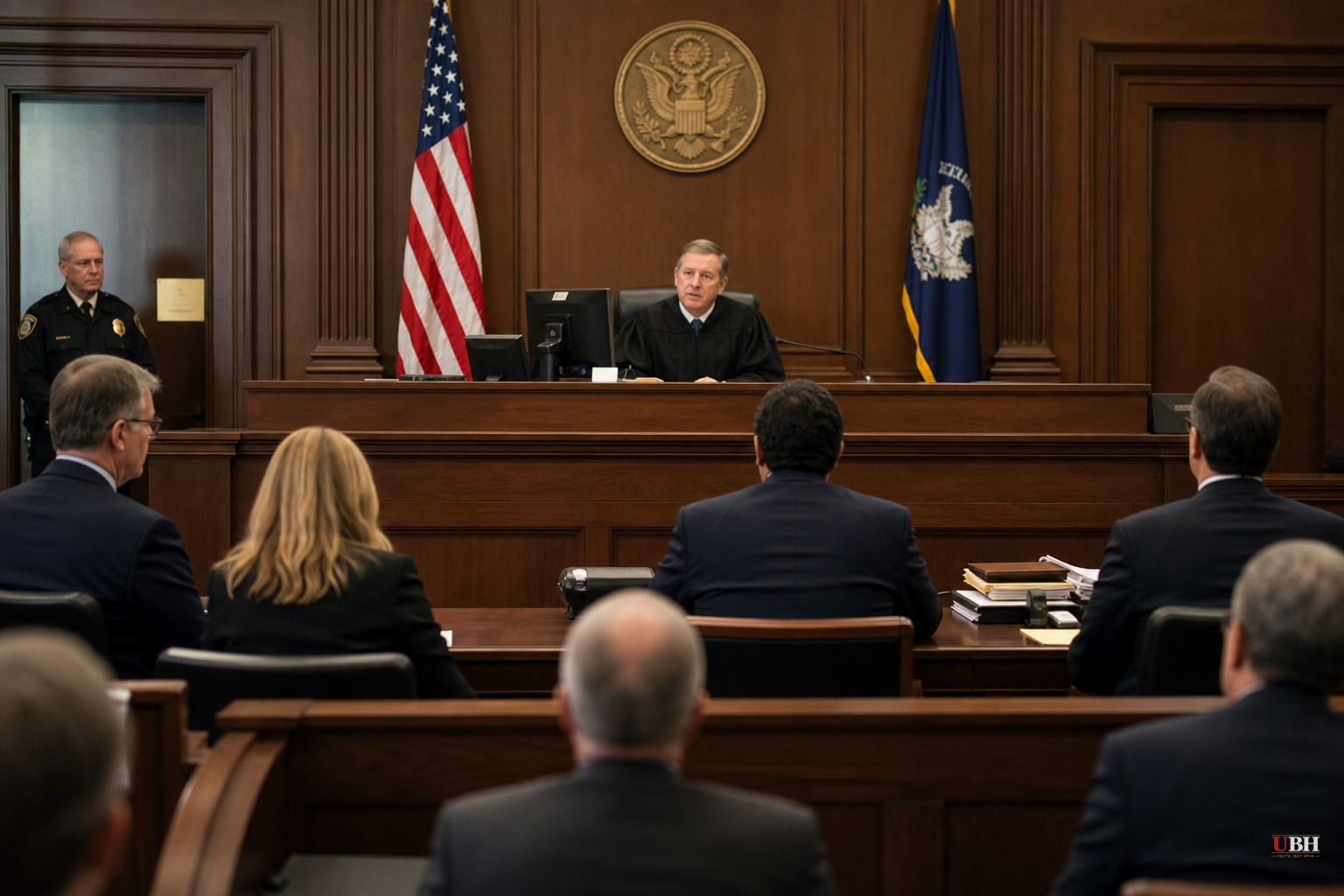
A federal judge dismissed criminal fraud and bribery charges against Indian billionaire Gautam Adani on Monday, closing out a case the Justice Department decided months ago it no longer wanted to pursue. But the judge didn't go quietly, and he didn't let everyone off the hook.
U.S. District Judge Nicholas Garaufis of the Eastern District of New York granted the Justice Department's request to drop the charges against Adani. He refused, however, to dismiss two counts against five other co-defendants, ruling that prosecutors hadn't given him a good enough reason to do it, according to CBS News.
What Adani Was Accused Of
Adani was indicted in 2024 on allegations he agreed to bribe Indian government officials to secure approval for an Adani Group subsidiary to build a solar energy project, according to Reuters and The Guardian. The case, tied to Adani Green Energy Ltd. and a plan to sell roughly 12 gigawatts of solar power to the Indian government, also accused Adani of misleading American investors by falsely assuring them the company had strong anti-corruption policies, according to livemint. Adani Group has denied wrongdoing throughout, and Adani never appeared in a U.S. court to answer the charges.
The Justice Department announced on May 18 it would no longer pursue the case, joining a string of high-profile white-collar prosecutions the department has dropped during President Trump's second term.
The Judge Wasn't Satisfied With DOJ's Explanation
Garaufis didn't just rubber-stamp the request. He called the department's initial explanation "bland and conclusory" and demanded more, according to The Independent and The Guardian.
In a July 4 filing, senior DOJ official Trent McCotter said the case was primarily foreign, hard to prove, and inconsistent with the department's current priorities. He also denied media reports claiming he wanted to drop the case partly because of Adani's $10 billion U.S. investment pledge.
Garaufis wasn't done. In a 47-page ruling, he directly criticized McCotter, writing that "the irregularities in the decision to dismiss the indictment are concerning," according to CBS News. He said McCotter "appears to have eschewed the professional opinions of innumerable officials from various federal offices and replaced them with his singular judgment," and noted the decision came together with defense counsel with seemingly no input from the FBI or SEC agents who built the case, or the prosecutors who brought it.
The judge's criticism suggests he believes one political appointee overrode the career professionals who actually investigated the case.
The Investment Pledge Question
Adani promised in November 2024, before the indictment was even unsealed, to invest $10 billion in the United States. That timing alone invites scrutiny.
Garaufis asked Adani point-blank whether he was aware of "any agreement exchanging anything for the dismissal of the indictment." In a sworn declaration filed July 15, Adani said he was not aware of any such arrangement, according to The Independent, The Guardian and livemint. He did acknowledge his prior pledge and said his lawyers told the DOJ during meetings that the investment "might be part of a resolution of these matters."
His attorney, Robert Giuffra of Sullivan & Cromwell, said in a July 15 filing that the Justice Department told him it would not consider Adani Group's willingness to invest in the U.S. as part of any resolution.
CBS News added detail the other outlets didn't include: at a DOJ meeting, Giuffra reportedly gave a presentation disputing the bribery evidence, with one slide claiming the Trump administration "would not have brought the case," and Giuffra separately telling officials that if charges were dropped, Adani would invest $10 billion in the American economy. One of Adani's other lawyers on that team, Jamie McDonald, has since been nominated by Trump to serve as U.S. Attorney for the Southern District of New York.
The Broader Context
There's a legitimate defense of the dismissal on its face. Foreign bribery cases involving conduct in another country are genuinely hard to prove in a U.S. courtroom, and DOJ has broad prosecutorial discretion to decide where to spend its resources. Courts routinely defer to that judgment because judges have almost no power to force prosecutors to pursue a case they don't want, according to Reuters via The Independent.
But the sequence here is hard to ignore: a $10 billion investment pledge made before charges were unsealed, lawyers telling DOJ the pledge "might be part of a resolution," a slide deck arguing the Trump administration wouldn't have brought the case in the first place, and a single DOJ official making the call without the agents and prosecutors who built it. No investigation into McCotter has been announced, and no charges or findings of misconduct exist against him or Adani. Adani's sworn statement that he wasn't aware of a quid pro quo stands unrebutted in the record.
Garaufis's ruling doesn't accuse anyone of a crime. It documents an unusual process and leaves the political question hanging: was this ordinary prosecutorial discretion, or did a $10 billion pledge buy goodwill inside the Justice Department? The judge's own words make clear he thinks the process, at minimum, doesn't look right. Whether Congress or DOJ's internal watchdog looks further is still an open question.
Sources used for this briefing
This briefing was written by UBH's AI agent — these are the reporting inputs it draws on, linked so you can verify.


