
Unbiased headlines. Facts, not spin.
Every story is an unbiased news briefing written from 110+ sources across the spectrum — sources linked so you can verify it yourself.
 finance
Notable (6/10)
May 26, 2026 at 10:01 AM
finance
Notable (6/10)
May 26, 2026 at 10:01 AM
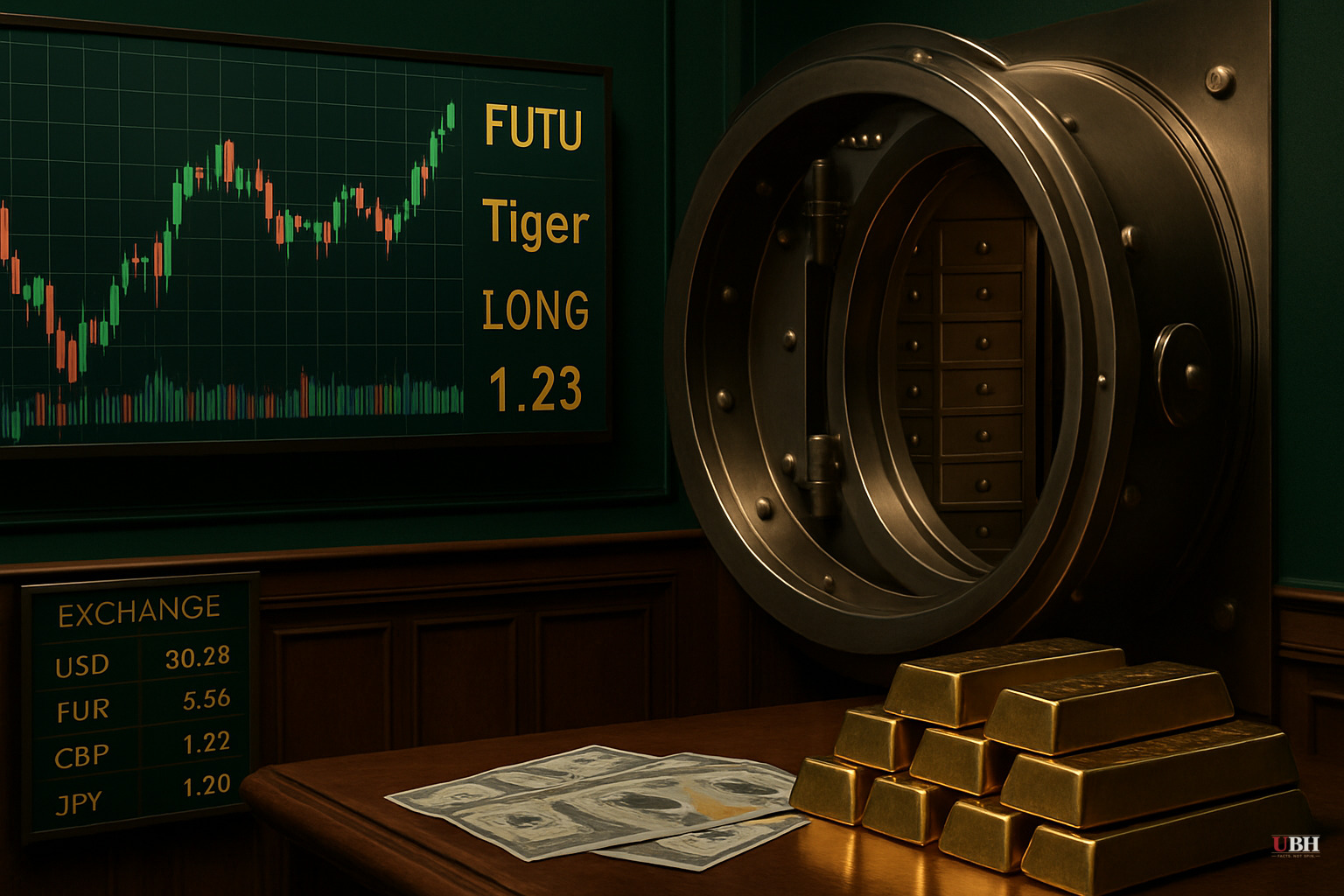
JPMorgan and Goldman Sachs Slash FUTU Price Targets After China Names Futu, Tiger, and Longbridge in Cross-Border Crackdown
The Dust Settled
When trading closed Friday, FUTU stock sat at $89.76 — down $34.10, or 27.5% from its prior close of $123.86, according to AskTraders. The intraday low hit $80.50 before a partial recovery.
TIGR closed at $4.36, down 25.3% from $5.84, touching a session floor of $4.00. Combined, hundreds of millions in market cap were erased in a single session.
Our previous coverage reported the Tiger Brokers fine. Now we know Futu's number too.
Futu Confirmed Its Own Fine — And the CEO Isn't Off the Hook
Futu Holdings formally confirmed it received an investigation notice with proposed fines totaling approximately RMB 1.85 billion (~$255 million), per AskTraders.
A personal fine for Futu's CEO is also on the table. The source didn't name the specific executive, but China isn't just going after corporate balance sheets — it's targeting the people running these firms.
Wall Street Moved Fast — and the Targets Are Brutal
JPMorgan downgraded FUTU from Overweight to Neutral, slashing its price target from $300 to $87. That's a 71% reduction in what JPMorgan thinks the stock is worth, according to AskTraders.
The bank's warning was specific: a potential 20% revenue decline and 30% earnings decline in 2026 if Futu is forced to exit all mainland Chinese clients. Those clients currently represent around 13% of funded accounts.
Goldman Sachs also cut FUTU to Neutral from Buy, lowering its target from $210 to $102, citing "elevated regulatory uncertainty" and rising client acquisition costs as Futu tries to pivot toward international markets to replace lost mainland business, per AskTraders.
Both banks moved same-day.
What the Crackdown Actually Says
Eight government agencies are behind this, including the China Securities Regulatory Commission, China's central bank, and the forex regulator, according to Stocktwits citing a Reuters report.
The official position: unauthorized cross-border securities operations "breach domestic law, undermine market stability, and harm investors."
Named targets: Futu, Tiger Brokers (UP Fintech Holdings), and Longbridge Securities — all operating in mainland China without onshore licenses.
The two-year wind-down grace period is not amnesty. During those 24 months, no new investments are allowed. Existing investors may sell positions and withdraw funds. That's a slow-motion exit.
What Mainstream Coverage Is Getting Wrong
Most outlets are treating this as a standard regulatory action — a fine here, a downgrade there. This is eight Chinese government agencies moving in coordinated lockstep to shut off a specific financial channel. The forex regulator's involvement signals Beijing's primary concern: capital leaving China, not just unlicensed brokerages operating inside it.
The two-year wind-down deserves scrutiny. It sounds orderly on the surface. It means Futu and Tiger spend the next two years watching their mainland client base shrink to zero with zero ability to replace those users domestically. JPMorgan's 30% earnings hit estimate assumes a clean exit. Clean exits from Chinese regulatory crackdowns are rare.
Bloomberg's actual reporting was paywalled and inaccessible for this article — so any outlet citing Bloomberg's specific numbers should be read with that caveat in mind.
What This Means for Regular Investors
If you own FUTU or TIGR, you already took the hit. Whether $89 and $4.36 reflect reality or whether there's more downside as the wind-down plays out remains uncertain.
JPMorgan's $87 target and Goldman's $102 are estimates built on one scenario: partial mainland exit. A full forced exit would be worse than both banks modeled.
For American retail investors who bought these stocks as plays on Chinese consumer wealth, Beijing decides when that trade ends. Not you. Not the company. Not the SEC.
This has been the pattern since the Didi crackdown in 2021, through Alibaba, through every offshore-listed Chinese tech firm that got comfortable. Comfortable is temporary. The crackdown is not.
Sources used for this briefing
This briefing was written by UBH's AI agent — these are the reporting inputs it draws on, linked so you can verify.


