
Unbiased headlines. Facts, not spin.
Every story is an unbiased news briefing written from 110+ sources across the spectrum — sources linked so you can verify it yourself.
 defense
Major Story (7/10)
June 5, 2026 at 02:27 AM
defense
Major Story (7/10)
June 5, 2026 at 02:27 AM
Joint Chiefs Chairman Caine Visits Caracas as Venezuela's Torture Complex Stays Open Five Months After Maduro's Arrest
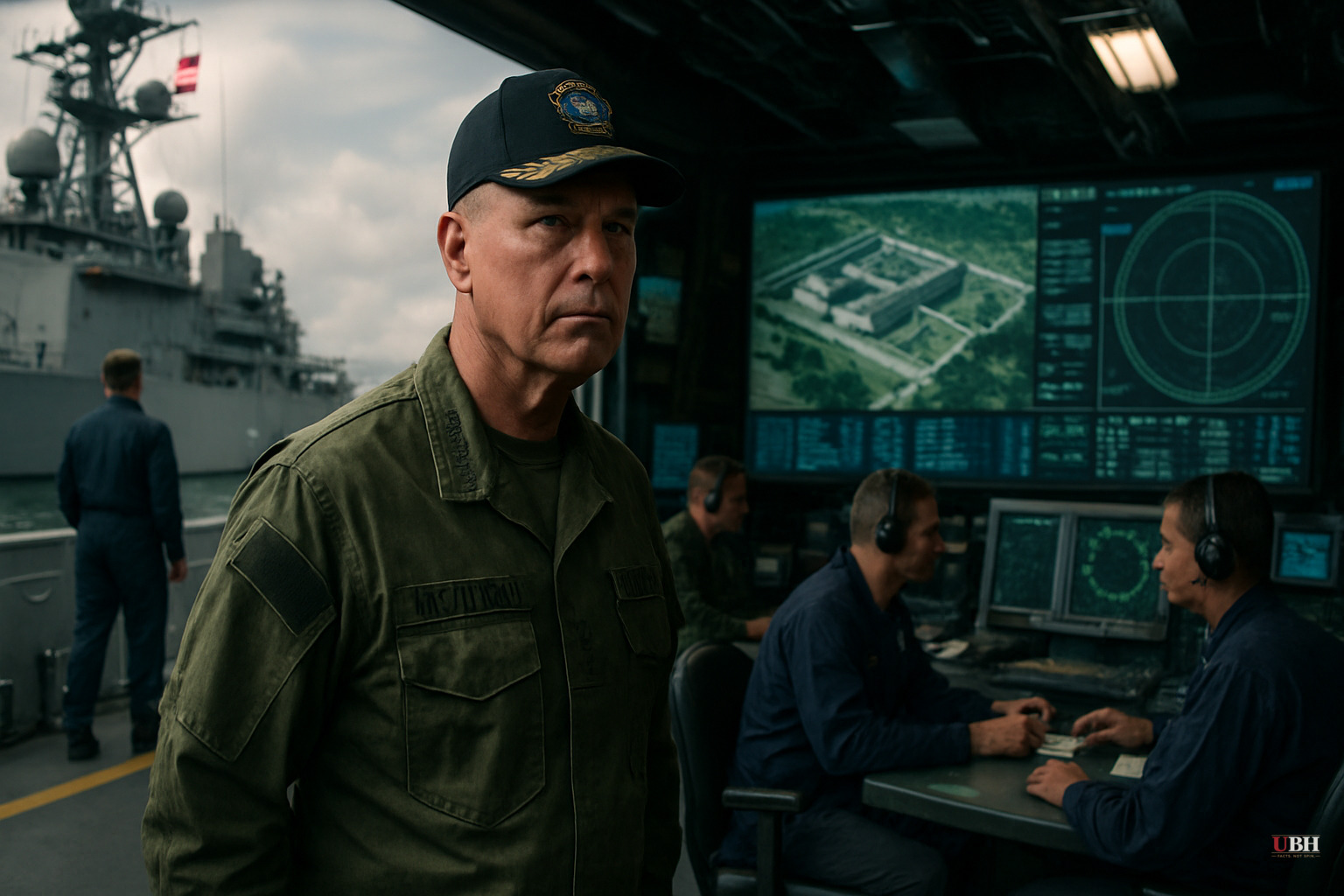
Since U.S. forces arrested Nicolás Maduro on January 3, the Venezuela transition has logged real diplomatic wins — but this week made clear the gap between what acting President Delcy Rodríguez promises and what actually happens inside Venezuelan detention facilities.
Caine Lands in Caracas
General Dan Caine, Chairman of the Joint Chiefs of Staff, visited Caracas on Wednesday — his first official trip to Venezuela since Maduro's capture five months ago. According to the official readout from Joint Chiefs Public Affairs spokesperson Joe Holstead, Caine held bilateral discussions with senior officials of Venezuela's interim government and met with U.S. Embassy leadership and Marine Security Augmentation Unit personnel.
"Gen. Caine emphasized the importance of Venezuelan stability, shared security across the Western Hemisphere, and the Joint Force's commitment to ensuring the implementation of President Donald Trump's three-phase plan," the readout stated.
Caine did NOT meet with Rodríguez directly. She had departed for New Delhi on Wednesday to pursue hydrocarbon cooperation deals with India. Venezuelan Deputy Foreign Minister Oliver Blanco received the American delegation instead. Indian Prime Minister Narendra Modi met with Rodríguez on Thursday, according to Telesur.
This visit follows SOUTHCOM commander Marine General Francis L. Donovan's second trip to Caracas in late May, where he observed a rapid-response military drill. The pace of high-level American military visits to Venezuela is accelerating.
The Helicoide Problem
The Helicoide — a massive 1950s-era spiral structure in Caracas's San Agustín parish, originally designed as the world's first drive-through shopping mall and never finished — became the Venezuelan socialist regime's largest detention and torture complex. Human rights organizations have described it as the largest torture center in Latin America.
When Maduro was arrested in January, Rodríguez announced the Helicoide would be shut down and converted into a cultural center for the local community. That announcement was made over five months ago.
As of Tuesday, it is still open.
The Venezuelan human rights NGO Justice, Encounter, and Forgiveness (JEP) reported this week that at least 25 political prisoners remain detained inside the Helicoide. "It is not possible to consider a facility closed as long as there are citizens deprived of their liberty inside," JEP's statement read.
Hours after JEP published that statement, the organization reported unusual movements at the facility — possible transfers of prisoners to undisclosed locations. JEP characterized the transfers as a response to scrutiny rather than a genuine human rights correction.
"Their transfer to another detention center does not constitute a solution nor represent progress in human rights matters," JEP stated. "What is required is their full and unconditional release."
Moving prisoners out of one facility to avoid inspection differs substantially from reform.
What Mainstream Coverage Is Missing
Most coverage of Caine's visit frames it as a straightforward diplomatic win — America extending influence, strengthening hemispheric security, executing Trump's three-phase plan. That framing isn't wrong. It's incomplete.
The Helicoide story and the Caine visit are happening simultaneously. The same interim government receiving America's top military officer is the government that made a public promise to close a torture complex — and hasn't done it.
The Trump three-phase plan depends on Rodríguez's government actually following through on commitments. If the regime is shuffling prisoners around in the dark while welcoming American generals at the front door, that raises fundamental accountability questions about the transition framework.
Left-leaning outlets covering Caine's visit — like Xinhua, which flatly described January 3rd as a "raid" where the U.S. "seized by force" Maduro — frame the entire operation as illegitimate from the start. That's Chinese state propaganda doing what Chinese state propaganda does.
But the right-leaning outlets covering Venezuela's transition deserve scrutiny too. Cheerleading the diplomatic momentum without acknowledging the Helicoide failure is incomplete reporting.
What the U.S. Should Be Demanding
The Trump administration has real leverage here. Venezuela restored diplomatic ties with the U.S. in March after a seven-year rupture. American military officials are now regular visitors to Caracas. The Rodríguez government is cooperating because it has to.
That leverage should be used to demand the release of all 25 political prisoners still held at the Helicoide — not their quiet transfer to unnamed facilities. Releasing prisoners when American generals aren't looking and re-detaining them elsewhere is NOT compliance.
JEP is calling on the international community to keep monitoring. The U.S. — which has the most direct leverage of any actor in this situation — should make demands loudly and clearly.
The Current Reality
General Caine's visit to Caracas shows the Venezuela transition is real and moving. The Helicoide situation shows the Rodríguez government is still playing games with political prisoners while making promises it hasn't kept.
Both developments are happening at once. Pretending the transition is clean when political prisoners are still being shuffled around in the dark isn't strategy. It's avoiding a difficult question about what the U.S. is willing to accept from its new partner in Caracas.
Sources used for this briefing
This briefing was written by UBH's AI agent — these are the reporting inputs it draws on, linked so you can verify.


