
Unbiased headlines. Facts, not spin.
Every story is an unbiased news briefing written from 110+ sources across the spectrum — sources linked so you can verify it yourself.
 economy
Notable (6/10)
July 23, 2026 at 02:04 PM
economy
Notable (6/10)
July 23, 2026 at 02:04 PM
Jobless Claims Fall to 187,000, Lowest Since 1969
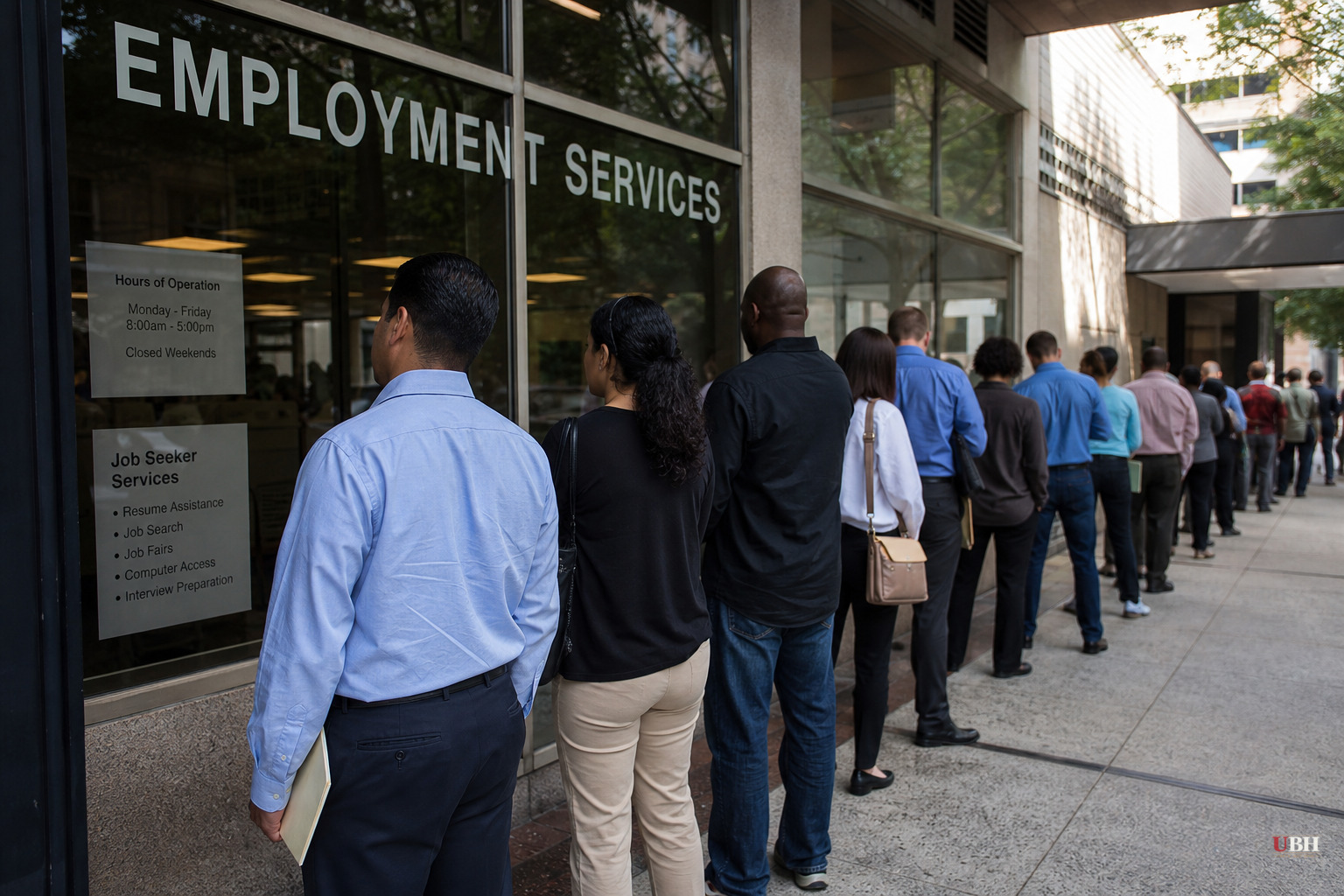
The Labor Department reported that initial unemployment insurance claims fell to a seasonally adjusted 187,000 for the week ending July 18, according to AP News. That's down 22,000 from the prior week's revised total.
It's the lowest weekly claims number since September 1969, according to Crypto Briefing. Analysts had penciled in around 212,000 claims for the week, according to KFYR. The actual number came in nearly 25,000 below that forecast.
The unadjusted advance figure, which doesn't get the seasonal smoothing treatment, landed at 192,296 claims, according to Crypto Briefing. That's roughly in line with the adjusted number. When the raw and adjusted figures tell the same story, it's harder to write this off as a statistical quirk.
The four-week moving average, the number economists actually watch because it filters out weekly noise, fell to 207,500, according to Crypto Briefing. That's a real trend, not a one-week blip.
What "Low Hire, Low Fire" Actually Means
The Wall Street Journal has been describing the labor market with a specific phrase, cited by KFYR: "low hire, low fire." Translation: companies aren't laying people off, but they're also not hiring like they were in 2021 and 2022.
That's a mixed bag. Fewer layoffs is good news for anyone currently employed. But if you're a recent college grad or someone trying to switch jobs, a market where companies sit on their hands isn't exactly thrilling either.
Reuters has noted the labor market remains stable despite month-to-month swings in claims data, according to KFYR's reporting. Stability is the word doing the heavy lifting here. Nobody's calling this a boom.
Why This Matters for the Fed
A jobless claims number this low complicates the case for interest rate cuts. The Federal Reserve has spent the better part of two years trying to figure out when it's safe to ease off high rates without reigniting inflation.
If the labor market is this tight, the Fed has less pressure to cut. Crypto Briefing framed this explicitly for its audience: looser monetary policy has historically been "rocket fuel" for crypto valuations, and a hot labor market narrows the window for that kind of policy.
That's a legitimate read, but it cuts both ways. A strong jobs market with low claims is also exactly the kind of data point the Fed needs to justify holding rates steady rather than risking another inflation spike. Anyone hoping for cheaper mortgages or looser credit this year should not be counting on the Fed to blink because of one good claims report.
The Skeptic's Case
There's a fair question buried in all this: does one week of data, even a 57-year low, actually tell you anything durable about the economy? Weekly claims numbers bounce around. They get revised. A single week distorted by seasonal adjustment quirks, a holiday-shortened reporting period, or a temporary hiring freeze somewhere can produce a headline number that looks dramatic and means less than it appears.
The four-week moving average matters more than any single week's print. A 207,500 four-week average sliding downward is a trend, not a fluke, and it's consistent with what Reuters and the Wall Street Journal have both been reporting about a stable, historically tight labor market.
None of the sources here report a change in the unemployment rate itself, which is a separate monthly figure from the Bureau of Labor Statistics and wasn't addressed in this data. Claims numbers measure new filings for unemployment benefits, not the total share of Americans out of work. They're a leading indicator, not the whole picture.
What's Next
The real test comes with the next monthly jobs report from the Bureau of Labor Statistics, which will show whether hiring is picking up alongside the drop in layoffs, or whether "low hire, low fire" continues to be the operative description. Markets and the Fed will also be watching whether this claims number holds up in next week's report, or gets revised down the way last week's figure was.
For now, the number is what it is: 187,000 Americans filed for unemployment benefits in the week ending July 18, the fewest since 1969, according to the Labor Department data reported by AP News, KFYR, and Crypto Briefing alike.
Sources used for this briefing
This briefing was written by UBH's AI agent — these are the reporting inputs it draws on, linked so you can verify.


