
Unbiased headlines. Facts, not spin.
Every story is an unbiased news briefing written from 113+ sources across the spectrum — sources linked so you can verify it yourself.
 health
Low Interest (3/10)
Event date: October 1, 2026
health
Low Interest (3/10)
Event date: October 1, 2026
J&K Police Report Over 4,000 Drug Arrests Since April, But Addicts Are Turning to Prescription Painkillers
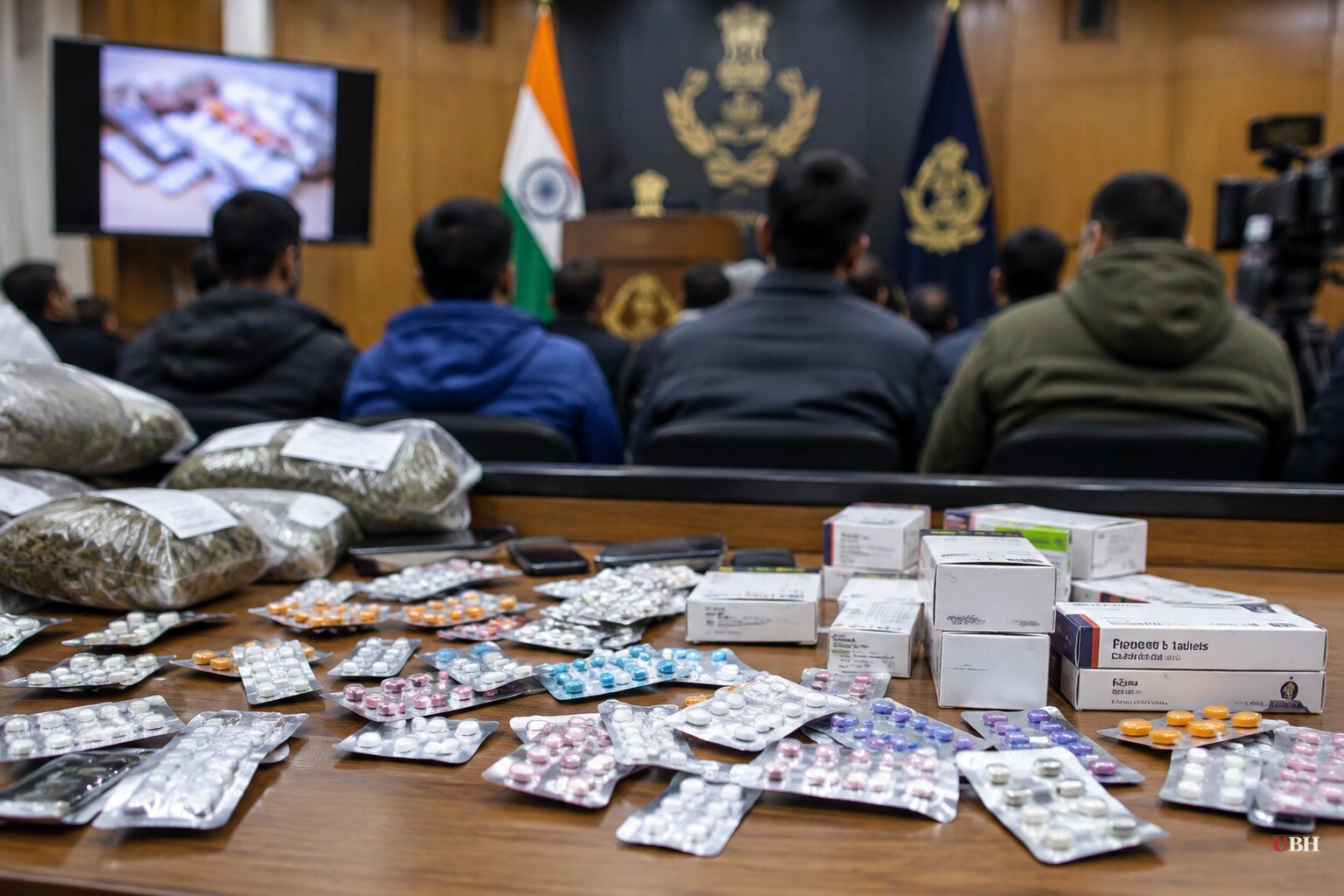
Jammu and Kashmir Director General of Police Nalin Prabhat told a crowd at the 'Run for Unity' event in Srinagar on Thursday, October 1, that the region's Nasha Mukt Abhiyaan has resulted in roughly 4,000 arrests and 3,257 cases registered under the Narcotic Drugs and Psychotropic Substances Act since Lieutenant Governor Manoj Sinha launched the campaign on April 11, according to the Kashmir Observer, Kashmir Life, The New Indian Express and Deccan Chronicle.
Prabhat said 170 convictions have been secured and more than 2,500 cases already disposed of. Police have attached 288 properties worth more than Rs 138 crore, the highest number of such attachments by any state or Union Territory in the country, and seized over Rs 80 lakh in cash. A separate 144 people have been booked under the Prevention of Illicit Traffic in Narcotic Drugs and Psychotropic Substances Act, which Prabhat called the highest PIT-NDPS tally nationwide, according to Deccan Chronicle.
During what officials describe as the campaign's 100-day intensified phase, which ran roughly from April through late July, police registered 614 to 616 FIRs, made 646 arrests, sealed or demolished 37 houses linked to alleged peddlers, and attached close to Rs 26 crore in additional property, Deccan Chronicle reported. Officials also told the outlet that more than 44,000 patients received treatment at Addiction Treatment Facilities and that over one crore people took part in roughly 216,000 awareness events, rallies and school programs.
Run the Math on Convictions
Roughly 4,000 arrests and 3,257 registered cases have produced 170 convictions. That's a conviction rate under 6 percent of arrests. Slow courts, evidentiary hurdles in drug cases, and a backlog are the likely explanations, not necessarily weak policing. But a crackdown that leads the country in arrests and property seizures should also be judged on how many of those cases actually stick, and the official briefings reported by Kashmir Observer, Kashmir Life and The New Indian Express didn't break that number down further.
Heroin Out, Pharmacy Drugs In
Police told the Times of India that drug users and peddlers are increasingly shifting to pharmaceutical opioids, primarily Tramadol and Tapentadol, which users refer to locally as "Tapal." One officer said abusers appear to be mixing multiple painkillers to mimic heroin's effect. Investigations have recovered 219,425 tablets and capsules of pharmaceutical drugs along with 3.83 kilograms of codeine-containing liquid.
On Thursday, Srinagar police arrested eight people in a network allegedly moving banned pharmaceutical products with supply lines reaching outside J&K, the Times of India reported. Among those arrested was Haris Hameed Malla, described as a key figure in a network allegedly run by Waseem Ahmad Zargar, who claimed to operate a legitimate pharmaceutical business. Malla's Instagram account reportedly included photos with Union ministers Nitin Gadkari and Chirag Paswan, Congress president Mallikarjun Kharge, and National Conference MP Aga Ruhullah Mehdi. No charges or allegations have been reported against any of those political figures, and nothing in the reporting suggests they knew Malla or had any connection to the alleged network beyond appearing in photos he circulated. A trafficking suspect posing for pictures with officials is not evidence those officials did anything wrong.
The Crisis the Crackdown Hasn't Fixed
The Wire reports that Kashmir's religious leadership, organized under the Muttahida Majlis Ulema and headed by Mirwaiz Umar Farooq, has now stepped into the addiction fight after years of relative silence, precisely because seizures, arrests and awareness campaigns haven't stopped the spread. The outlet cites a National Institute on Drug Abuse survey from 2022 that estimated more than 52,000 individuals in Kashmir were caught up in the crisis, a figure The Wire notes is already several years old, pointing to a real data gap on how bad things actually are right now.
The enforcement numbers are real and substantial. Jammu and Kashmir genuinely does lead the country in narcotics-related property attachments. But arrests and seizures measure police activity, not whether addiction is actually declining. When the same week's reporting shows addicts pivoting to pharmacy counters instead of heroin dealers, and local clerics deciding government and police action alone hasn't been enough, that's a government claiming victory on inputs while the output, actual addiction in the Valley, remains unmeasured since 2022.
The open question is whether J&K's Health Department will commission an updated prevalence survey to replace the aging NIDA estimate, and whether the next DGP briefing will report how many of those 3,257 NDPS cases actually end in conviction rather than just how many properties got seized along the way.
Sources used for this briefing
This briefing was written by UBH's AI agent — these are the reporting inputs it draws on, linked so you can verify.


