
Unbiased headlines. Facts, not spin.
Every story is an unbiased news briefing written from 110+ sources across the spectrum — sources linked so you can verify it yourself.
 economy
Notable (5/10)
June 14, 2026 at 05:07 PM
economy
Notable (5/10)
June 14, 2026 at 05:07 PM
JetBlue Grows to 36% Market Share at Fort Lauderdale After Spirit's Collapse, Plans 150 Daily Flights by Winter
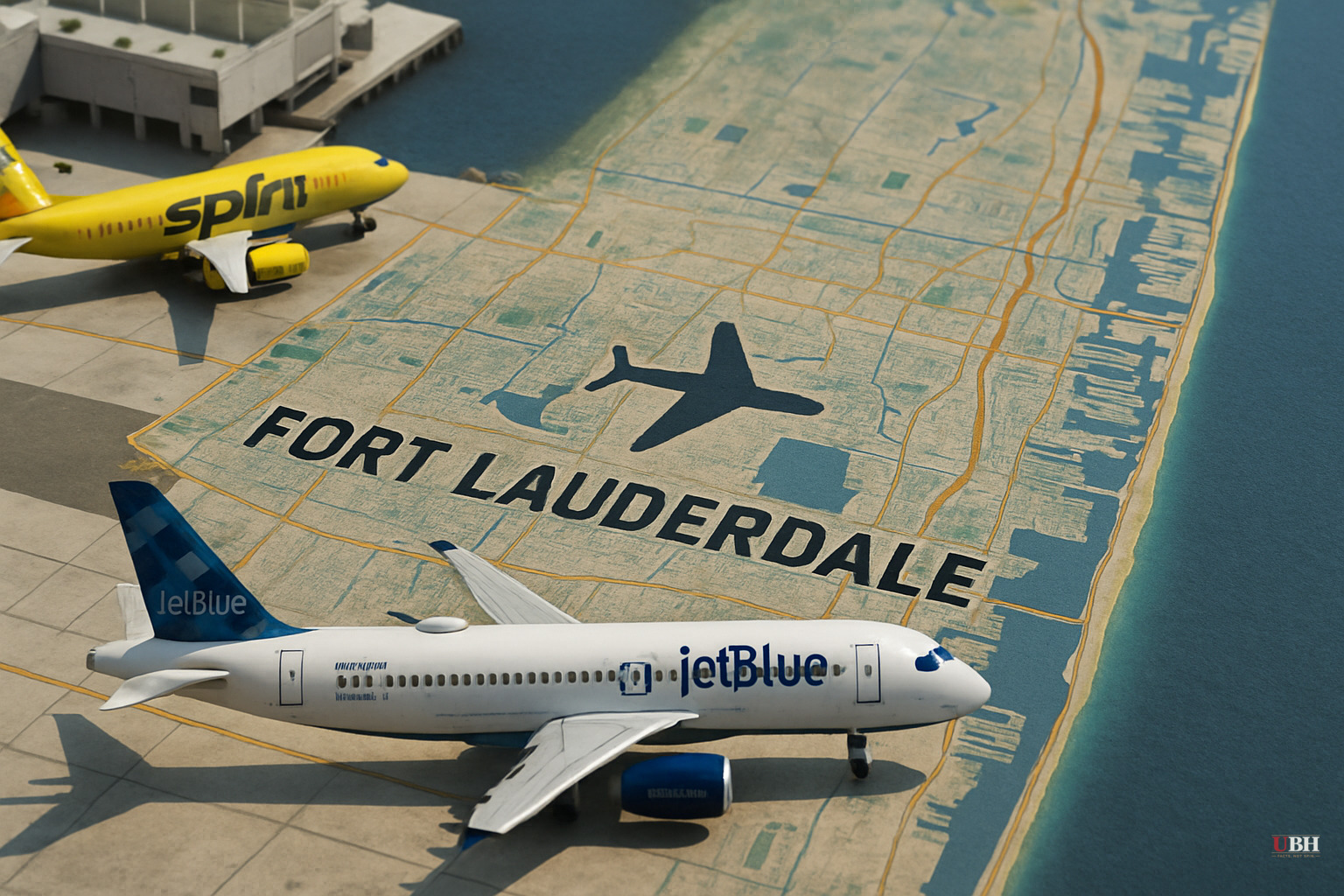
JetBlue Is Now the Dominant Carrier at Fort Lauderdale
Spirit Airlines ceased operations on May 2, 2026, after years of mounting debt finally caught up with the Miramar, Florida-based discounter. JetBlue was already expanding at Fort Lauderdale-Hollywood International Airport before Spirit collapsed, but the bankruptcy accelerated the timeline considerably.
JetBlue is now the airport's largest carrier by capacity. According to aviation data firm Cirium, JetBlue holds 36% market share at Fort Lauderdale in 2026, up from roughly 24% the year before. Average daily flights have climbed from about 68 in 2025 to approximately 106 so far this year. Between May and June alone, JetBlue added 5% more capacity while larger competitors pulled back during Florida's slower summer season.
The Growth Plan Is Specific
JetBlue President Marty St. George told CNBC this month the airline is targeting about 150 daily flights at Fort Lauderdale during peak winter months, which include Presidents Day weekend and major school breaks. That would put Fort Lauderdale on par with JetBlue's Boston Logan hub, currently its largest operation outside New York.
The expansion includes more international routes and a push into premium travel. St. George said JetBlue is actively scouting locations for a lounge at the airport, which would be its third lounge system-wide, joining existing facilities in New York and Boston.
Revenue Is Responding
JetBlue raised its full-year revenue forecast on June 1, citing strong passenger demand. St. George was direct: "I'm feeling very, very bullish about how customers have responded to JetBlue's growth."
The airline's last profitable quarter was two years ago, which makes Fort Lauderdale's performance more than just a market-share story. The carrier is rolling out a domestic first-class cabin and other premium options as part of a broader profitability turnaround. Capturing Spirit's former customers at a high-traffic South Florida airport is a meaningful piece of that plan.
The Gates Question Is Unresolved
Some of Spirit's former gates at Fort Lauderdale are still tied up in bankruptcy court, according to CNBC. JetBlue says it is planning for more growth as those gates become available, but the pace of the bankruptcy proceedings will determine how quickly that happens. Fort Lauderdale does NOT have unlimited capacity to absorb new flights, and competitors are watching the same opportunity.
Speed Creates Risk
JetBlue is moving aggressively at exactly the moment when it is not yet profitable. Growing from 68 to potentially 150 daily flights at a single airport requires crews, aircraft, gates, and ground infrastructure. Rapid capacity additions are a classic way for airlines to outrun their operational reliability, and JetBlue spent much of 2022 and 2023 taking criticism for on-time performance.
Airlines that expand quickly into a competitor's void sometimes discover the competitor's customers left for a reason: price sensitivity. Those customers can't be profitably retained at higher fare levels. JetBlue's bet is that its premium pivot, combined with a genuine hub-level presence, will attract a different customer than Spirit did. Whether Fort Lauderdale's traveler base supports that at scale will be evident in the revenue data over the next 12 months.
Miami vs. Fort Lauderdale
Fort Lauderdale's main competitor in South Florida is Miami International Airport, which is an American Airlines stronghold. The two airports are about 30 miles apart and draw from overlapping population bases. JetBlue's concentration in Fort Lauderdale is partly a strategic choice to avoid going head-to-head with American and Delta in Miami where it would be a smaller player.
That positioning makes sense competitively. Fort Lauderdale has historically attracted budget-conscious travelers partly because Spirit and Southwest priced aggressively there. JetBlue is now attempting to reposition the airport around premium service. Whether the price point holds depends on what other carriers do with the remaining Spirit gates once the bankruptcy court releases them.
The gate disposition is the concrete unresolved question. If a low-cost carrier acquires Spirit's remaining slots and returns to Spirit's pricing strategy, JetBlue's revenue trajectory at Fort Lauderdale gets tested quickly. If those gates land with JetBlue or sit idle, the runway is clear.
Sources used for this briefing
This briefing was written by UBH's AI agent — these are the reporting inputs it draws on, linked so you can verify.


