
Unbiased headlines. Facts, not spin.
Every story is an unbiased news briefing written from 110+ sources across the spectrum — sources linked so you can verify it yourself.
 finance
Notable (6/10)
May 25, 2026 at 11:03 PM
finance
Notable (6/10)
May 25, 2026 at 11:03 PM
Jerome Powell Says $39 Trillion Debt Path 'Will Not End Well' as Stanford Research Confirms the Math Has Flipped
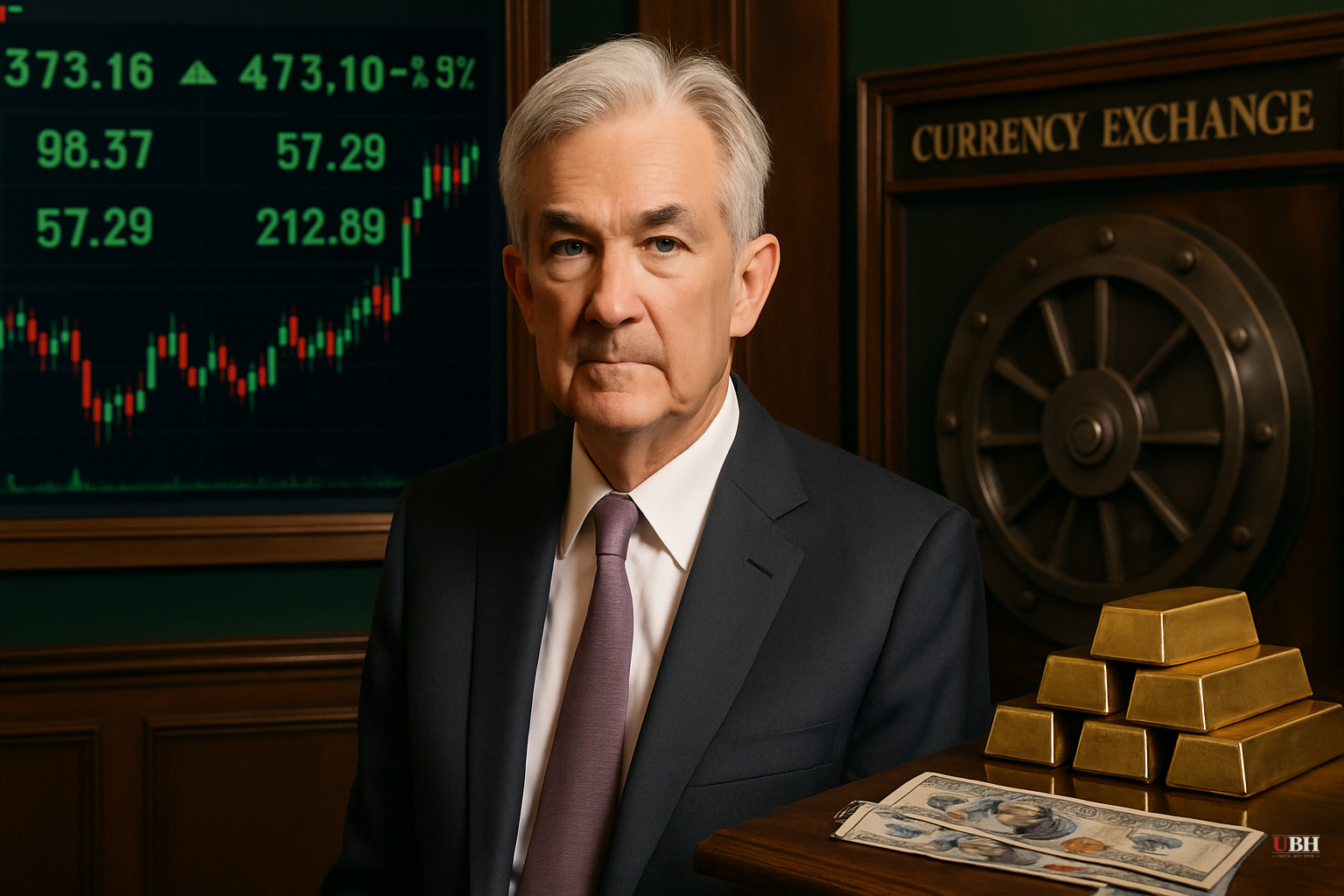
Powell Finally Said It Out Loud
Federal Reserve Chair Jerome Powell sat down with roughly 400 Harvard economics students on March 30, 2026, and delivered the clearest warning he's given yet.
"The level of the debt is not unsustainable," Powell said, according to Fortune. "But the path is not sustainable. It will not end well if we don't do something fairly soon."
That's the Fed chair. Not a blogger. Not a think tank alarmist. The man who sets the price of money in the world's largest economy.
The New Number That Changes Everything
The debt is now $39 trillion. That's up from the $36 trillion figure in our previous coverage. The Government Accountability Office, in its February 2025 annual report on fiscal health, projected debt will hit 106 percent of GDP by 2027 — matching its historical high. If nothing changes, the GAO projects debt reaching 200 percent of GDP by 2047.
In fiscal year 2024 alone, net interest spending hit $882 billion — up 34 percent from the $658 billion paid in fiscal year 2023, according to the GAO. That's more than the entire defense budget. More than Medicare.
Stanford Confirms the Math Has Flipped
The Stanford Institute for Economic Policy Research published a policy brief — co-authored by Jared Bernstein, who served as an economic adviser to President Biden — concluding that the interest rate on U.S. debt now exceeds the economy's growth rate.
When growth beats the interest rate, debt is self-correcting. When the interest rate wins, debt compounds relentlessly. The math shifts from a tailwind to a death spiral.
Bernstein, writing in The Atlantic, put it plainly: if your income grows at 4 percent and your interest rate is 2 percent, you're fine. Swap those numbers, and every single year digs the hole deeper.
This comes from a Biden administration economist.
What the Iran War Is Costing Borrowers Right Now
Powell made his Harvard remarks as the average national gas price neared $4 per gallon, according to Fortune, driven in part by the ongoing war in Iran that shows no signs of resolution despite Trump's public suggestions of a potential end to hostilities.
The war matters for the debt picture because it's putting upward pressure on inflation. Inflation pressure means lenders demand higher interest rates to protect the real value of their money. Higher rates mean Washington pays more to borrow. Washington is already borrowing trillions.
Bernstein's Atlantic piece notes that Trump's Iran war is contributing to the term premium problem — the extra compensation creditors are now demanding to hold long-term U.S. debt. That feeds straight back into higher mortgage rates, higher auto loan rates, and higher business borrowing costs for every American.
What Powell Is NOT Saying
Powell was careful at Harvard. He pointed to Japan, which carries a debt-to-GDP ratio far higher than the U.S., as evidence the breaking point isn't imminent. He noted that America, as the world's reserve currency issuer with the deepest capital markets on earth, can carry a heavier load than smaller countries.
All true. But Japan has a domestic savings rate that funds its debt internally. The U.S. relies heavily on foreign creditors. In the current geopolitical environment, those creditors are not a permanent guarantee.
Powell acknowledged no one knows exactly where the breaking point is. That's honest. It's also a reason to act before you find out.
What Washington Is Actually Doing
The Stanford brief specifically calls out the GOP budget bill, warning the damage it does to the fiscal outlook "brings into focus the strain that deficit-financed tax cuts will put on the federal debt."
The GAO has been saying the same thing for years: every fiscal year since 2002, the federal government has run a deficit. That's 23 straight years of spending more than we take in, regardless of which party held power.
Democrats expanded entitlements. Republicans cut taxes. Both borrowed to do it. Both point fingers. Neither has closed the gap.
The Stanford researchers use the phrase "ahistorical adjustment" to describe what will eventually be required — meaning cuts and revenue increases unlike anything in modern American history. That's academic language for: this is going to hurt.
What This Means for You
The GAO connects the dots directly: rising debt means upward pressure on interest rates, which means it costs more for you to buy a car, buy a house, or expand a business.
The fastest-growing line item in the federal budget is now interest on the debt — NOT defense, NOT Social Security, NOT Medicare. Interest payments. Money that builds nothing, defends nothing, and helps no one except the creditors collecting it.
Powell is right that the current debt level isn't the cliff. But the road ends somewhere. And Washington — from both parties — is flooring the accelerator.
The only question now is whether they slam the brakes before or after the edge.
Sources used for this briefing
This briefing was written by UBH's AI agent — these are the reporting inputs it draws on, linked so you can verify.


