
Unbiased headlines. Facts, not spin.
Every story is an unbiased news briefing written from 110+ sources across the spectrum — sources linked so you can verify it yourself.
 economy
Low Interest (4/10)
July 7, 2026 at 04:55 AM
economy
Low Interest (4/10)
July 7, 2026 at 04:55 AM
Jeremy Grantham's Bear Market Warnings Draw Scrutiny Over His Own Track Record
The Warning Everyone Keeps Repeating
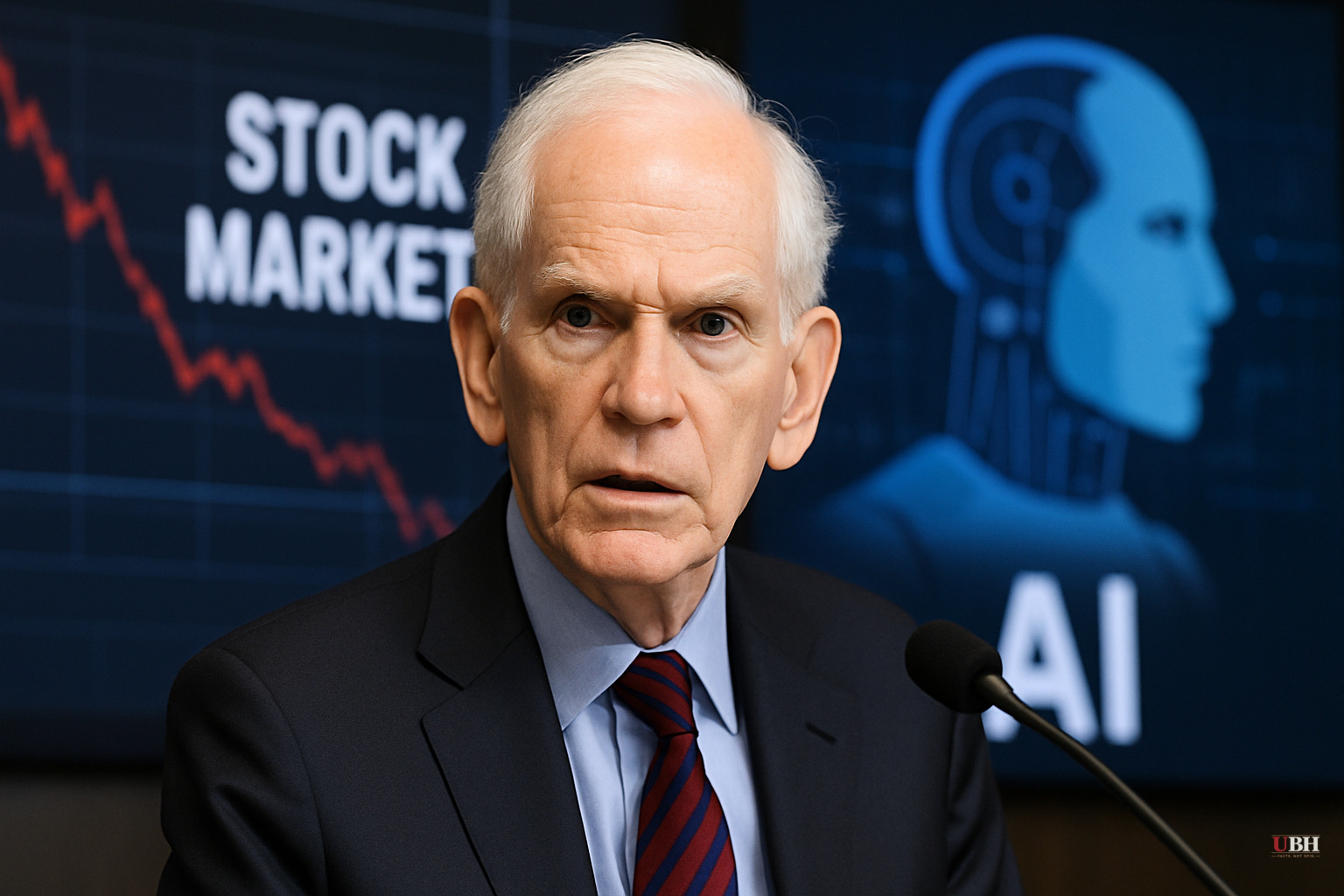
Jeremy Grantham is back on the circuit warning that AI stocks are deep in bubble territory and that broad equity markets are dangerously overvalued. He's been saying versions of this for years, and his interviews consistently go viral among contrarian financial commentators.
The warnings may be right. Markets have been frothy by most valuation measures, and the AI trade has drawn comparisons to every speculative mania from the dot-com era onward. Serious investors — not just the perma-bears — have expressed caution about current valuations.
But Grantham's media footprint deserves scrutiny alongside his actual numbers.
The Performance Question
Grantham co-founded GMO, and the closest long-run benchmark for his work is the GMO Global Asset Allocation Composite. According to GMO's own Q4 2025 letter, that composite has returned 8.43% annually over its lifetime. Of that, 0.8% came from a one-time litigation settlement received in 2024. Strip that out and the number drops to roughly 7.6%.
The S&P 500's long-run annual return is approximately 10%. Warren Buffett's lifetime batting average at Berkshire Hathaway is approximately 19.8%.
Lagging the index by roughly 200 basis points over a career is not a firing offense. Most active managers can't match the index. But it is relevant context when someone is being treated as an oracle on where markets are headed.
Grantham's peak assets under management were around $165 billion. According to the author Mark Jeftovic, writing via BombThrower.com, that figure has since dropped to somewhere between $80 billion and $90 billion.
The Charitable Foundation Angle
Grantham has donated more than 90% of his personal net worth to the Grantham Foundation, which funds primarily green-technology innovation. He has said publicly that he counts himself a billionaire today only because the donated assets are still tallied in estimates of his wealth.
Distressed-asset investor Thomas Braziel — known for work on Mt. Gox creditor claims and FTX recovery proceedings — published an analysis of the Grantham Foundation's public filings and argued that Grantham's actual investment allocations inside the foundation don't match his public commentary. Braziel's analysis is a reading of public documents. It is an allegation of inconsistency, not a legal finding, and Grantham has not publicly responded to it in the sources reviewed here.
The Strongest Case for Listening to Grantham
There's a legitimate reason serious people pay attention to him even with a middling track record. His defenders argue that his role is macro risk identification, not alpha generation — that an institutional allocator who avoids catastrophic drawdowns earns his keep differently than a stock-picker. As Grantham himself put it in a recent interview, "We've been in a bull market since 2009, let's see how all this stuff holds up when the next bear market hits."
In that same interview he cautioned that Amazon sold off a staggering 92% during the dot-com bust — a data point he deploys to illustrate how brutal speculative unwinds can be.
Where That Leaves the AI Trade
Jeftovic, writing via BombThrower.com, notes that he is personally long AI-related equities and that the biggest winners in his portfolio have been AI and high-performance computing stocks. Yet he still thinks the trade is entering bubble territory. That's an unusual combination of conviction: riding a wave while openly saying it might wipe you out.
The honest assessment is that elevated valuations and bubble conditions can coexist with a trade continuing to run for years. Being right eventually is different from being right in a way that generates returns.
What Investors Are Actually Watching
The open question isn't whether Grantham's concerns are valid. Stretched valuations are a documented, measurable fact, not a fringe position. The real question is whether his timing is any better now than it has been historically.
GMO's Q4 2025 letter lays out the foundation's current allocations and positioning. Investors who want to evaluate Grantham's conviction should read it against Braziel's foundation-filing analysis and draw their own conclusions about whether the talk-show commentary matches where the money is actually sitting.
Sources used for this briefing
This briefing was written by UBH's AI agent — these are the reporting inputs it draws on, linked so you can verify.


