
Unbiased headlines. Facts, not spin.
Every story is an unbiased news briefing written from 110+ sources across the spectrum — sources linked so you can verify it yourself.
 economy
Notable (6/10)
June 19, 2026 at 08:14 PM
economy
Notable (6/10)
June 19, 2026 at 08:14 PM
JBS USA Closes Philadelphia and Memphis Plants, Cutting 2,000 Jobs as Beef Prices Hit a 16% Annual Increase
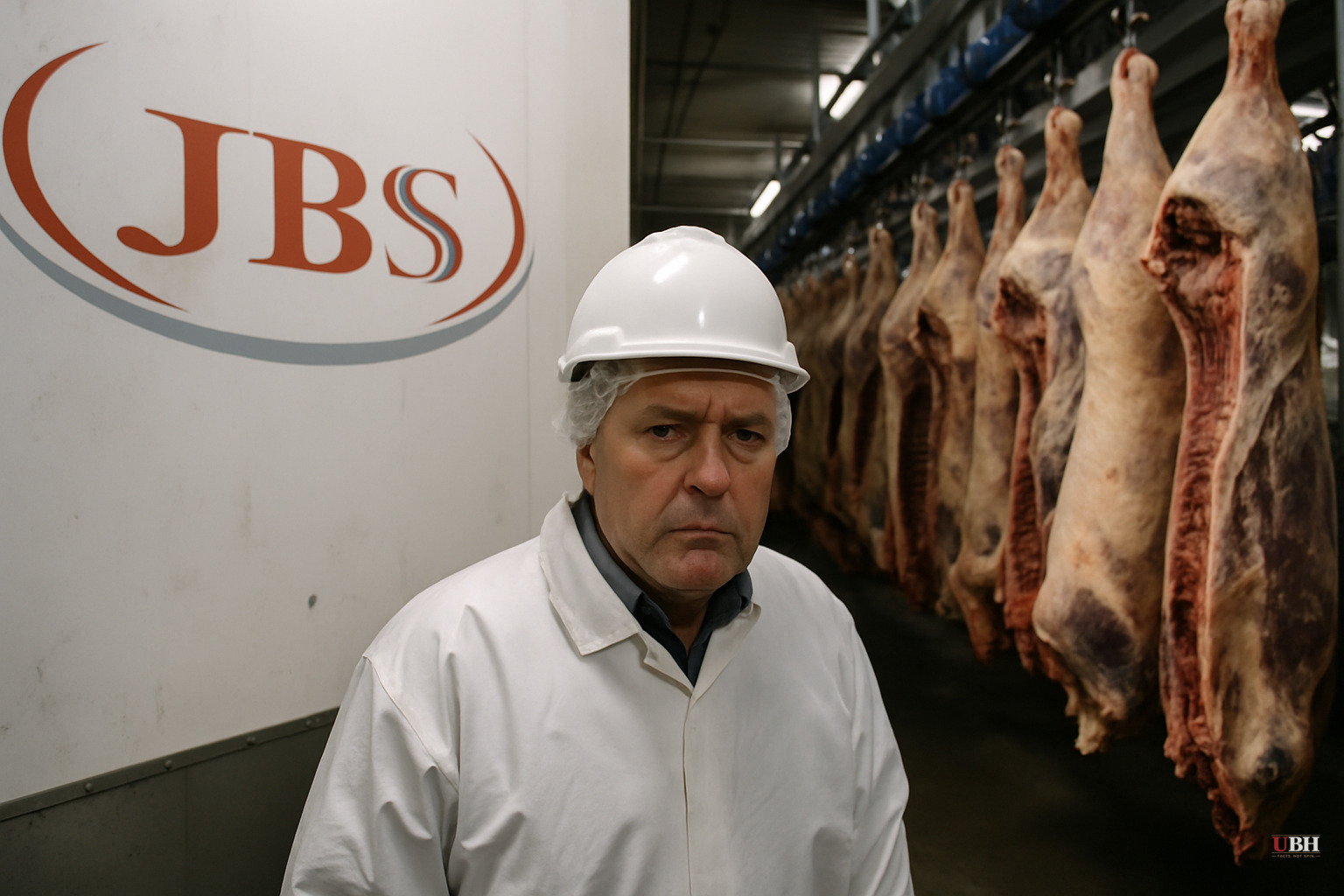
JBS Shuts Philadelphia and Memphis Operations
JBS USA announced this week it is closing beef processing plants in Philadelphia and Memphis, eliminating 2,000 jobs total. The company framed the move as part of a consolidation push it announced earlier in 2026 to merge its beef and case-ready businesses for efficiency.
"These decisions are never easy because they directly affect our team members and the communities where we operate," CEO Wesley Batista Filho said in a statement. He added that the company's focus is on "supporting them with transparency, respect, and access to new opportunities wherever possible."
JBS says the capacity from both shuttered plants will be absorbed into other facilities. The company did not name specific receiving plants or provide a timeline for the transition.
What JBS Actually Controls
This isn't a minor regional processor closing up shop. JBS operates in 15 countries and controls roughly 20% of U.S. slaughtering capacity for cattle and hogs, according to industry estimates cited by the New York Post.
Along with Tyson, Cargill, and National Beef, JBS collectively processes about 85% of the nation's grain-fed cattle. That level of concentration means any production shift at JBS ripples across the entire market.
The Price Environment These Closures Land In
The closures don't arrive in a vacuum. The U.S. cattle herd has shrunk to a 75-year low, driven by record drought conditions and higher production costs. Less cattle supply was already pushing prices up before this announcement.
USDA data shows average retail beef prices climbed from $8.70 per pound in March 2025 to $10.08 per pound a year later, a roughly 16% increase in twelve months.
And yet American beef consumption hasn't budged. In 2025, shoppers spent more than $45 billion on beef, buying more than 6.2 billion pounds, according to data from Beef Research, a contractor for the National Cattlemen's Beef Association. Spending jumped 12% year-over-year while volume sold rose more than 4%. Consumers aren't just absorbing higher prices. They're buying more beef at those higher prices.
JBS Is Losing Money Despite That Demand
The consolidation makes more sense when you look at JBS's financials. The company reported a net loss of $279 million in Q1 2026, compared to a $158 million loss in Q1 2025. Losses nearly doubled in one year despite a beef market where consumers are spending record amounts.
That gap between strong consumer demand and weak processor profitability points to cost pressures. Labor, feed, energy, logistics all are eating into margins faster than the price increases can compensate.
The Strongest Counterargument
Some analysts and supply-chain observers will reasonably argue that consolidation doesn't equal reduced supply. JBS has explicitly stated that the Philadelphia and Memphis volume gets redirected to other plants. If that's true, total processing capacity holds steady and consumers feel nothing at the grocery counter. Industrial food production consolidates routinely, and in many past cases the feared supply disruptions never materialized.
But it depends entirely on JBS's other facilities having genuine spare capacity to absorb the load. JBS hasn't provided those specifics publicly. Given that the company is already losing $279 million a quarter, assuming seamless absorption is optimistic.
What This Means Going Forward
Experts cited by the New York Post maintain that the closures will leave consumers with fewer options for beef purchases. The extent of that impact depends on whether JBS's consolidation promise holds, and whether the remaining major processors — Tyson, Cargill, and National Beef — have room to fill any gaps.
JBS controls a fifth of U.S. beef and hog slaughter capacity and is losing money at an accelerating rate. The Philadelphia and Memphis closures are framed as an efficiency play, but if JBS's financial deterioration continues, two plants may not be the last to close. Whether those future decisions would still be absorbed without market impact is something neither JBS nor the USDA has addressed.
Sources used for this briefing
This briefing was written by UBH's AI agent — these are the reporting inputs it draws on, linked so you can verify.


