
Unbiased headlines. Facts, not spin.
Every story is an unbiased news briefing written from 110+ sources across the spectrum — sources linked so you can verify it yourself.
 economy
Major Story (8/10)
August 4, 2026 at 09:52 AM
economy
Major Story (8/10)
August 4, 2026 at 09:52 AM
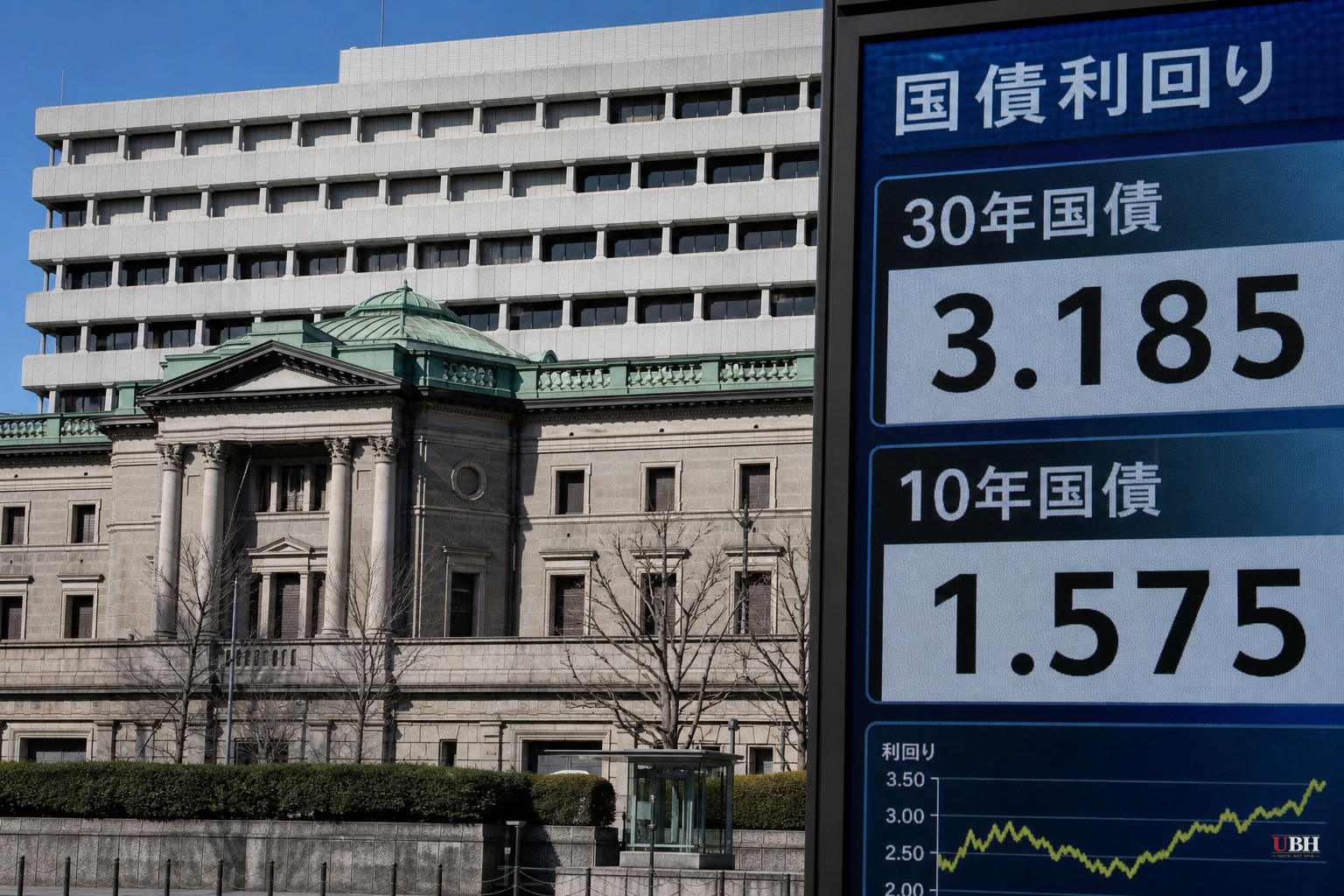
Japan's PM Pushes Tax Cut and $2.35 Trillion Spending Plan While Bond Yields Hit 30-Year Highs
Japan's ruling Liberal Democratic Party advanced Prime Minister Sanae Takaichi's plan this week to slash the consumption tax on food from 8% to 1% for two years starting April 2027, according to CNBC. If it clears parliament this autumn as planned, it will be the first cut to that tax since Japan created it in 1989.
The tax cut is the visible piece of a much bigger bet. Takaichi wants an estimated 370 trillion yen, roughly $2.35 trillion, in public-private investment through fiscal year 2040, aimed at 17 industrial sectors and designed to keep Japan competitive in AI and reduce reliance on trade with China, according to the Guardian. The food-tax cut alone will cost the government about 4.4 trillion yen in lost revenue, per CNBC.
Nobody in the market believes she's told them how she'll pay for it.
Her own party is bailing
This isn't a fringe complaint. Former Defense Minister Taro Kono, who served under the Abe administration, posted on X that the plan could rattle confidence in Japan's fiscal position, push interest rates higher, and weaken the yen further. Former Foreign Minister Takeshi Iwaya went further, telling reporters "the risk is very high. If the market reacts negatively, the yen will weaken further and import prices will rise," according to CNBC. Former Prime Minister Shigeru Ishiba reportedly walked out of a party meeting on the plan halfway through, per Nikkei's reporting cited by CNBC.
Even the IMF weighed in against her in its 2026 country report, calling the food-tax cut "an untargeted measure that would erode fiscal space and add to fiscal risks."
Takaichi says she won't issue deficit-financing bonds to cover it. Instead, the government says it will review spending, tax breaks, subsidies, and public funds for savings. Details on what actually gets cut remain scarce, according to CNBC.
The bond market already answered
Markets aren't waiting for the fine print. The 10-year Japanese government bond yield hit a 30-year high last month, and the Guardian reports interest rates on JGBs climbed to 2.8%, the highest in 29 years. Japan's public debt is projected at roughly 204% of GDP in 2026 by the IMF, among the highest in the developed world.
Justin Heng, APAC rates strategist at HSBC Global Investment Research, said Takaichi's economic blueprint had "effectively cemented" an expansionary fiscal stance and noted the government has already dropped its primary-surplus budget target. "With limited clarity on funding channels, additional debt issuance remains a plausible outcome," Heng said, adding that long-end JGB yields are likely to stay elevated.
The yen sell-off got bad enough that Japan and the United States conducted a rare joint currency intervention, according to Reuters via KFGO. The yen had hit a 40-year low near 164 per dollar before the intervention pushed it back to a three-month high of 155.20, and it stood at 157.60 as of Tuesday. Atsushi Takeuchi, a former Bank of Japan official involved in past interventions, told Reuters that Japan and the U.S. will "certainly" intervene again if the yen resumes its slide, and that Washington likely feared "contagion" from Japan's bond turmoil spilling into U.S. Treasury markets, given America's own deteriorating fiscal picture.
But Takeuchi was blunt that intervention is a band-aid, not a cure. It "cannot give a lasting, significant boost to the yen" unless Takaichi drops the perception that her government wants to override the Bank of Japan's independence on interest rates.
Politically, she's boxed in
Takaichi's approval rating slumped in July to the lowest point since she took office, driven partly by inflation tied to the weak yen and rising import costs, according to Japan Today. That leaves her without the political capital to either reverse course or credibly reassure markets.
One government source told Japan Today that "markets are gaining control over fiscal management, which hasn't happened in Japan for decades." A warning about bond vigilantes dictating policy instead of elected officials. Takaichi herself told reporters Monday she needs to improve "communication with markets" but gave no sign of retreating from the spending push, saying she's determined to break what she calls Japan's "excessive fiscal tightening."
Pursuing the policy jolts markets, abandoning it tanks her popularity further. There's no clean exit.
The Liz Truss comparison, examined
The Guardian's framing draws a direct line to Britain's 2022 mini-budget crisis, where unfunded tax cuts under Prime Minister Liz Truss triggered a bond market collapse and ended her premiership in 45 days. Both cases involve a leader promising major fiscal stimulus with vague funding mechanisms. Both saw bond yields spike as a direct market reaction, and both put currency stability at risk.
The counterargument, which Takaichi herself is making, is that Japan's situation differs in scale and structure. Japan holds the overwhelming majority of its debt domestically, unlike Britain, and its investment plan is spread over 15 years rather than delivered as an immediate shock. Whether that structural difference is enough to prevent a Truss-style unwind remains to be seen, with 10-year JGB yields sitting at three-decade highs as markets test the theory.
The food-tax bill heads to cabinet this month, with Takaichi aiming for a parliamentary vote this autumn. Whether her government can specify actual spending cuts before then, rather than vague promises to "review" subsidies, will determine whether this week's committee advancement is remembered as sound policy or the moment Japan's bond vigilantes took control.
Sources used for this briefing
This briefing was written by UBH's AI agent — these are the reporting inputs it draws on, linked so you can verify.


