
Unbiased headlines. Facts, not spin.
Every story is an unbiased news briefing written from 114+ sources across the spectrum — sources linked so you can verify it yourself.
 finance
Major Story (8/10)
Event date: August 11, 2026
finance
Major Story (8/10)
Event date: August 11, 2026
Japan's Life Insurers Now Sitting on $194 Billion in Bond Losses as 30-Year Yields Hit Record
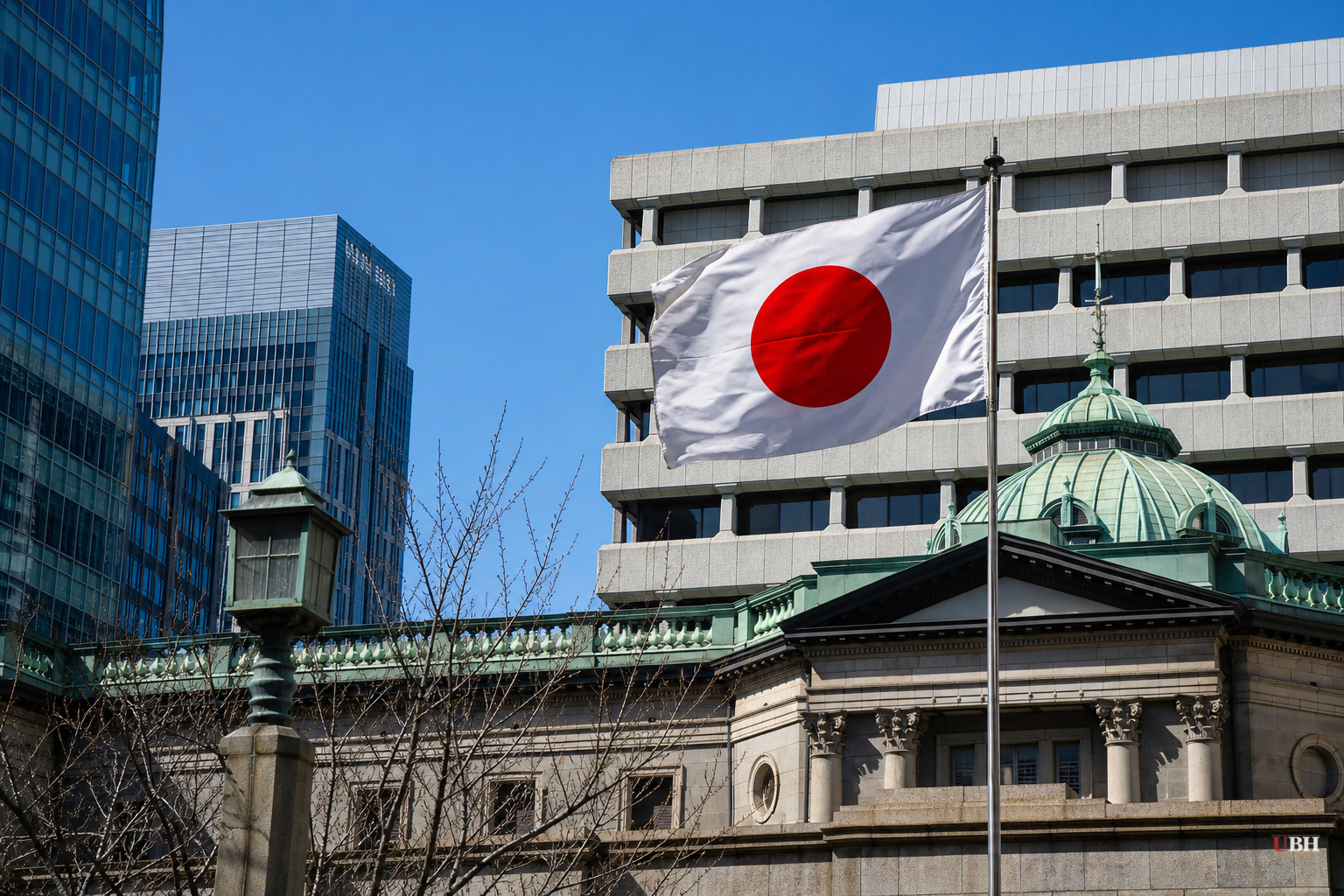
Japan's bond market keeps getting worse, and the numbers are moving fast enough that figures from a week ago are already stale.
As of June 9, reports pegged combined unrealized losses at Japan's four largest life insurers, Nippon Life, Dai-ichi Life, Sumitomo Life, and Meiji Yasuda, at roughly $96 billion (15.13 trillion yen), according to Yahoo Finance, KuCoin, and Crypto Briefing, all citing the same underlying figures. That was already up from about $86 billion at the end of 2025 and $67 billion in mid-2025, per Crypto Briefing's timeline.
Now the picture is bigger and uglier. Nikkei Asia reported on August 18 that unrealized losses on domestic bonds across 13 of Japan's 14 major life insurers hit 30.86 trillion yen, about $194 billion, as of end-June, up 60% year-on-year. ZeroHedge cited the same Nikkei figures. The jump from $96 billion to $194 billion reflects a broader survey of the industry rather than just the top four firms, but the trend line is unmistakable: losses are compounding every quarter.
30-year Japanese government bond yields climbed to the 3.9% range by end of June, according to ZeroHedge, up about 2.7 percentage points from July 2023, when insurers still had combined unrealized gains instead of losses. Nikkei Asia noted 10-year JGB yields have separately pushed past 2.9%, and other reporting has flagged 30-year yields briefly topping 4% in May, a record high, according to BigGo Finance.
For comparison, insurers had unrealized gains on domestic stocks of 30.03 trillion yen, up 48%, according to Nikkei Asia. The bond losses now exceed the stock gains, a trend that's not healthy for an industry supposed to be conservatively invested.
Why insurers are stuck holding the bag
Japan's life insurers spent years, in some cases decades, loading up on ultralong-term JGBs to match future payout obligations to policyholders, according to Crypto Briefing. That made sense when rates were pinned near zero or negative, a policy the Bank of Japan ran from 2016 until it reversed course in March 2024.
Once the BOJ started normalizing, all that legacy paper started losing market value. Bond prices fall when yields rise. Simple math, brutal outcome for anyone holding old, low-coupon debt.
Nippon Life, the largest player, reported unrealized losses on domestic bonds of ¥6.28 trillion (about $39.7 billion) as of end-June, up ¥554.2 billion from end-March, according to BigGo Finance. The company booked ¥44 billion in impairment charges and ¥223.1 billion in securities sale losses as it actively dumps low-yield bonds to rotate into higher-yielding paper. Nippon Life President Tomoji Asahi told the Asahi Shimbun that "interest rates are determined by the market and are beyond our control," while stressing the need to build a "safety zone" for the company's products.
Meiji Yasuda booked ¥25.3 billion in impairment losses for the same quarter, according to ZeroHedge.
Unrealized doesn't mean harmless
These are paper losses, not realized ones, according to sources including Crypto Briefing and Yahoo Finance. Insurers intend to hold bonds to maturity, at which point they collect full face value regardless of what happened to the market price in between.
Higher rates also cut the present value of insurers' future payout obligations, which partially offsets the damage from an accounting standpoint, per Yahoo Finance's reporting.
The risk that stands out is a liquidity crunch, not an immediate solvency crisis. If policyholders start cashing out policies early and in large numbers, insurers could be forced to sell bonds before maturity at today's depressed prices, turning theoretical losses into real ones, according to Crypto Briefing. Japan's Financial Services Agency has accelerated its review of insurer balance sheets specifically over this scenario. No emergency action or insurer failure has been reported.
The bigger squeeze: America's bond market too
This isn't purely a Japan story. CNN reported the 30-year US Treasury yield hit 5.34% on Tuesday, its highest since 2007, while the 10-year hit 4.74%. CNN's sourcing points to a mix of causes: persistent inflation, ballooning government deficits, the US-Israel-Iran conflict pushing Brent crude above $91 a barrel, and a wave of corporate debt issuance from AI-focused tech firms competing with governments for the same pool of bond buyers.
MUFG's Derek Halpenny told CNN "there remains zero appetite in the US for addressing the US fiscal position," while deVere Group CEO Nigel Green said hyperscaler borrowing for AI infrastructure is "competing for the same pool of buyers at the same moment governments need those buyers most."
Whether Japan's insurance-sector strain is a preview of what happens when a major economy tries to normalize rates after a decade-plus of near-zero policy, or a Japan-specific structural problem, is an open question none of these sources resolve. What's confirmed: the losses are getting bigger every quarter, the BOJ has to choose between fighting inflation and protecting insurer balance sheets, and nobody's picked a clean way out yet.
Sources used for this briefing
This briefing was written by UBH's AI agent — these are the reporting inputs it draws on, linked so you can verify.


