
Unbiased headlines. Facts, not spin.
Every story is an unbiased news briefing written from 110+ sources across the spectrum — sources linked so you can verify it yourself.
 economy
Notable (6/10)
July 22, 2026 at 08:08 AM
economy
Notable (6/10)
July 22, 2026 at 08:08 AM
Japan's Exports Jump 19.3% in June, But Oil Costs Push Trade Back Into Deficit
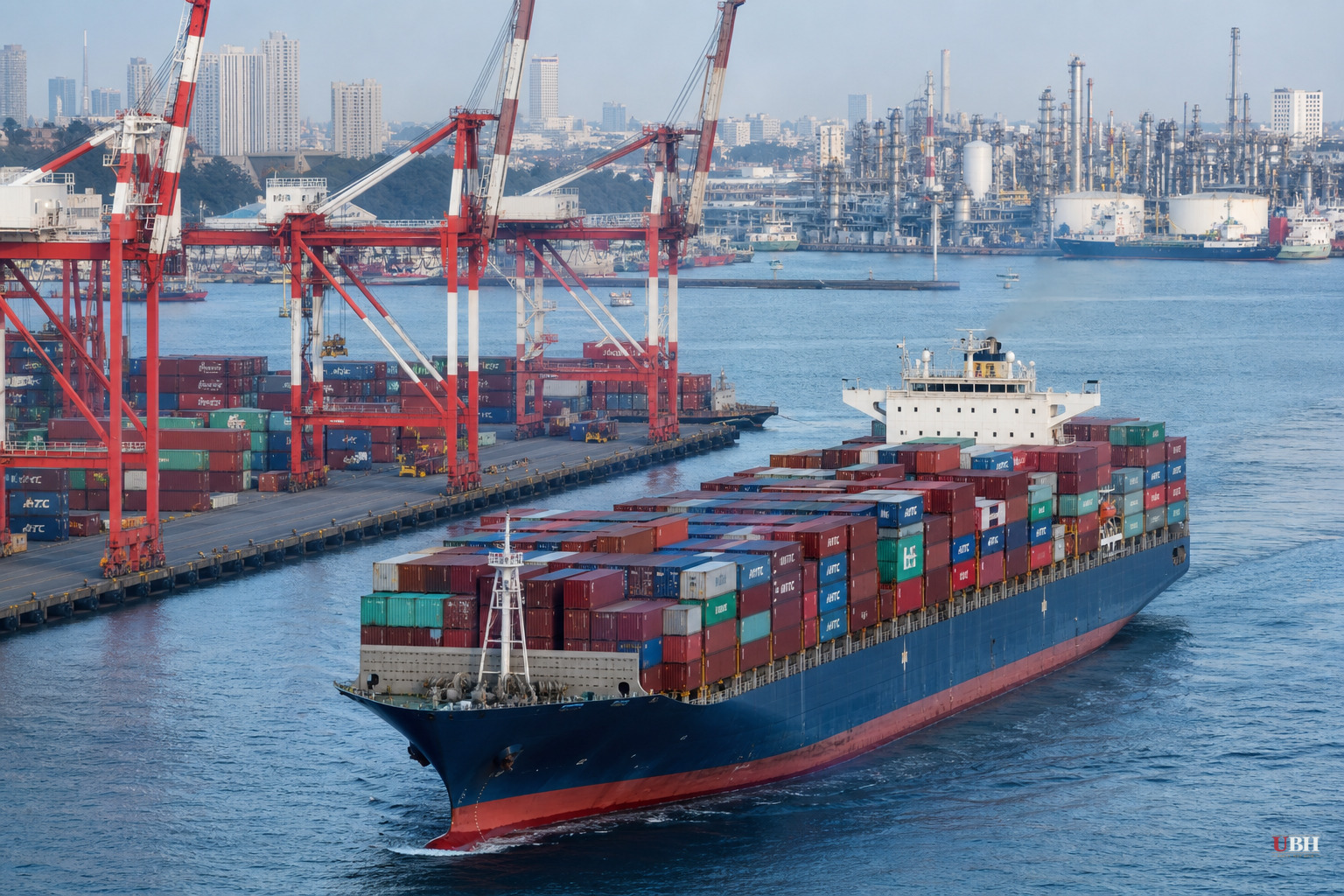
Japan's Ministry of Finance reported Wednesday that exports rose 19.3% year-on-year in June, the fastest growth rate since November 2022 and better than the 18.6% economists polled by Reuters had expected, according to CNBC. That's a pickup from May's 16.8% growth, marking the tenth straight month of export gains, according to Ground News.
Export volumes rose just 0.2% from a year earlier, according to CNBC and ActionForex. Almost the entire 19.3% jump came from prices, not actual shipment quantities. A weak yen and soaring semiconductor prices, not a surge in real economic activity, are driving the gain.
The yen is trading near 163 to the dollar, according to CNBC, hovering at multi-decade lows. A weaker yen inflates the yen-value of everything Japan sells overseas, even if the physical volume of goods barely moves. Marcel Thieliant, head of Asia-Pacific at Capital Economics, said the strength in export values is almost entirely a result of soaring export prices, reflecting both the weak yen and the rising cost of memory chips.
Semiconductor equipment shipments jumped 53.8% in June, fueling gains at Japanese tech names like Tokyo Electron, Renesas Electronics and Advantest, whose shares are up between 50% and 93% this year, according to CNBC. Exports to Asia rose 22.7%, with a 46.4% spike in shipments to Taiwan. Exports to China, Japan's largest trading partner, climbed 17.6%. Goods sold to the U.S. rose 13%, and Japan posted a 3.15 trillion yen trade surplus with the United States specifically, according to Ground News.
The Import Side Is the Real Story
Imports jumped 25.4% year-on-year, outpacing the 21% gain economists expected and also marking the fastest import growth since November 2022, according to BigGo Finance. The total import bill hit a record 11.34 trillion yen, roughly $69.5 billion.
Crude oil is the culprit. The value of crude oil imports soared 59.3% even though the actual volume of oil Japan bought fell 13.7% year-on-year, according to BigGo Finance. Japan is paying dramatically more for less oil. That's the combined effect of the weak yen and disruption tied to the Iran conflict and instability around the Strait of Hormuz.
Japan imports more than 87% of its energy needs, according to the International Energy Agency, cited by CNBC. That dependence makes the country's trade balance hostage to both currency swings and Middle East geopolitics at the same time. Thieliant noted that with the Strait of Hormuz closed again, Japan's crude imports will stay below pre-war levels for a while yet, per CNBC.
BigGo Finance adds a detail other outlets skip: Japan is actively diversifying oil suppliers, with purchases from the United States and Russia rising as imports from the Middle East decline. That's a structural shift worth watching, though the sourcing switch hasn't been enough to offset the price shock.
The net result was a trade deficit of 406.9 billion yen in June, about $2.5 billion, according to BigGo Finance and confirmed by the Ministry of Finance data cited across CNBC, Ground News and ActionForex. That's a sharp reversal from the 122.2 billion yen surplus Japan posted in the same month last year, and it marks the second straight month of red ink, according to the Economic Times, as referenced by Ground News.
What Happens Next
The Bank of Japan is widely expected to leave interest rates unchanged at its policy meeting scheduled for next week, according to Ground News and BigGo Finance, though it's expected to maintain a tightening bias to guard against inflation risk. The central bank noted in its June policy meeting that overseas economies are seeing an upswing from AI demand, which has eased some of its earlier concern about a broader economic slowdown, according to CNBC.
Takeshi Minami, chief economist at Norinchukin Research Institute, warned that prolonged instability tied to the Iran conflict could weigh on global economic activity, according to Ground News. With the Strait of Hormuz shut again and Japan's oil bill still climbing, whether the country can keep paying for energy at these prices without the yen weakening further remains an open question.
Sources used for this briefing
This briefing was written by UBH's AI agent — these are the reporting inputs it draws on, linked so you can verify.


