
Unbiased headlines. Facts, not spin.
Every story is an unbiased news briefing written from 110+ sources across the spectrum — sources linked so you can verify it yourself.
 economy
Major Story (7/10)
June 22, 2026 at 04:38 AM
economy
Major Story (7/10)
June 22, 2026 at 04:38 AM
Japan Quintuples Visa Fees on July 1, First Increase Since 1978
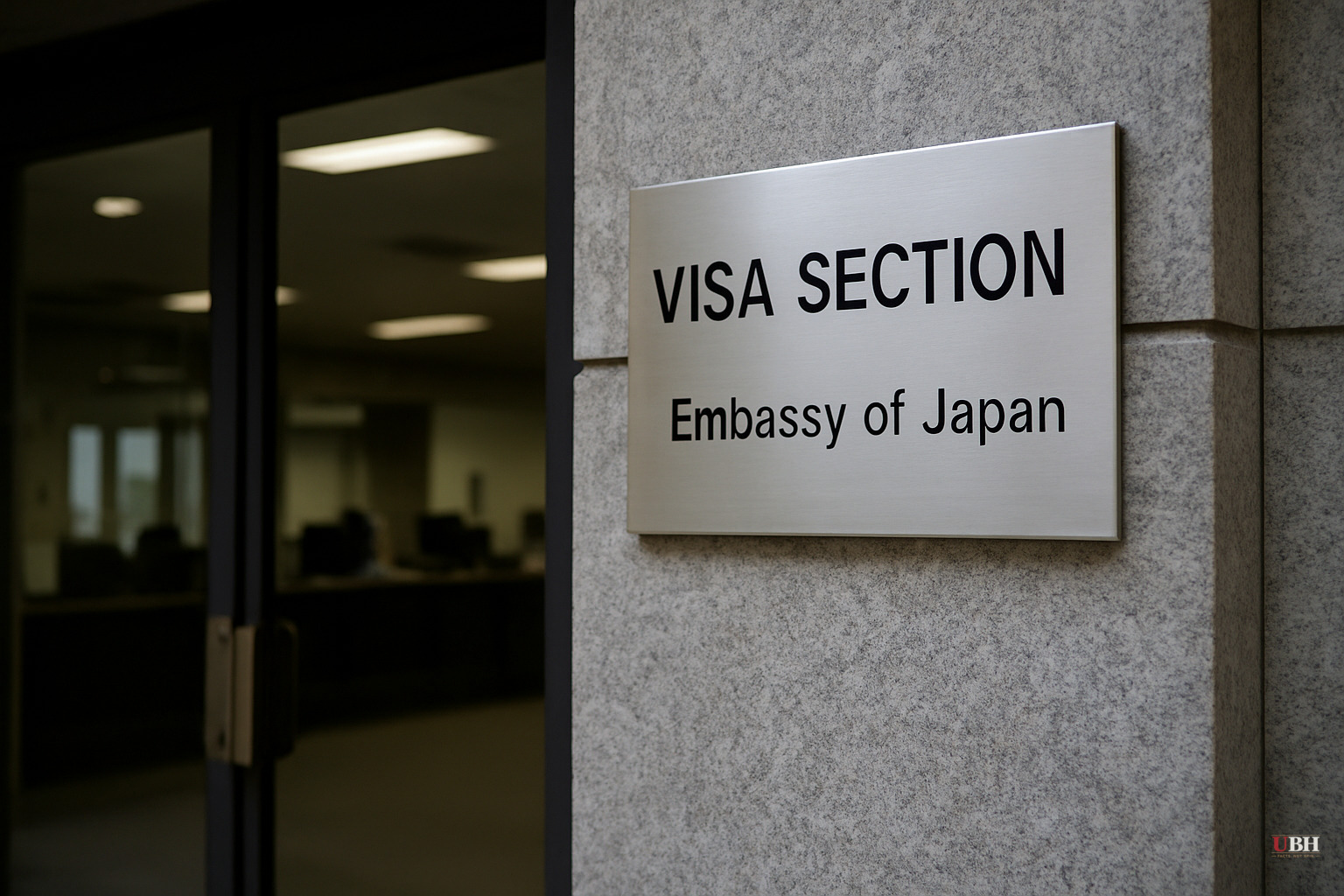
A Japanese government official announced the fee revision at a press conference on June 19, 2026, framing it as a straightforward correction for inflation and yen depreciation since 1978, according to BBC News and VisasNews. The cabinet formally approved the ordinance change the same day.
Starting July 1, a single-entry visa will cost 15,000 yen (roughly $93 at current exchange rates), up from 3,000 yen ($18). A multiple-entry visa will run 30,000 yen ($186), up from 6,000 yen ($37). Applications submitted before July 1 are not affected.
Why Now
The yen has weakened dramatically since 2021 and is currently hovering near 40-year lows, according to BBC News. That exchange-rate slide made Japan's already-cheap visa fees look even cheaper in dollar and euro terms. Japan also recorded 42.7 million international tourists last year, a new record, driven by a post-pandemic rebound supercharged by yen weakness.
Japan's Ministry of Foreign Affairs noted in a preparatory document this spring that the fees had sat unchanged for nearly half a century, according to VisasNews. Authorities pushing the hike argue Japan's visa charges need to reach the same ballpark as other G7 countries. The U.S. charges $185 to $315 for non-immigrant visas; a standard UK short-stay visa costs £135, according to BBC News. Japan's new 15,000-yen single-entry fee ($93) still undercuts both.
Residency Fees Are Going Up Too
The visa fee change isn't the only cost increase foreigners in Japan are facing. In May, Japan's Upper House passed a separate bill raising the statutory ceiling for permanent residency applications to 300,000 yen, a 30-fold increase from the current 10,000 yen cap. Changing residency status or extending a stay will cost up to 100,000 yen, also up from 10,000 yen, according to BBC News. These are separate from the visa-issuance fees taking effect July 1.
The Chinese Tourism Wrinkle
Caixin Global notes a dimension the other outlets largely skip: Chinese tourists were already pulling back from Japan before this announcement, amid deteriorating Beijing-Tokyo relations. The fivefold fee increase lands on top of that existing friction. Caixin framed the story specifically around the impact on Chinese visitors, who represent one of Japan's largest inbound tourist segments. Whether the fee hike accelerates that pullback remains unclear, as the sources don't resolve whether this is a geopolitical trend independent of visa costs.
The Case Against the Hike
Critics of the increase argue the timing is wrong. Tourism-dependent small businesses in Japan have built their revenue models around high visitor volumes, and any friction at the front door matters. A traveler weighing a trip to Japan now faces a visa cost that jumped $75 overnight for a single-entry trip. For budget travelers or those from lower-income countries, that's a real barrier. Opponents also note that Japan's government has simultaneously pushed hard to attract foreign tourists to combat its demographic decline and economic stagnation, and a sharp fee increase sends a mixed signal.
The government's counter is direct: Japan does NOT anticipate an immediate impact on inbound tourism, officials told reporters on June 19. That tracks with the math. Even at 15,000 yen, Japan's single-entry visa is cheaper than the U.S. or UK equivalent. Tourists absorbed airfare costing hundreds or thousands of dollars to get there. For the visitors Japan most wants to attract, $93 for a visa is unlikely to be the trip-killer. The ministry's own framing is that this is a cost-of-doing-business normalization, not a policy lever to reduce visitor numbers.
What Comes Next
VisasNews reports that Japan has not yet issued guidance on whether the July 1 increase applies specifically to online eVISA applications. The eVISA system covers certain nationalities and purposes of travel and is the government's preferred digitization channel, so that clarification matters for a large slice of applicants. Separately, Japan's planned JESTA electronic travel authorization system, which would affect currently visa-exempt visitors, is expected during fiscal year 2028, according to VisasNews. That's a future expansion of entry controls, not part of the July 1 change.
Japan's government says it can raise fees without hurting tourism. The Chinese tourism data, which Caixin Global covers and the other outlets do not, suggests that visa economics can interact with geopolitics in ways that are hard to model in advance. If Chinese visitor numbers continue to slide into the second half of 2026, the July 1 fee increase will make it harder to untangle the political cause from the financial one.
Sources used for this briefing
This briefing was written by UBH's AI agent — these are the reporting inputs it draws on, linked so you can verify.


