
Unbiased headlines. Facts, not spin.
Unbiased Headlines is an independently owned news organization. We bring you the facts, not opinions, written fresh from 110+ named sources. Sources linked so you can verify it yourself.
 finance
Notable (5/10)
finance
Notable (5/10)
Jamie Dimon Says Dollar's Reserve Status Depends on US Staying the World's Strongest Military and Economy
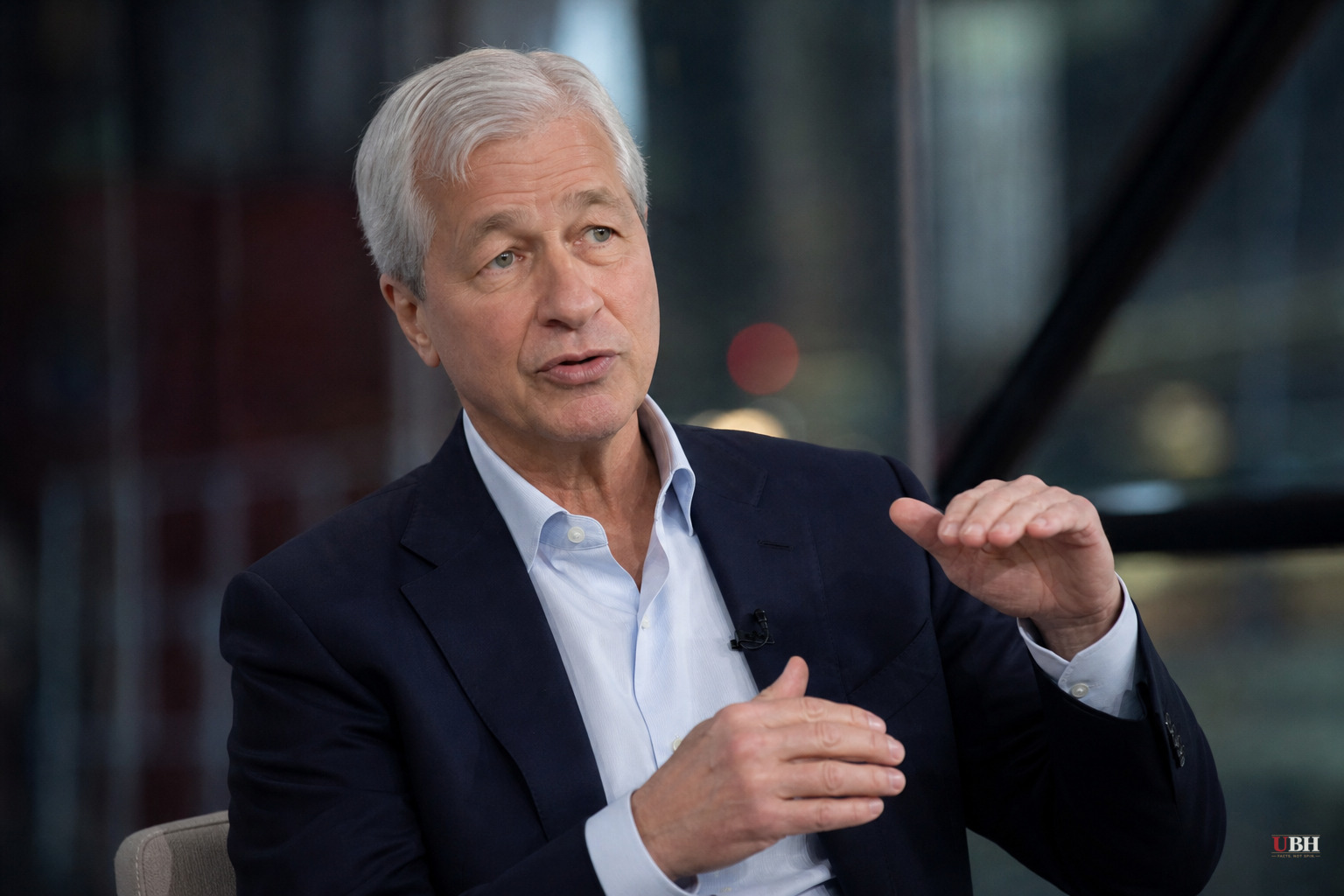
Jamie Dimon isn't predicting the dollar's collapse. He's predicting what happens if America stops earning the privilege of having one.
Speaking on PBS's "Firing Line with Margaret Hoover" over the weekend, the JPMorgan Chase CEO laid out a blunt equation: no dominant military, no dominant economy, no reserve currency.
"If we're not the strongest military in 25 years and the strongest economy, we won't be the reserve currency either," Dimon said, according to Fortune. "The world will be fragmented, and it'll be very dangerous for us."
That's a 25-year deadline from the head of the largest bank in the country.
The Numbers Behind the Warning
The dollar currently makes up about 57% to 58% of global foreign-exchange reserves, depending on whether you cite the Federal Reserve's figures or the Atlantic Council's, according to Business Insider and PrimeXBT. That's down from roughly 70% at the turn of the millennium.
A 13-point drop over 25 years sounds alarming until you check what caused the panic in the first place. After the US and its allies froze Russian central bank assets in 2022 following Russia's invasion of Ukraine, plenty of analysts warned that freezing a rival's dollar reserves would spook other countries into dumping the currency. Federal Reserve research has since found no significant post-2022 shift away from dollar holdings, according to Business Insider.
So the sanctions-driven de-dollarization panic hasn't shown up in the data. The institution most likely to know if a flight from the dollar was underway says it hasn't seen one. Dimon's case is longer-term and structural, not about a single sanctions episode.
Rare Earths, China, and the Iran War
Dimon didn't just talk currency theory. He named specific failures.
He said the US should have recognized 10 or 15 years ago that it was dependent on China for rare earths, aluminum, and certain types of steel, according to Business Insider. "We can't rely on China for that, we can't allow mercantilist behavior, we need to do it here, we made a mistake," he said.
He also pointed to the Iran War as evidence the US lacks the industrial base to sustain a long conflict. "The war in Iran has pointed out we didn't have productive capability to defend the United States if there was a real war that lasted for a long period of time," Dimon said. "And that's a hell of a statement."
Dimon is connecting manufacturing capacity, military readiness, and the dollar's global status. These are typically treated separately, but his argument is that they're the same problem viewed from different angles.
JPMorgan isn't just talking. The bank launched a $1.5 trillion, 10-year Security and Resiliency Initiative in October targeting critical minerals, advanced manufacturing, energy, defense, AI, and quantum computing, according to Fortune and Business Insider. Dimon said at the time it had become "painfully clear" the US was too reliant on unreliable sources for materials essential to national security.
Why the Military Matters to a Currency
Daniel McDowell, associate director of Syracuse's Moynihan Institute of Global Affairs, told Fortune that Dimon's logic isn't a stretch. "A strong military makes a currency more appealing because it's a signal to foreign investors that their assets are safe," McDowell said.
Economic strength is still the primary driver of dollar dominance. The military is what McDowell called "the icing on the cake." But if allies start doubting America's ability to defend itself or come to their aid, they have less reason to hold Treasury bonds that fund the very defense they're counting on.
McDowell also floated the scenario that would do the most damage: the US entering an all-out war with a rival like China or Russia and losing decisively. That's not what happened with Iran, McDowell noted, since that wasn't an all-out war. A decisive loss to a major power would have real implications for how the world views the dollar.
Where the Coverage Splits
The Daily Caller News Foundation's coverage, republished by outlets including Heartlander News, pushed Dimon's timeline further than Dimon himself did. It cited financial analyst Philip Pilkington arguing that Iran War-driven energy shocks and strain on Japan, the largest foreign holder of US Treasuries, could cut the 25-year window in half. That reporting also noted the US Treasury staged a joint currency intervention with Japan to prop up the yen, tying it to the dollar's stability.
Dimon did not make that accelerated timeline claim. That's Pilkington's independent analysis, presented in an interview hosted by Mario Nawfal and layered on top of Dimon's remarks by a specific outlet. Readers should treat the 25-year figure as Dimon's number and the shorter timeline as a separate analyst's forecast.
Dimon has also separately warned about a looming bond crisis tied to US debt, after publicly held federal debt exceeded 100% of GDP, according to the Daily Caller News Foundation's reporting. "The way it's going now, there will be some kind of bond crisis, and then we'll have to deal with it," he said.
None of this is a prediction that the dollar collapses next year, or even next decade. It's a warning from the head of a $4 trillion bank that the conditions propping up American financial dominance, military strength, industrial capacity, and economic output aren't guaranteed to hold for another 25 years unless something changes. The open question is whether Washington treats that as a policy priority or a talking point.
Sources used for this briefing
7 links from 6 independent newsrooms (syndicated copies of the same report count once)
These are the sources it draws on, linked so you can verify.


