
Unbiased headlines. Facts, not spin.
Unbiased Headlines is an independently owned news organization. We bring you the facts, not opinions, written fresh from 110+ named sources. Sources linked so you can verify it yourself.
 health
Low Interest (4/10)
Event date: November 3, 2026 ·
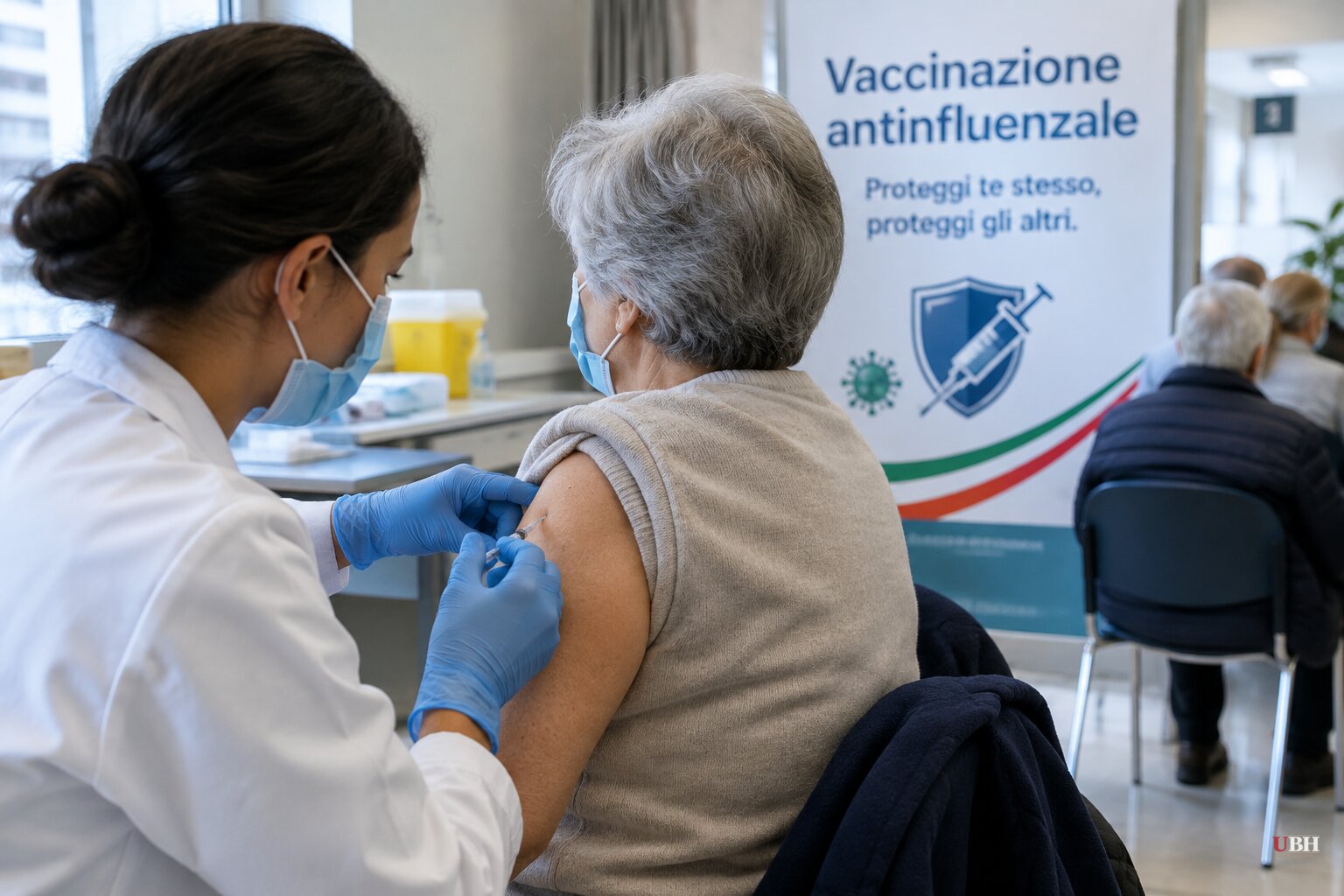
Italy's Flu Vaccination Rate for Over-65s Falls to 49.81%, Below 50% for the First Time in the Ministry's Latest Data
Title: Italy's Flu Vaccination Rate for Over-65s Falls to 49.81%, Below 50% in the Ministry's Latest Data
Body:
Fewer than half of Italy's elderly got a flu shot last season. The Italian Ministry of Health says 49.81% of people aged 65 and over were vaccinated in the 2025-26 campaign, down from 52.5% the season before.
That leaves more than 7 million Italians in that age group unprotected, according to Tech Times' account of the ministry figures.
The numbers
Italy administered 11,107,046 flu doses in 2025-26, roughly 460,000 fewer than the prior season. Coverage across the whole population slipped from 19.6% to 18.87%.
The World Health Organization has set a minimum target of 75% for elderly populations since 2003. Italy sits 25.19 percentage points below it.
Italy last cleared that bar in 2007-08, when coverage hit 75.4%. That makes 18 straight seasons below the line.
What flu costs
Flu kills between 7,000 and 24,000 Italians a year, the large majority of them elderly, according to the figures Tech Times cited in its report on the ministry release.
The European Commission's statistics office, Eurostat, counted 9,100 flu deaths among EU residents in 2023, across all member states. That works out to 1.8 deaths per 100,000 inhabitants. Of those, 7,900 were people 65 and over, a rate of 8.0 per 100,000 in that age group. For people under 65 the rate was 0.3.
The Commission itself says the yearly number swings widely. There were 12,700 flu deaths in the EU in 2018 and 360 in 2021. It says the drop may reflect, at least in part, the distancing, hand-washing and mask measures introduced against COVID-19.
The Italian estimate and the Eurostat count are plainly not measuring the same thing, and the first should not be read as a precise toll.
Italy against the EU
The European Commission reports that 45% of EU residents 65 and over were vaccinated against flu in 2024. Ireland led the bloc that year at 76%.
Italy's 52.5% in 2024-25 and 49.81% in 2025-26 are Italian season figures. They are not a like-for-like match with a single EU calendar year, so the comparison is rough. Still, Italy is not an outlier at the bottom of the table. The broader problem is that Europe as a whole is well short of the WHO target, and Ireland's 76% is the highest the Commission reports for any member state.
The access question
Pharmacy vaccination has been available in Italy since 2021. The idea was to give older people a way around crowded doctor's offices. The 2025-26 decline came anyway.
Tech Times reports that the country is short about 5,700 general practitioners, and says the vaccination slump is structural rather than a one-season blip. That is the outlet's analysis. The ministry's figures show the direction of the trend, but they do not by themselves explain why older Italians are skipping the shot.
The pharmacy channel is a real policy tool with a real record now: five years of availability and a coverage rate that still fell. Whether the problem is access, awareness, trust in the vaccine, or something else is a question the headline numbers do not answer.
Why the target matters
The WHO's 75% figure is a floor for meaningful protection of older populations, according to the Tech Times account. Below it, the wider protective effect for people who cannot be vaccinated or who respond poorly to vaccines, such as cancer patients on immunosuppressive therapy and very frail elderly people, is weaker.
A target missed for 18 consecutive seasons is a benchmark in name only. Italy has not reached it since 2007-08, and the latest year moved further away from it.
What comes next
The European Commission says its flu statistics page is scheduled for an update in November 2027. That release will show whether Italy's slide fits a wider European pattern or stands apart from it. The Italian Ministry of Health's next season figures will show whether the 2025-26 drop was a one-year dip or the start of a lower baseline.
Sources used for this briefing
2 links from 2 independent newsrooms (syndicated copies of the same report count once)
These are the sources it draws on, linked so you can verify.


