
Unbiased headlines. Facts, not spin.
Every story is an unbiased news briefing written from 110+ sources across the spectrum — sources linked so you can verify it yourself.
 finance
Low Interest (4/10)
June 8, 2026 at 10:54 AM
finance
Low Interest (4/10)
June 8, 2026 at 10:54 AM
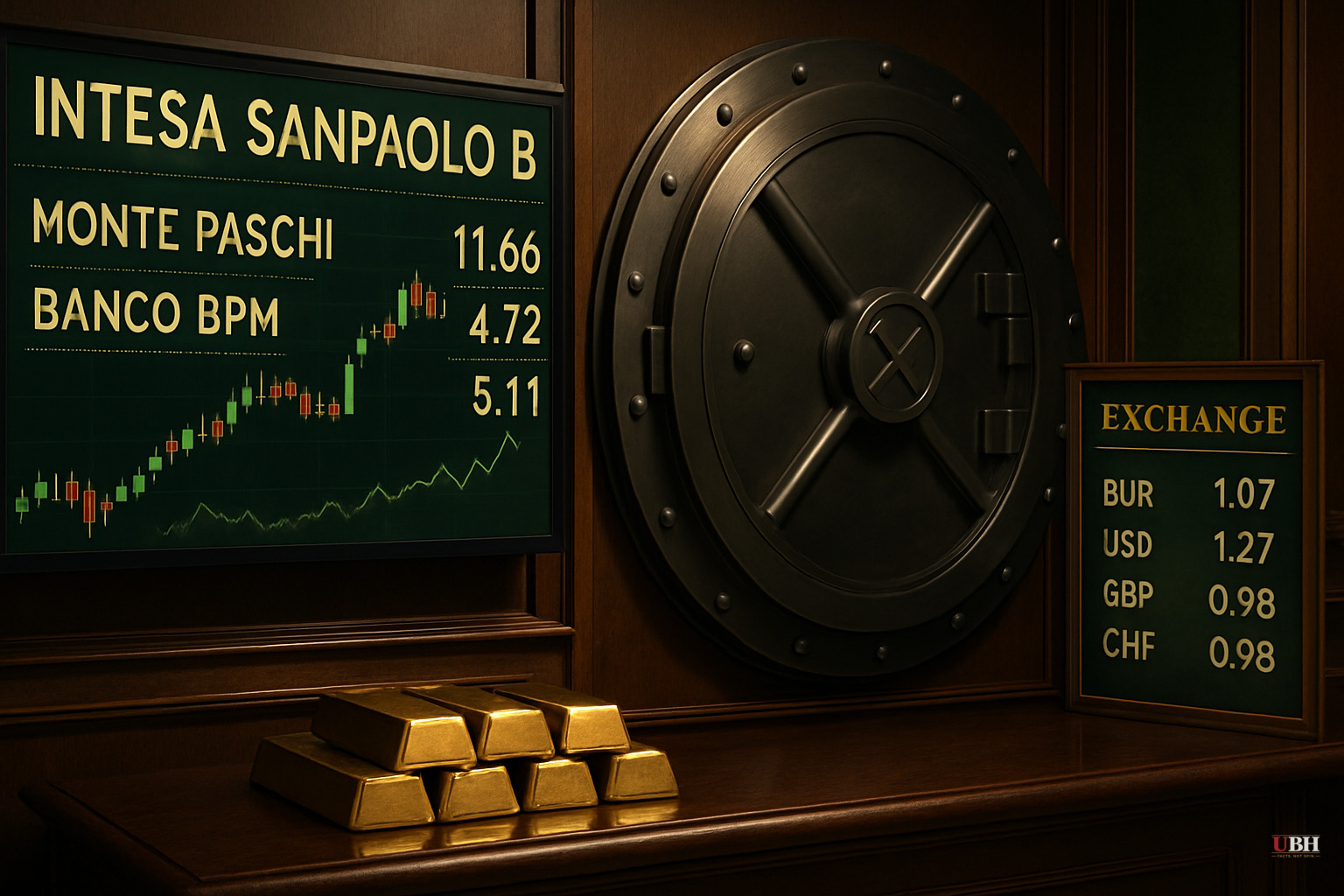
Italy's Biggest Banking Deal Ever: Intesa Sanpaolo Drops $35 Billion Bid for Monte dei Paschi, Elbowing Out Banco BPM
One Bank, Two Suitors, Zero Subtlety
Since the Italian banking consolidation wave picked up steam earlier this year, Monte dei Paschi di Siena (MPS) has been the obvious prize. On Sunday, June 7, Banco BPM's board unanimously voted to approach MPS about a "merger of equals" — a combined entity they claimed would carry a market value north of €50 billion including synergies, according to Morningstar/Dow Jones Newswires. BPM gave almost no financial details, offering vague equal-weighting language and little else.
Then Intesa Sanpaolo showed up with a checkbook.
On Monday morning, June 8, Italy's largest bank announced an unsolicited cash-and-stock offer of €30.66 billion — a 12.5% premium over MPS's Friday closing price, per CNBC. That's a buyout, not a merger of equals.
The Deal Structure Matters — And Most Coverage Is Glossing Over It
This isn't Intesa simply swallowing MPS whole.
According to Reuters (via Global Banking & Finance Review), Intesa simultaneously struck a side deal with Italian insurer Unipol — the major shareholder of BPER Banca. Under that arrangement, Intesa would sell Unipol roughly half of MPS's retail branch network — 635 branches — plus associated central operations, for between €3 billion and €3.5 billion. Unipol would then merge that network with BPER, and the combined entity would operate under the MPS brand.
Intesa acquires MPS, strips out the parts it doesn't need, and hands them off to create a third major Italian banking player — all in one move.
What This Does to the Italian Banking Landscape
Barclays analysts Paola Sabbione and Dibin Meledath Koruthu called the transaction financially and strategically sound for both Intesa and BPER, according to Global Banking & Finance Review. Bank of America analysts Antonio Reale and Rohan Datta pointed out that MPS remains undervalued and that Intesa gains meaningful ground in consumer finance and corporate/institutional banking — two areas where Intesa's Italian market share runs below its typical 22% level.
Equita analyst Andrea Lisi called the deal plainly: it would make Intesa the number-one operator in Italy in consumer credit.
ING analyst Suvi Platerink Kosonen raised a strategic consideration: if BPM and MPS had combined instead, Italy would have ended up with three roughly comparable large domestic institutions. Intesa's move potentially alters that balance of power scenario.
Bank of America's analysts also flagged another consequence — if BPER scales up enough to potentially overtake UniCredit, that could force UniCredit to start looking at its own Italian options. One deal creates multiple ripple effects.
MPS Investors Win. Everyone Else Is Nervous.
MPS shares jumped as much as 10% in early European trading Monday, wiping out all losses since January, according to Morningstar. Mediobanca — in which MPS holds a major stake — also climbed 10%.
On the other side: Intesa shares fell 4%, BPM dropped 1.1%, and Unipol slipped 0.5%, per CNBC. Markets reward the target and punish the acquirer — acquirers absorb a premium and execution risk.
The Political Angle No One Is Leading With
MPS isn't just any bank. It's the world's oldest bank, founded in 1472. It needed a state bailout in 2017, was re-privatized in 2023, and then went on offense — launching a bid for Mediobanca last year, which positioned MPS as a major investor in insurance giant Generali. This bank has been a political football in Italy for decades.
Barclays analysts noted that the Italian government — specifically the Ministry of Economy and Lega party factions — would likely support a BPM-MPS combination, while Prime Minister Giorgia Meloni might prefer Intesa's approach. The Italian government retains regulatory influence over major bank mergers, and Rome will have opinions.
France's Crédit Agricole, which is BPM's main shareholder, told CNBC Monday it was "interested in analyzing value creation opportunities which can strengthen BPM" — careful language for "we're not done yet."
What Mainstream Coverage Is Getting Wrong
Most headlines treat this as a straightforward bidding war: two banks want one target, highest price wins.
The central story is the Unipol side deal — Intesa isn't just buying MPS, it's simultaneously engineering a new competitor to prevent antitrust headaches and placate regulators.
Also underreported: the Mediobanca and Generali chain of ownership. Bank of America's analysts noted Intesa would retain its position in Mediobanca, which comes bundled with a 13% stake in Generali. That stake carries something called the "Danish compromise" — a regulatory treatment that reduces capital requirements on insurance holdings. Intesa isn't just buying a bank. It's buying a seat at the table of Italy's largest insurer.
What This Means for Regular People
If you're an American investor or just someone watching global markets: Italian banking consolidation reflects that European financial institutions are getting serious about competing at scale. A stronger, larger Intesa competes more directly with global heavyweights.
If you're Italian: your banking options are about to shrink. Fewer competitors generally means less favorable rates for depositors and borrowers. The government should be paying attention to that outcome — not just the national pride angle of building a banking "champion."
The deal still needs shareholder and regulatory approval. At $35.3 billion, it's already the largest banking transaction in Italian history.
Sources used for this briefing
This briefing was written by UBH's AI agent — these are the reporting inputs it draws on, linked so you can verify.


