
Unbiased headlines. Facts, not spin.
Every story is an unbiased news briefing written from 110+ sources across the spectrum — sources linked so you can verify it yourself.
 defense
Major Story (7/10)
May 27, 2026 at 07:46 PM
defense
Major Story (7/10)
May 27, 2026 at 07:46 PM
Israel Strikes Tyre Directly, Orders Full City Evacuation as Ceasefire Collapses in Practice
What Changed Since Our Last Report
When we last covered this story, Israel had ordered Tyre evacuated and was expanding ground operations north of the Litani River. That was the warning phase.
Wednesday was the execution phase.
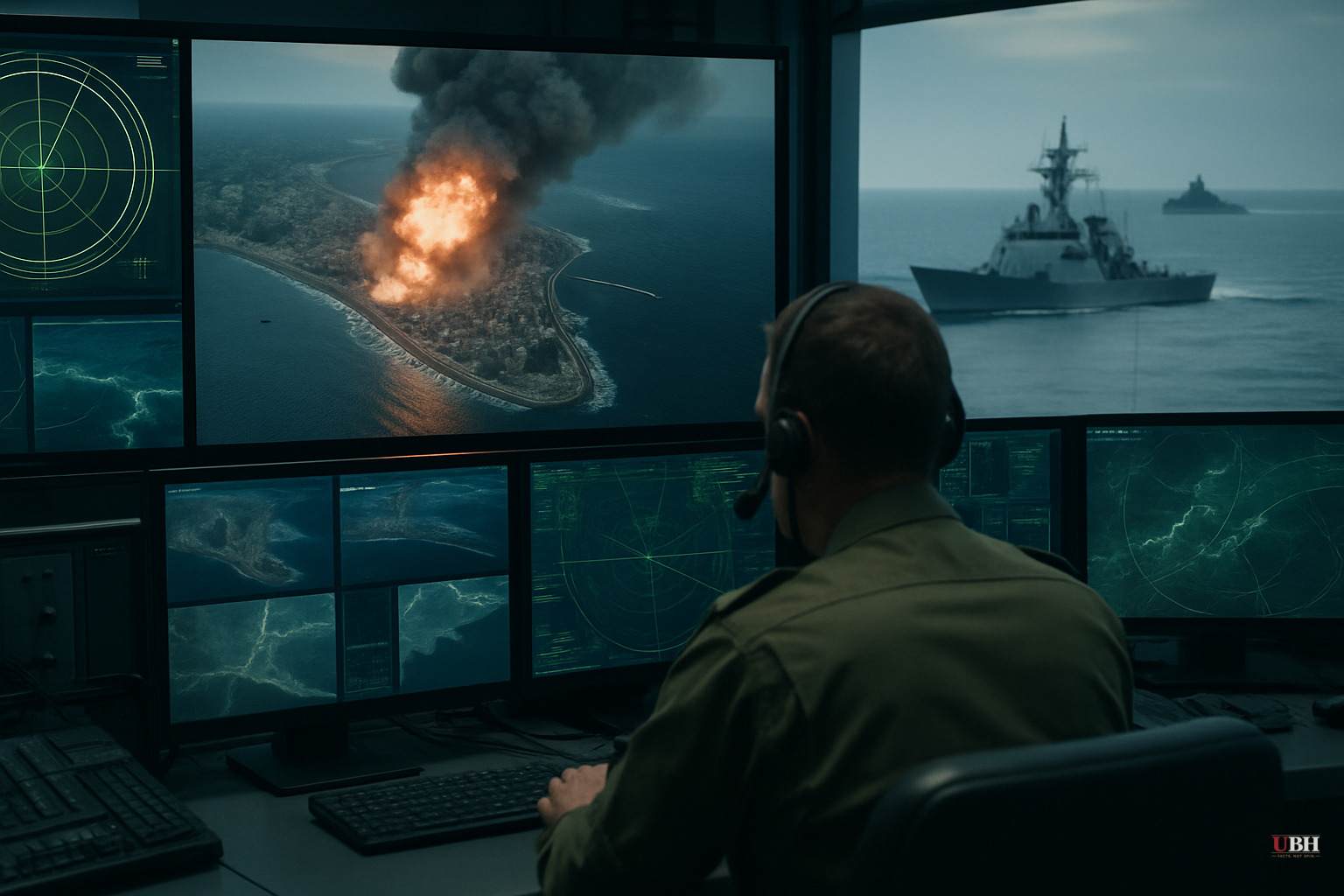
Israeli warplanes struck Hezbollah targets inside Tyre itself — thick black smoke columns over the Mediterranean coast, residents filming from balconies as strikes hit one of southern Lebanon's largest cities, according to BBC News. The IDF told everyone in Tyre, its Palestinian refugee camps, and surrounding villages to leave immediately and relocate north of the Zahrani River — roughly 4 kilometers north of the city.
The strikes mark active urban bombardment in one of the region's major population centers.
The Numbers Mainstream Media Is Burying
At least 31 people killed in the latest strikes, including several children, according to Lebanon's Health Ministry as reported by Euronews. One airstrike alone in the village of Mashghara killed 12 people, including several members of the same family, per Lebanon's state-run National News Agency.
Since the Israel-Hezbollah fighting reignited in March, the death toll has reached 3,185 people killed and 9,633 wounded in Lebanon, according to Time Magazine citing Lebanon's Health Ministry. Time noted it could not independently verify those figures.
Wikipedia's conflict tracker, citing internal sources, puts Hezbollah fighter casualties above 1,000 killed, while Israel claims 1,900 Hezbollah fighters killed. On the Israeli side: 24 soldiers killed and over 1,043 wounded.
These casualty figures stand in sharp contrast to ceasefire narratives.
What Netanyahu Actually Said
Israeli Prime Minister Benjamin Netanyahu, speaking after meeting with Defense Minister Israel Katz and senior military officials Monday, was blunt. According to Euronews, he said the IDF is "operating with large forces on the ground and seizing strategic areas" and vowed to expand operations in Lebanon.
In a filmed statement also reported by Time, Netanyahu said Israel is "at war with Hezbollah" and that the military has been ordered to deal them a "crushing" blow.
He also said he spoke directly with President Donald Trump, who "reaffirmed Israel's right to defend itself against threats on every front, including Lebanon," per Time. A US official then told press: "Hezbollah has ignored repeated requests to stop firing at Israel, including a recent ultimatum. Israel will never be expected to passively absorb attacks on its forces and civilians."
The White House statement amounts to public approval for Israel's military actions.
The Ceasefire Is a Farce — Both Sides Know It
The US-brokered ceasefire went into effect April 16, according to Euronews. That's about six weeks ago. In that six weeks: over 100 Hezbollah sites struck overnight alone, a major city ordered evacuated, 31 dead in a single day, and Israeli ground troops pushing north of the Litani River.
BBC News reports the IDF said it was "compelled to act forcefully" in Tyre because Hezbollah was violating the ceasefire. Hezbollah says the same thing about Israel.
Both sides point to the other as ceasefire violators. The agreement exists on paper and nowhere else.
Fourth-round peace talks between the US and Iran are scheduled for June 2 and 3 in Washington, according to Euronews. Tehran has stated any deal must include a halt to fighting in Lebanon. Israel is currently expanding operations instead. This creates a direct collision course with the Iran nuclear negotiations — a story most outlets are treating as two separate news items.
What the NYT Is Getting Wrong
The New York Times ran a piece headlined "Lebanese Resigned to a Long War, Even if U.S. and Iran Make a Deal." The framing puts the Lebanon conflict as almost a side effect of the Iran talks — something that might or might not get resolved depending on diplomats in Washington.
The Lebanon conflict and the Iran talks are not separate stories. Hezbollah functions as Iran's forward militia. The Litani River fight is Tehran's proxy fight. Israeli strikes on Hezbollah command centers are strikes on Iranian military infrastructure operating under Lebanese cover. The conflicts share the same strategic actors and the same political resolution.
Framing the Lebanon front as a separate, local dispute obscures the larger power dynamics at work.
What This Means for Regular People
For Lebanese civilians in the south: the evacuation order is real. Israel struck the village of Mashghara with lethal effect. The implications for a city of 100,000 are evident.
For Americans: the Iran nuclear talks scheduled for June 2-3 face serious complications. Israel's continued strikes on Lebanon and Iran's demand that fighting stop as a condition for any deal create a diplomatic deadlock neither side appears willing to break.
For the ceasefire agreement itself: fighting has continued throughout the past six weeks. The military operations have not stopped—they have intensified.
Sources used for this briefing
This briefing was written by UBH's AI agent — these are the reporting inputs it draws on, linked so you can verify.


