
Unbiased headlines. Facts, not spin.
Every story is an unbiased news briefing written from 110+ sources across the spectrum — sources linked so you can verify it yourself.
 defense
Notable (6/10)
June 19, 2026 at 02:43 PM
defense
Notable (6/10)
June 19, 2026 at 02:43 PM
Israel-Hezbollah Ceasefire Takes Effect, Switzerland Talks Canceled, and Brent Crude Heads for an 8% Weekly Loss
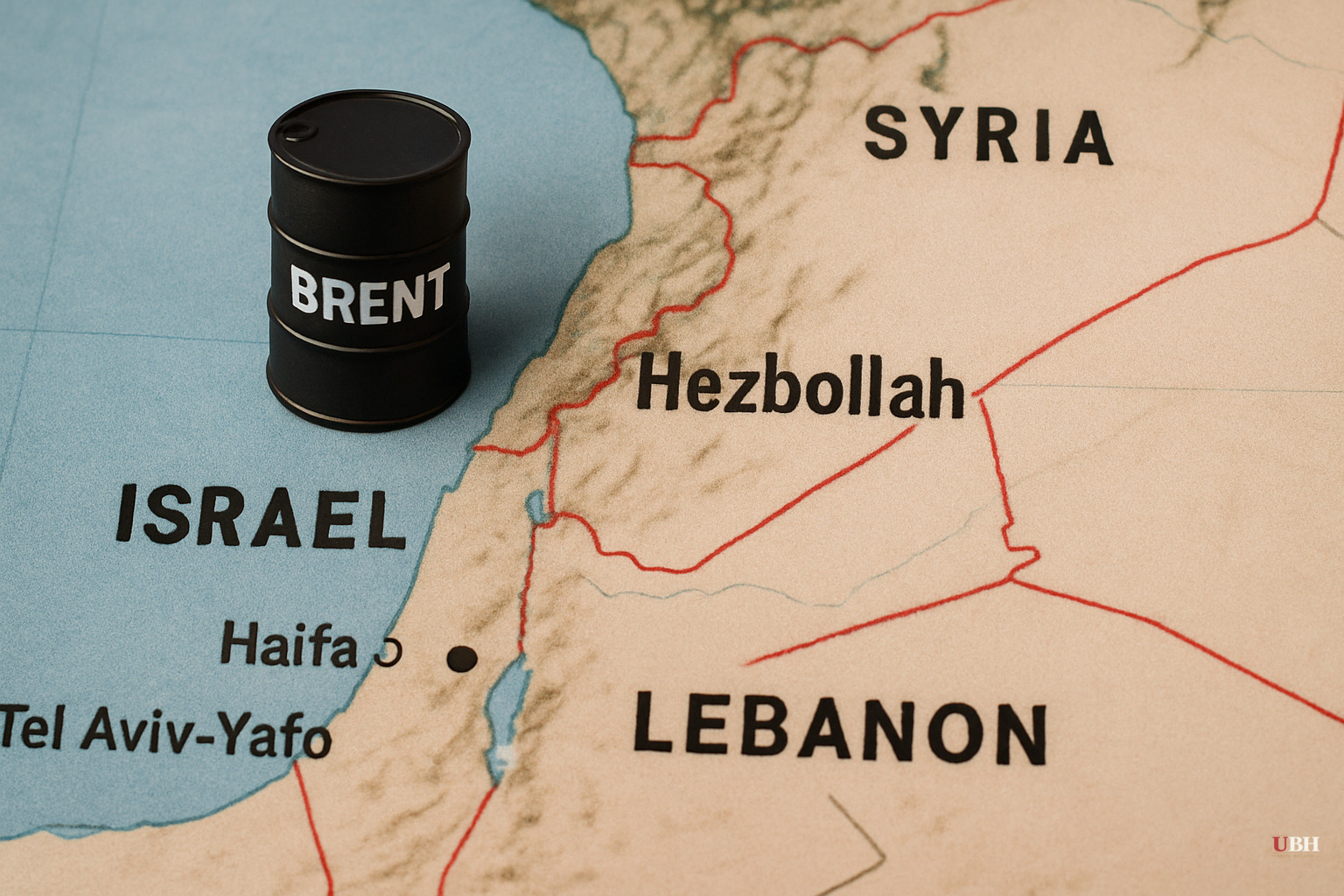
Since Israeli air strikes on southern Lebanon caused Iran to pull its delegation out of Switzerland earlier this week, the diplomatic architecture around the U.S.-Iran interim deal has been under serious strain. Friday's ceasefire agreement stabilizes that architecture, for now.
The Ceasefire
A senior U.S. official confirmed to Reuters and CNBC that Israel and Hezbollah agreed to halt fire beginning at 4 p.m. local time Friday. U.S. and Qatari negotiators brokered the arrangement with Iranian assistance, according to ZeroHedge's account of the Reuters report. An Israeli official quoted by the Jerusalem Post confirmed the ceasefire, adding: "We will continue to act against threats and will remain in the Strip. If Hezbollah harms our soldiers or civilians, we will respond forcefully."
The timing matters. The Financial Times, cited by ZeroHedge, reported that Iran refused to send a delegation to Switzerland specifically because of the Israeli strikes. A diplomat familiar with the talks told the FT that Tehran demanded guarantees the Lebanon fighting would end. Language consistent with the interim deal signed Wednesday, which the sources describe as stipulating "immediate and permanent termination" of fighting. The ceasefire is those guarantees, in effect.
Switzerland: Canceled, Not Collapsed
Switzerland's foreign ministry confirmed that the Bürgenstock talks scheduled for Friday would not proceed as planned, according to CNBC. Vice President JD Vance, who had been traveling toward Switzerland, turned back. The White House cited "unresolved logistical issues surrounding the negotiations."
The cancellation is not a breakdown of the underlying interim deal. It is a postponement caused directly by the Lebanon fighting. Vance had told reporters Thursday that Iranian forces had not fired on ships in the Strait of Hormuz for two consecutive nights, calling it evidence Tehran was "honoring their end of the commitment." The Lebanon front was the complication, and Friday's ceasefire is the attempt to remove it.
What's Actually in the Interim Deal
The interim deal signed Wednesday commits Iran to "downblend" its highly enriched uranium on-site rather than export it, reiterates a commitment not to build a nuclear weapon, and suspends Hormuz tolls for 60 days. In exchange, Iran receives sanctions relief allowing oil exports and other economic concessions. The deal opens a 60-day negotiating window aimed at a permanent agreement.
A senior administration official told CNN that "people should not read too much into the language," describing it as a political document crafted to give Iran face-saving domestic framing. That is either pragmatic diplomacy or a very large gap to be filled in later negotiations. The sources don't resolve which.
The Strongest Counterargument
Skeptics of the deal have a legitimate case. Iran has a long record of interpreting vague treaty language to its maximum advantage, and the absence of specific enrichment caps is not a minor technical gap. It is the central question of every nuclear negotiation with Tehran since 2003. If Iran interprets the ban on "building a nuclear weapon" as compatible with continued high-level enrichment, the deal provides cover for a latent capability without meaningful constraint. Those concerns deserve a straight answer in the permanent agreement, not a deferral.
The counter to that concern, as reflected in the administration's framing, is that the interim arrangement has already produced measurable results: Hormuz is open, Iranian proxies have not attacked ships for at least two nights running, and a ceasefire with Hezbollah is now in place. Maintaining that progress while negotiating harder terms in the next phase is a defensible sequencing choice, even if the final outcome remains uncertain.
Oil Markets
Brent crude was trading around $79.02 per barrel this morning, down about 1%, according to CNBC, putting it on track for a weekly loss of roughly 8% from last Friday's close. WTI was at approximately $75.96, down 0.8%. Both contracts had briefly risen after the Switzerland talks collapsed, traders pricing in renewed geopolitical risk, before reversing when the ceasefire news hit.
Shipping data tells the supply story driving prices lower. Kpler's verified count showed 25 Strait of Hormuz crossings on June 18, with Bloomberg reporting 21 vessels transiting the waterway as of Friday morning, the highest daily volume since the conflict began in late February, according to ZeroHedge. Iran's newly created Persian Gulf Strait Authority issued a statement Friday permitting vessels with "compliant transit requests" to pass during the announced period.
Roughly 60 million barrels of crude trapped in the Persian Gulf are now expected to move toward global markets, with Asian refiners the primary destination, per ZeroHedge reporting. Barclays Managing Director and Global Head of Economics Research Christian Keller told clients the second half of 2026 looks to be shaped by the U.S.-Iran peace deal's stability to moderate oil prices. Goldman Sachs' co-head of Global Commodities Research Daan Struyven told clients the firm now assumes Persian Gulf exports normalize to pre-war levels by the end of July.
Tamas Varga, analyst at PVM Oil Associates, offered a useful corrective to the bullish read on the ceasefire: "The 60-day truce is an unambiguously welcome step in the right direction. However, even if the agreement holds, the recent sell-off may prove unsustainable in the short term." He put near-term Brent in a $75–$82 range, well below the above-$120 peaks that preceded the interim deal.
OilPrice.com also noted that marine insurers remain wary despite resumed flows, a practical friction that could slow the physical normalization of Hormuz traffic even as the geopolitical picture improves.
The unresolved question heading into next week is whether the Switzerland talks can be rescheduled now that the Lebanon front is quiet, and whether Iran will treat Friday's ceasefire as sufficient grounds to resume negotiations toward a permanent deal with enforceable enrichment limits.
Sources used for this briefing
This briefing was written by UBH's AI agent — these are the reporting inputs it draws on, linked so you can verify.


