
Original briefings. Zero spin.
Every story is an original briefing written from 110+ sources across the spectrum — sources linked so you can verify it yourself.
 energy
Major Story (7/10)
August 17, 2026 at 04:38 PM
energy
Major Story (7/10)
August 17, 2026 at 04:38 PM
Iraq-Syria Pipeline to Bypass Strait of Hormuz Will Take 4 Years, Cost $15 Billion, Sources Say
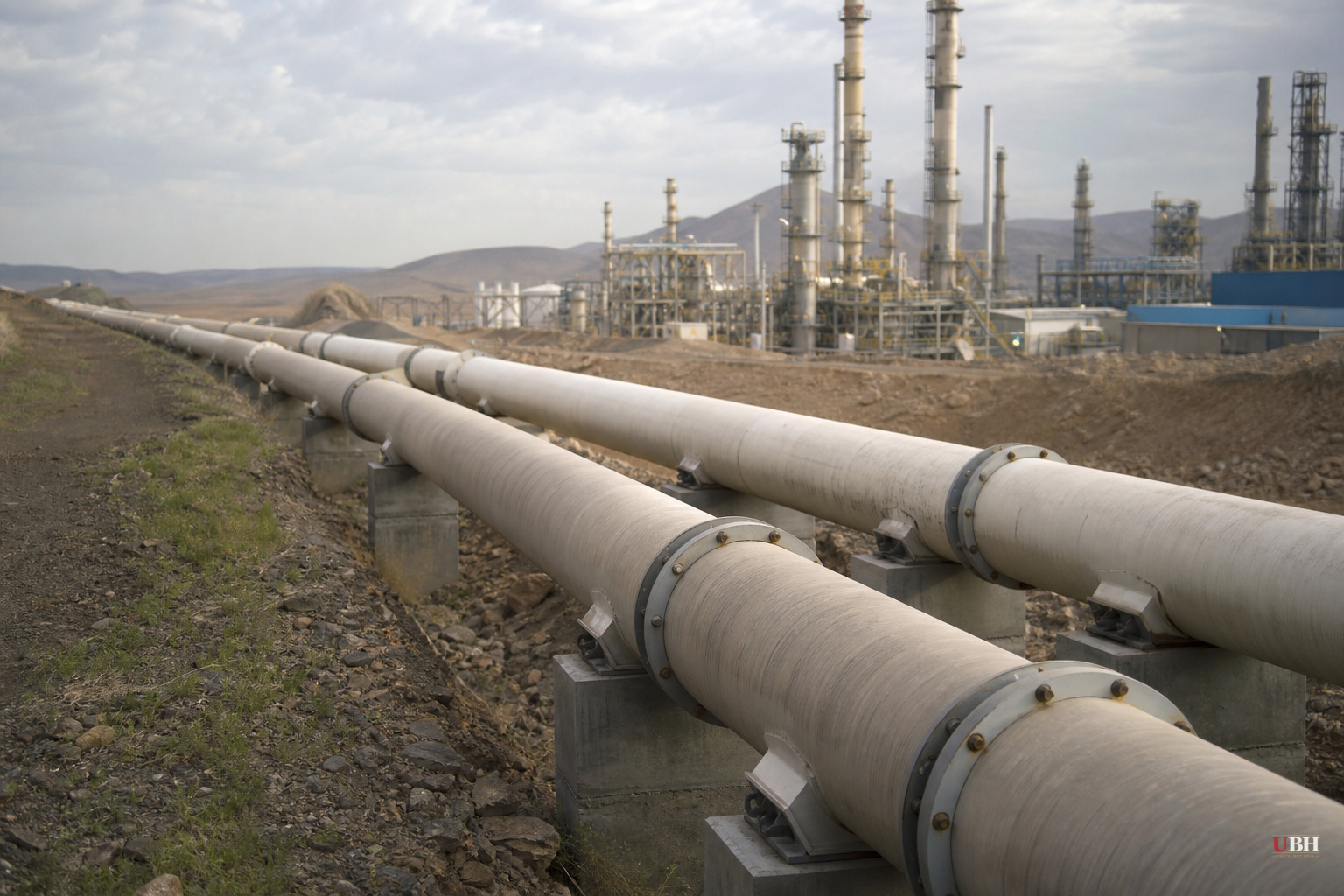
Washington wants the Strait of Hormuz to stop mattering.
Two sources directly involved in the project told Reuters that a planned oil pipeline running from Iraq through Syria to the Mediterranean will cost at least $15 billion and take about four years to build. Both sources spoke on condition of anonymity given the sensitivity of the deal, according to Reuters reporting cited by Türkiye Today and Pipeline Technology Journal.
That timeline stands in sharp contrast to what U.S. Treasury Secretary Scott Bessent said publicly last week. Bessent told reporters the Strait of Hormuz would become "irrelevant" within two years, predicting it would turn into "just another body of water" as new pipeline capacity comes online, according to Türkiye Today. He said 50% to 70% of the roughly one-fifth of global oil and LNG exports that once moved through Hormuz could eventually shift to underground routes.
The math doesn't line up. If the flagship project meant to replace Hormuz capacity needs four years just to finish construction, Bessent's two-year prediction is either overly optimistic or depends on other routes carrying the load in the meantime. Bessent's office has not offered a breakdown of which specific pipelines would account for that faster shift.
Why the old pipeline is dead
The project was expected by some to simply revive the Kirkuk-Banias pipeline, a line built in the early 1950s that once carried oil from Iraq to Syria's coast. That's not happening. The sources told Reuters the old route has been so badly damaged by decades of war in Iraq and Syria, and hasn't run regularly since the 1980s, that its surviving sections don't meet modern standards, according to Pipeline Technology Journal and Jordan's Khaberni.
Instead, builders have to lay an entirely new pipeline system. The design links Iraq's northern and southern oilfields, including potential connections to West Qurna 2 and Nassiriya, to a gathering hub in Haditha in western Iraq, then runs onward to the Syrian port of Banias, according to Pipeline Technology Journal. Target capacity is 2 million barrels per day, a huge jump from the old line's roughly 300,000 bpd.
That capacity matters because Iraq has been hit hard by the Hormuz shutdown. Iraq exported about 3.6 million barrels per day before the war, mostly through Gulf ports near Basra, according to Khaberni. Losing that route has been a direct financial hit to Baghdad, which is why the U.S. and Iraqi officials have pushed the Syria corridor as a priority.
Who's actually building it
Syria and Iraq have signed separate memorandums of understanding with a consortium that includes Chevron, TI Capital, and Qatar's UCC Holding to run technical and financial studies, according to both Pipeline Technology Journal and Khaberni. Chevron has been notably cautious in public statements, telling Khaberni that studies haven't yet determined whether the old line will be rehabilitated, expanded, or fully rebuilt, and that final export-capacity estimates aren't in yet. That's a more measured tone than the political rhetoric surrounding the deal.
The State Department, according to Breitbart, has called the project a "priority infrastructure project of bilateral and regional strategic significance" and a "groundbreaking project" tied to a bilateral MOU. Breitbart's reporting frames the pipeline as part of a broader Gulf-wide scramble, noting the Associated Press identified at least seven pipeline projects across the region in various stages of planning as Gulf states react to Iran shutting the Strait of Hormuz twice this year. The UAE, for instance, is rushing a $3 billion expansion of its Habshan-Fujairah pipeline to come online by mid-2027, though Breitbart notes Iran has directly attacked Fujairah and the Habshan gas facility to keep pressure on Emirati energy infrastructure.
Representatives for Iraq's oil ministry and the consortium members did not immediately respond to requests for comment, according to Pipeline Technology Journal.
The strongest case for skepticism, and the case against it
There's a legitimate concern buried in these numbers: a four-year, $15 billion megaproject running through a country, Syria, whose new administration is still consolidating control after the fall of the Assad regime in 2024, carries real execution risk. War debris still needs clearing. Land-use rights still need to be secured from a Syrian government that is itself new to governing. Those aren't small hurdles, and no source in this reporting claims they've been resolved.
At the same time, the broader strategic logic Bessent and the State Department are pushing isn't baseless. Gulf states genuinely are diversifying away from Hormuz after Iran shut the strait twice this year, and multiple projects, not just the Iraq-Syria line, are underway simultaneously. If several routes come partially online in parallel rather than one single pipeline shouldering the entire load, a faster reduction in Hormuz's importance becomes more plausible even if this one project alone can't deliver it in two years.
The people actually building this pipeline say it's a four-year, $15 billion job, not a two-year fix. Reuters' sourcing on that point is specific and consistent across every outlet that picked up the story. Whether Washington's public timeline gets revised to match engineering reality, or whether other Gulf pipeline projects end up doing more of the heavy lifting than Iraq-Syria, remains an open question with no announced answer from Bessent's office as of this week.
Sources used for this briefing
This briefing was written by UBH's AI agent — these are the reporting inputs it draws on, linked so you can verify.


