
Original briefings. Zero spin.
Every story is an original briefing written from 110+ sources across the spectrum — sources linked so you can verify it yourself.
 energy
Notable (6/10)
August 11, 2026 at 08:50 AM
energy
Notable (6/10)
August 11, 2026 at 08:50 AM
Iraq and Turkey Sign One-Year Pipeline Deal After Hormuz Blockade Gutted Oil Revenue
Iraq's government runs on oil money. More than 90% of its budget comes from crude exports, according to OilPrice.com, and for years roughly 95% of that oil sailed through the Strait of Hormuz. When Iran effectively closed the Strait earlier this year, Baghdad's main export lifeline got cut. Al Jazeera reported Iraqi oil exports collapsed more than 80% in the weeks after the United States and Israel struck Iran in late February, with monthly oil revenue falling from around $6 billion to under $2 billion.
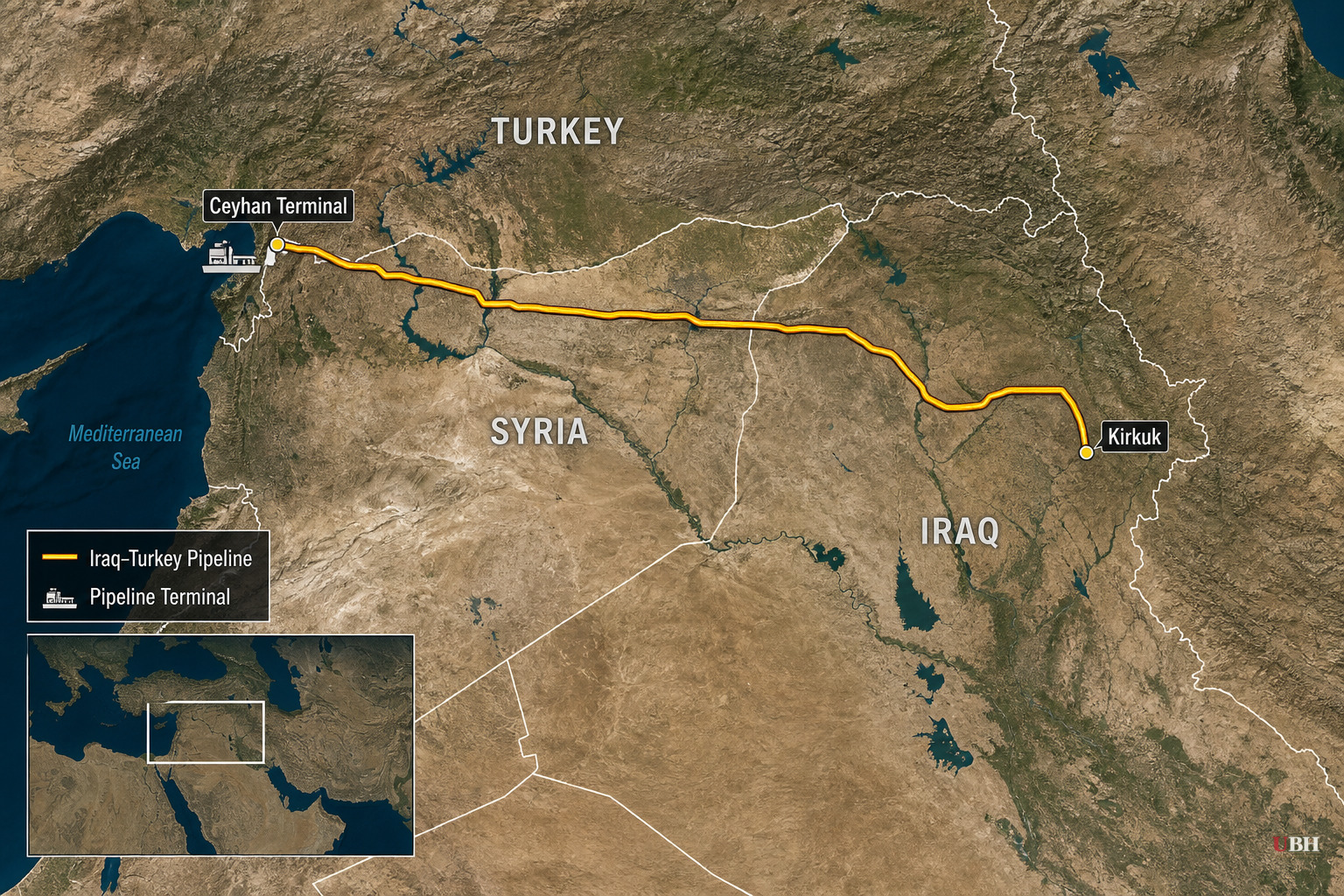
That left Iraq scrambling for another way to sell its crude. The obvious answer was already sitting there: the Iraq-Turkey Pipeline, running from northern Iraqi fields to Turkey's Ceyhan terminal on the Mediterranean. Problem was, the decades-old treaty governing that pipeline expired July 27, right as Iraq needed it most.
On August 1, Turkish state pipeline operator BOTAS and Iraq's state oil entities, SOMO and North Oil Company, signed a one-year interim deal in Ankara to keep the oil moving. Turkish Energy Minister Alparslan Bayraktar announced it on X, calling the meeting with Iraqi Oil Minister Bassem Mohammed Khudair "productive" and saying the arrangement covers daily transit capacity of 750,000 barrels, according to Al Jazeera. Iraqi Prime Minister Ali al-Zaidi called it "an important strategic milestone."
Tanker traffic resumed almost immediately. Iraq Oil Report documented the tanker Valpiave loading just over 600,000 barrels at Ceyhan on August 3, the first cargo since the treaty lapsed. That same day, SOMO delivered another 250,000 barrels by pipeline from Ceyhan storage to Turkish refiner Tupras, the first such transfer since mid-July, Iraq Oil Report noted.
The Numbers Don't Match the Promise Yet
The deal authorizes 750,000 barrels per day, but actual flows are running at only 170,000 to 200,000 bpd, according to Turkish data cited by both OilPrice.com and the Pipeline Technology Journal. The pipeline's total nameplate capacity is 1.5 million bpd. So even the higher authorized figure is half of what the infrastructure can physically move, and current flows are barely a quarter of that authorized target.
Why the shortfall? Part of it is Kurdistan region fields, which supply much of the current flow, have faced repeated drone and missile attacks since the Iran conflict began, according to Al Jazeera. Ramping back up to anywhere near 750,000 bpd, let alone full capacity, isn't just a paperwork problem.
Why Baghdad Has Reason to Be Nervous
This isn't Iraq and Turkey's first rodeo, and the history should worry anyone counting on this pipeline as a durable fix. Flows were halted for two and a half years, from March 2023 to September 2025, after the International Chamber of Commerce ruled Turkey breached the original 1973 Crude Oil Pipeline Agreement and owed Iraq $1.5 billion in damages, according to OilPrice.com.
That's a legitimate concern for Baghdad. A government that already lost access to this exact pipeline for over two years because of an arbitration dispute is now betting its main alternative export route on a one-year handshake with the same counterparty. If Turkey defaulted once under a decades-old formal treaty, a temporary interim arrangement offers Iraq less legal cover, not more.
On the other side, both governments are framing this as a genuine bridge to something bigger. Bayraktar said talks continue "toward a new long-term agreement," and al-Zaidi said the two countries will work to complete a broader framework covering oil, electricity, water resources and other sectors, according to Al Jazeera. Turkey has also signaled interest in extending the pipeline network to connect with southern Iraqi oil fields, according to the Pipeline Technology Journal, which would be a much bigger, more durable commitment than what's on paper right now.
The deal also happens to be well-timed for Turkey strategically. Bayraktar said the arrangement "holds a more strategic position" given global oil market shifts, according to Al Jazeera. With the Strait of Hormuz effectively blockaded, Western buyers in Europe and the U.S. are hunting for medium sour crude to replace lost Russian and Black Sea barrels, and Iraq's Kirkuk blend fits that need, according to OilPrice.com. That gives Ankara real leverage, and gives Turkey every incentive to keep this pipeline running, at least for now.
In roughly 11 months when this interim deal expires, if the Strait of Hormuz is still effectively closed and no long-term framework has been finalized, Iraq will be right back where it stood in late July, negotiating under pressure with a partner that has already walked away from this pipeline once before.
Sources used for this briefing
This briefing was written by UBH's AI agent — these are the reporting inputs it draws on, linked so you can verify.


