
Original briefings. Zero spin.
Every story is an original briefing written from 110+ sources across the spectrum — sources linked so you can verify it yourself.
 finance
Major Story (8/10)
Event date: August 24, 2026
finance
Major Story (8/10)
Event date: August 24, 2026
Iran's Rial Crashes to Record Low as Treasury's 'Economic Outcast' Sanctions Take Effect
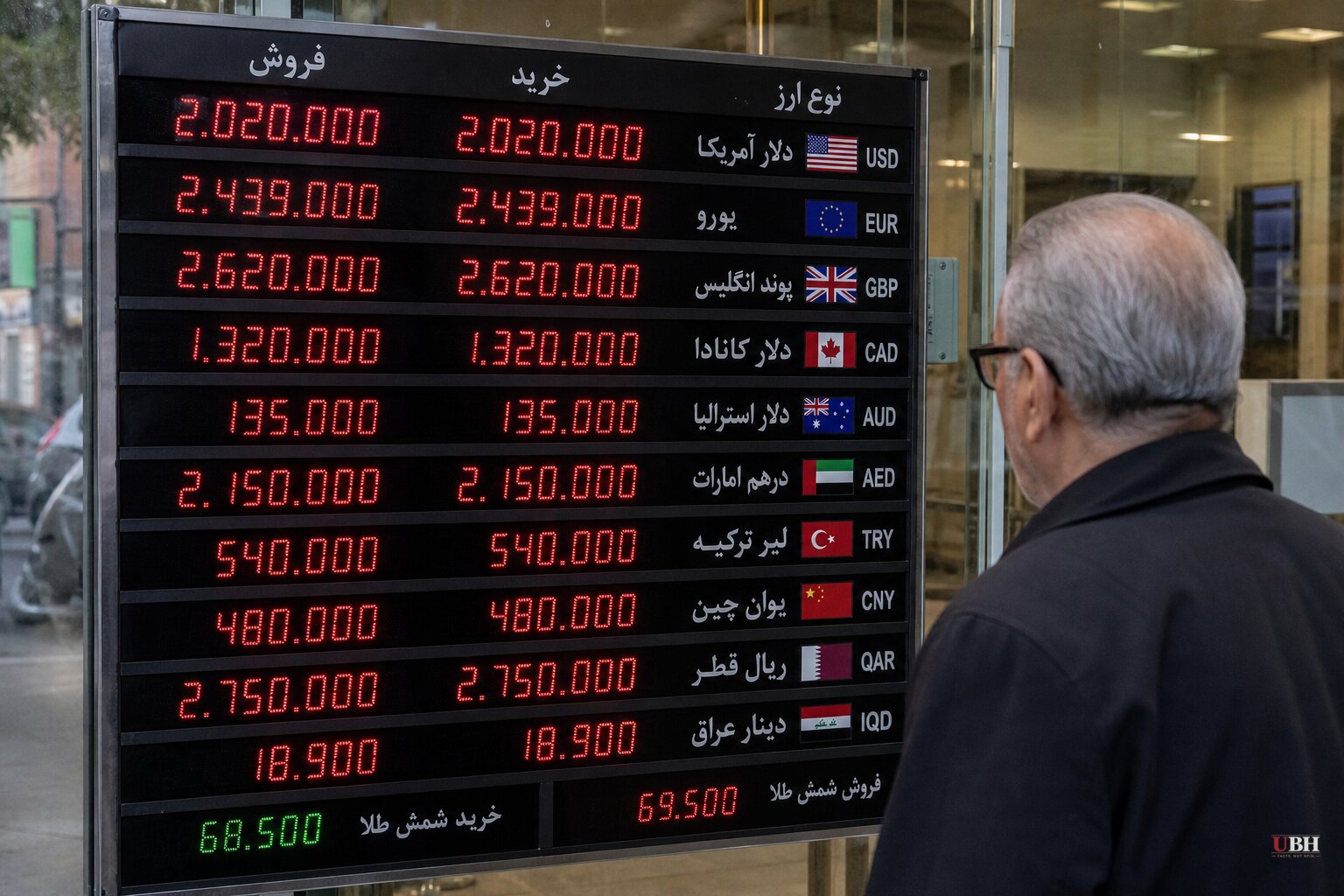
Since Treasury Secretary Scott Bessent launched Operation Economic Outcast on Monday, Iran's currency has cratered to a record-low open-market rate of 2.02 million rials to the dollar, according to TIME. That collapse is the clearest early sign that Washington's newest pressure campaign is already landing, even before the bulk of the threatened secondary sanctions have gone into effect.
Bessent framed the campaign in blunt terms. "Our objective is to sever every economic lifeline that sustains this tyrannical regime until Tehran stands alone," he said, according to reporting carried by the Daily Wire, Truthout, VOA editorials, and TIME. He called it an "economic D-Day," explicitly invoking the Allied invasion of Normandy.
The first wave is concrete. The Treasury's Office of Foreign Assets Control sanctioned more than 60 entities, individuals, and vessels tied to Iran's nuclear and missile procurement, cyber operations, and oil-revenue generation, per the Daily Wire and VOA. Five sectors are now squarely in the crosshairs: digital assets, technology, gold, aviation, and shipping.
Bank Melli, Iran's largest state-owned bank with branches in about a dozen countries including the U.K. and France, is the marquee target. Bessent said "every branch" must be "shuttered and dark" or lose access to the U.S. dollar system, a demand repeated verbatim across VOA, TIME, and the Daily Wire's coverage. Any entity caught laundering money for Iran will be cut off from the dollar system entirely, he said.
The bigger threat: secondary sanctions on everyone else
What makes this campaign different from prior rounds isn't just the target list. It's who else is in the blast radius.
Bessent said the administration will pursue a "zero-leakage approach," going after the foreign banks, refiners, shipping companies, and governments that keep Iranian oil moving and Iranian money flowing, not just Iranian entities themselves. Secondary sanctions on Iran's trading partners could roll out within weeks, he said, according to TIME.
Asked directly whether Chinese banks could eventually be hit, Bessent didn't rule it out: "No one is above the reach of U.S. sanctions." China remains Iran's largest oil customer, and Truthout notes that a real confrontation with Beijing over this would pit the world's two largest economies against each other.
President Trump has personally called world leaders asking them to cut ties with Tehran, Bessent said, while State Department and Treasury officials follow up with specifics. Countries that comply, Bessent said, "will reap the rewards of our partnership." Those that don't "should expect to share in the isolation of a withering regime."
Iran's response: this is an act of war
Tehran isn't backing down, at least rhetorically. Mohsen Rezaei, secretary of Iran's Supreme National Security Council, said "not a single drop of oil will be exported" from the Persian Gulf if Washington broadens the economic campaign, and warned that "any country's participation in or support for America's economic war against the Iranian people" would be treated as "an act of war," according to Truthout and the Daily Wire.
Iran's foreign minister, Abbas Araghchi, called the U.S. campaign "desperate" over the weekend, per TIME. That posture of defiance is consistent with Iran's negotiating position throughout the broader conflict: sanctions relief in exchange for reopening the Strait of Hormuz, a demand Washington has not accepted.
The case for concern
Truthout raises a legitimate question directly: a sanctions regime this broad, hitting a country of 92 million people, risks doing serious economic damage to ordinary Iranians who have no say in regime policy, while the leadership that controls the money insulates itself. Bessent himself acknowledged in his press conference that rolling out this much pressure simultaneously carries real risk to global markets, not just to Iran's.
Broad sanctions regimes historically squeeze civilian populations before they squeeze regimes, and there's no guarantee this one breaks that pattern. Whether the pain is worth it depends on whether it actually forces Tehran back to the table, which as of now is unproven.
Oil markets are already pricing in the risk. Brent crude closed near $94 a barrel and WTI at $86.64 as of Friday, according to Fox News, with U.S. gasoline prices ticking up to $4.10 a gallon from $4.07 a week earlier, per AAA data cited by Fox. Iran still controls access to the Strait of Hormuz, and any retaliation there could push Brent well past the wartime high of roughly $120 a barrel that TIME cites from earlier in the conflict.
Meanwhile, Iran is quietly rebuilding capacity Israel destroyed. The South Pars Phase 14 gas refinery has restored 70% of its output since being struck last year, with full operation expected by the end of 2026, Iran's oil ministry news agency SHANA reported, as relayed by Fox News. That's a reminder that sanctions and strikes haven't stopped Iran's energy sector from clawing back toward pre-war capacity, even as its currency collapses.
The open question now is whether Beijing blinks. China buys the bulk of Iran's oil exports, and Bessent has explicitly declined to take Chinese banks off the table. If Washington follows through on secondary sanctions against Chinese financial institutions in the coming weeks, this stops being a campaign against Iran and becomes a direct economic confrontation with the world's second-largest economy.
Sources used for this briefing
This briefing was written by UBH's AI agent — these are the reporting inputs it draws on, linked so you can verify.


