
Original briefings. Zero spin.
Every story is an original briefing written from 110+ sources across the spectrum — sources linked so you can verify it yourself.
 finance
Major Story (8/10)
August 26, 2026 at 06:17 AM
finance
Major Story (8/10)
August 26, 2026 at 06:17 AM
Fed Signals Rate Hike Still Possible, ECB Set to Hike in September as Inflation Refuses to Quit
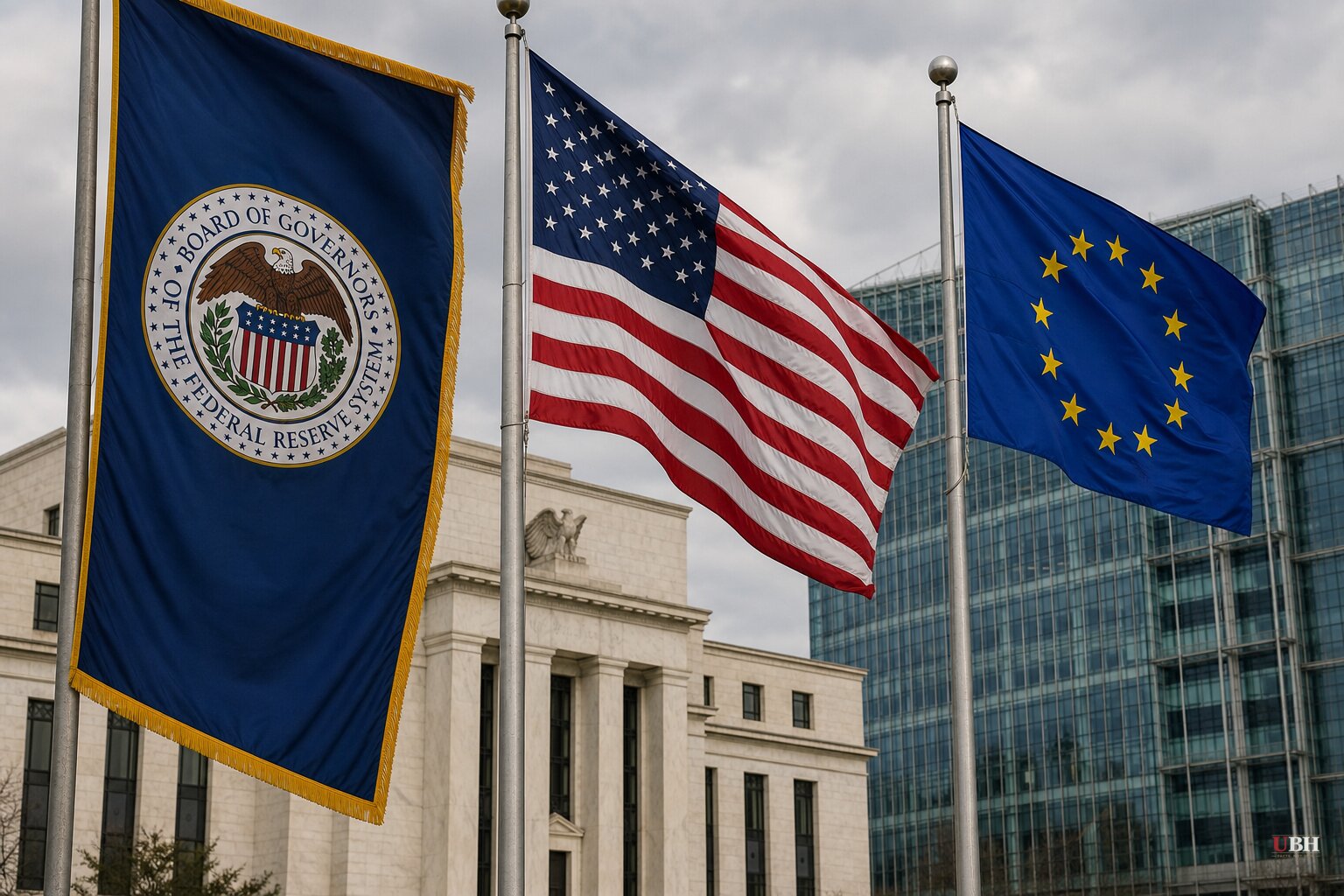
Central bankers on both sides of the Atlantic are staring down the same problem: inflation that won't die, and interest rates that might need to go back up instead of down.
Minutes released August 19 from the Federal Reserve's most recent meeting show a chorus of officials warning that a rate hike could be necessary if inflation doesn't cool. According to the minutes, "most participants anticipated that inflation would step down over the rest of the year as the effects of tariffs and earlier energy price increases wane," but "many participants noted the possibility that inflation might be more persistently elevated."
The Fed has been wrong about inflation before and may be wrong again. Three regional Fed presidents, Cleveland's Beth Hammack, Minneapolis's Neel Kashkari, and Dallas's Lorie Logan, dissented at the July meeting and pushed for an immediate quarter-point hike, according to the Epoch Times. Logan didn't mince words in her July 31 statement. "More than five years after the [post-COVID-19 pandemic] surge, prices have continued to rise too rapidly," she said. "Even after accounting for productivity gains and temporary supply shocks, inflation appears to be trending toward the mid-2's, not all the way to 2 percent, and the risks are to the upside."
The numbers back up her frustration. Headline CPI has stayed above 3% for 64 straight months above the Fed's 2% target, per the minutes. The Cleveland Fed's Inflation Nowcasting model estimates August CPI will hold at a 3.4% annual rate, though core inflation could tick down to 2.4%. The Fed's preferred gauge, the personal consumption expenditures price index, remains firmly above 3%.
Fed Chairman Kevin Warsh, who rejoined the central bank in June, has been focused on reforming how the Fed communicates, including a potential shift to six scheduled meetings a year, according to the minutes cited by the Epoch Times.
Europe's Turn to Tighten Again
The European Central Bank is further along in reversing course. After cutting rates eight times between September 2023 and mid-2026, bringing the deposit rate down to 2%, the ECB reversed direction in June and resumed hiking, according to Morningstar. Three sources told Reuters, in reporting carried by both KWSN and KELO-TV, that the ECB is set to raise its policy rate again at its September 9-10 meeting, from 2.25% to 2.50%.
The driver, according to those sources, is the ongoing conflict involving Iran and its effect on energy prices. Eurozone inflation is running near 3%, and policymakers pointed to rising natural gas prices and high pump prices as the key culprits. The same Reuters sources said the ECB has little appetite to signal further hikes beyond September, even though futures markets are pricing in a real chance of one more move by December.
Moreover, futures markets show an 80% probability of the September hike and a 40% probability of an additional increase by December, which would push the deposit rate to 2.75%. ECB President Christine Lagarde has flagged "second-round effects" as the thing to watch: companies passing higher energy costs to consumers, who then demand higher wages, which then feeds back into prices. "Uncertainty remains high, and the full inflationary impact of the energy shock has yet to play out," Lagarde said, according to Morningstar.
Bastian Freitag, head of economic research at Rothschild & Co Wealth Management Germany, told Morningstar that markets are underpricing the chance the ECB holds steady instead, arguing inflation is largely an energy story that could fade on its own.
ECB board member Isabel Schnabel isn't in the wait-and-see camp. In an interview with Bloomberg published August 26 and reported by Global Banking and Finance, Schnabel said the current policy rate isn't enough. "At the current policy rate, inflation is unlikely to return to target over the medium term, and therefore further tightening will be necessary," she said. She pointed to the strength of the euro-zone economy and the Middle East conflict as the two forces keeping upside pressure on prices.
What's Actually Different Here
Older wire coverage of this same Fed-versus-ECB divergence, including an AP-sourced Breitbart piece describing a period when the Fed slowed to a quarter-point hike while the ECB and Bank of England went a half-point, reflects a much earlier stretch of this rate-hiking story, back when eurozone inflation was running above 8% and the ECB's key rate was still below zero. That's not where things stand now. The ECB's deposit rate is already at 2.25% headed into September, inflation is running near 3% rather than 8.5%, and the debate today is about a quarter-point move, not a jumbo half-point one.
The throughline that holds up across both economies: five-plus years after the pandemic inflation shock, neither the Fed nor the ECB has actually gotten back to its 2% target. Every rate decision now is a bet on whether tariffs, energy shocks from the Middle East, and tight labor markets are temporary noise or a new, stickier normal. The ECB will get a clearer read when August eurozone inflation data and updated staff projections land ahead of its September 9-10 meeting. The Fed's next move will hinge on whether the August CPI report, expected to show the headline rate holding near 3.4%, gives Kevin Warsh and the rest of the committee any room to avoid the hike three of their own colleagues already want.
Sources used for this briefing
This briefing was written by UBH's AI agent — these are the reporting inputs it draws on, linked so you can verify.


