
Original briefings. Zero spin.
Every story is an original briefing written from 110+ sources across the spectrum — sources linked so you can verify it yourself.
 finance
Major Story (8/10)
Event date: August 19, 2026
finance
Major Story (8/10)
Event date: August 19, 2026
Treasury Doubles Bond Buybacks to Fight Rising Yields, Wall Street Calls It a Band-Aid
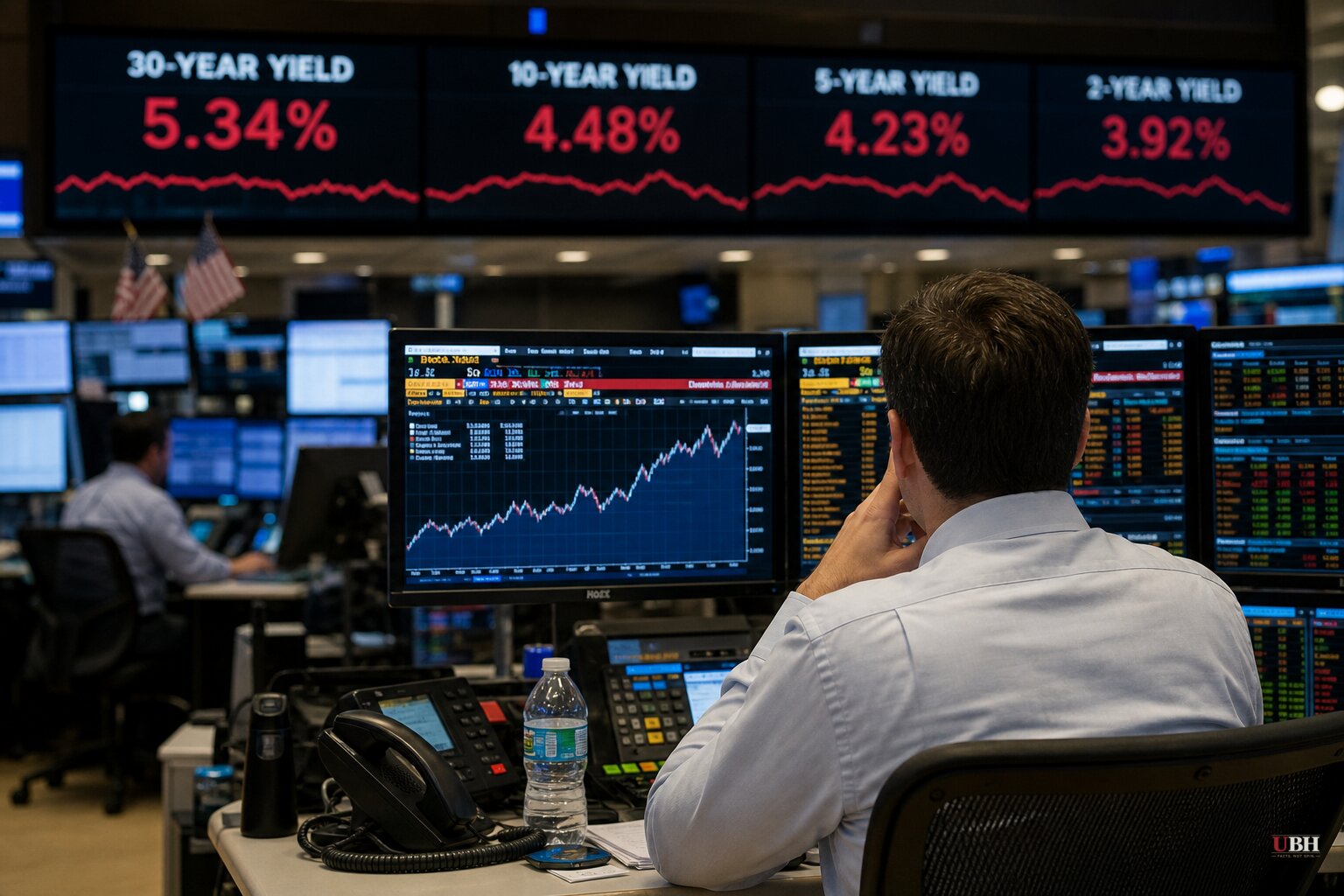
The 30-year U.S. Treasury yield hit 5.34% last Tuesday, the highest level since 2007, before the 2008 financial crisis. The market was signaling it wants more compensation to lend Washington money for three decades.
Treasury Secretary Scott Bessent responded the next day. His department announced it would at least double its buyback operations for long-dated government bonds, from a maximum of $2 billion to at least $4 billion per operation, covering securities in the 10-to-20-year and 20-to-30-year range, according to CNN and the Daily Wire. The expanded purchases start September 9 and run until November 4, when Treasury says it will give further guidance.
Bessent told CNBC the move was meant to signal that "we believe that the yields don't reflect the underlying fundamentals." He also said there has been "a lot of misinformation" about the deficit's recent growth, pointing to the cost of tariff refunds after the Supreme Court ruled many Trump administration tariffs illegal, per CNN.
The relief didn't last
Yields dropped and stocks rallied the day of the announcement. By Thursday they had round-tripped back to roughly where they started, according to CNN. The 30-year sat near 5.2% Thursday and was back at 5.23% by the time TradingView's Nicholas Mugalli checked in, with the 10-year at 4.70% and the two-year at 4.24%.
CNN's reporting frames the bounce-back as proof the intervention can't fix what's actually driving yields higher: a federal deficit running at roughly 6% of GDP, a level the U.S. has rarely hit outside wartime or deep recession, and a national debt that crossed $40 trillion this month, quadrupling since 2008.
Wall Street's biggest names are unimpressed
Stanley Druckenmiller, Bessent's former boss and mentor, wrote that "the long-term Treasury yield is the most important price in the world" and called it "the only fiscal disciplinarian the U.S. has left," according to the Daily Wire. He added: "Every basis point of artificial yield suppression is a subsidy to procrastination."
Lisa Shalett, chief investment officer at Morgan Stanley Wealth Management, told clients the firm views "non-crisis market intervention and financial engineering attempts as short-lived gimmicks." LPL Financial's chief fixed income strategist was blunter: "This is a Band-Aid. This doesn't really fix the problem." Mike Sanders of Madison Investments said his worry is that "the market is going to try to fight them on it at a certain point."
Not everyone piled on. Portfolio manager Vincent Ahn noted that "Bessent seems willing to use balance-sheet tools more aggressively when the ultralong end starts deteriorating," a more sympathetic read of the same move.
Citadel calls it "financial repression," but there's a wrinkle
Citadel Securities' Nohshad Shah, head of EMEA fixed-income sales, wrote in a client note obtained by Bloomberg that the buyback strategy amounts to "financial repression," according to Stocktwits and Bloomingbit. Shah argued that suppressing Treasury yields doesn't erase the pressures pushing them up in the first place, including loose fiscal policy, heavy AI-buildout borrowing competing for capital, and a tight labor market. His conclusion: "The durable solution is not repeated intervention, but harder choices on fiscal policy and central banks willing to get ahead of inflation, including, if necessary, by hiking rates."
But TradingView flagged something CNN, Stocktwits, and the Daily Wire didn't address: SPX World Trade Securities CEO Nicholas Mugalli publicly accused Citadel of talking its own book. "Citadel is short bonds, so when Bessent uses the TGA to cap yields with buybacks, they scream 'financial repression,'" Mugalli posted on X, adding that "they need yields to spike for their trade to pay off." He called Citadel's inflation alarm "just Citadel trying to talk the bond market down so they can cover."
One trader is alleging that Citadel's research call was driven by its own trading position rather than genuine analysis. No source confirms Citadel's actual position size or the motivation behind its call. Shah's argument stands on its own economic logic regardless: a policy that treats a price signal without touching the underlying deficit could just relocate pressure, whether or not the firm making that case also profits from higher yields.
What the inflation data actually shows
Breitbart's Business Digest pushes back on the framing that rising long yields signal inflation panic. It notes the 30-year breakeven inflation rate, derived by comparing regular Treasuries against Treasury Inflation-Protected Securities, sat at 2.20% in July, down from 2.30% in May and below the series' 2010-era median of 2.23%. If investors feared Washington would inflate away its debt, that breakeven number should be rising, not falling. That's a legitimate data point suggesting the yield spike is more about real growth expectations and deficit-driven supply than inflation fear specifically, even as the deficit concern itself remains real and shared across nearly every source here.
Treasury's next scheduled update on the buyback program comes November 4. Whether the expanded purchases hold yields down between now and then, or whether the market fights them on it, as Sanders warned, will be the test of whether this was liquidity management or price management.
Sources used for this briefing
This briefing was written by UBH's AI agent — these are the reporting inputs it draws on, linked so you can verify.


