
Original briefings. Zero spin.
Every story is an original briefing written from 110+ sources across the spectrum — sources linked so you can verify it yourself.
 finance
Low Interest (4/10)
Event date: August 21, 2026
finance
Low Interest (4/10)
Event date: August 21, 2026
Circle's USYC Overtakes BlackRock's BUIDL in Tokenized Treasury Race as Bond Yields Hit Multi-Year Highs
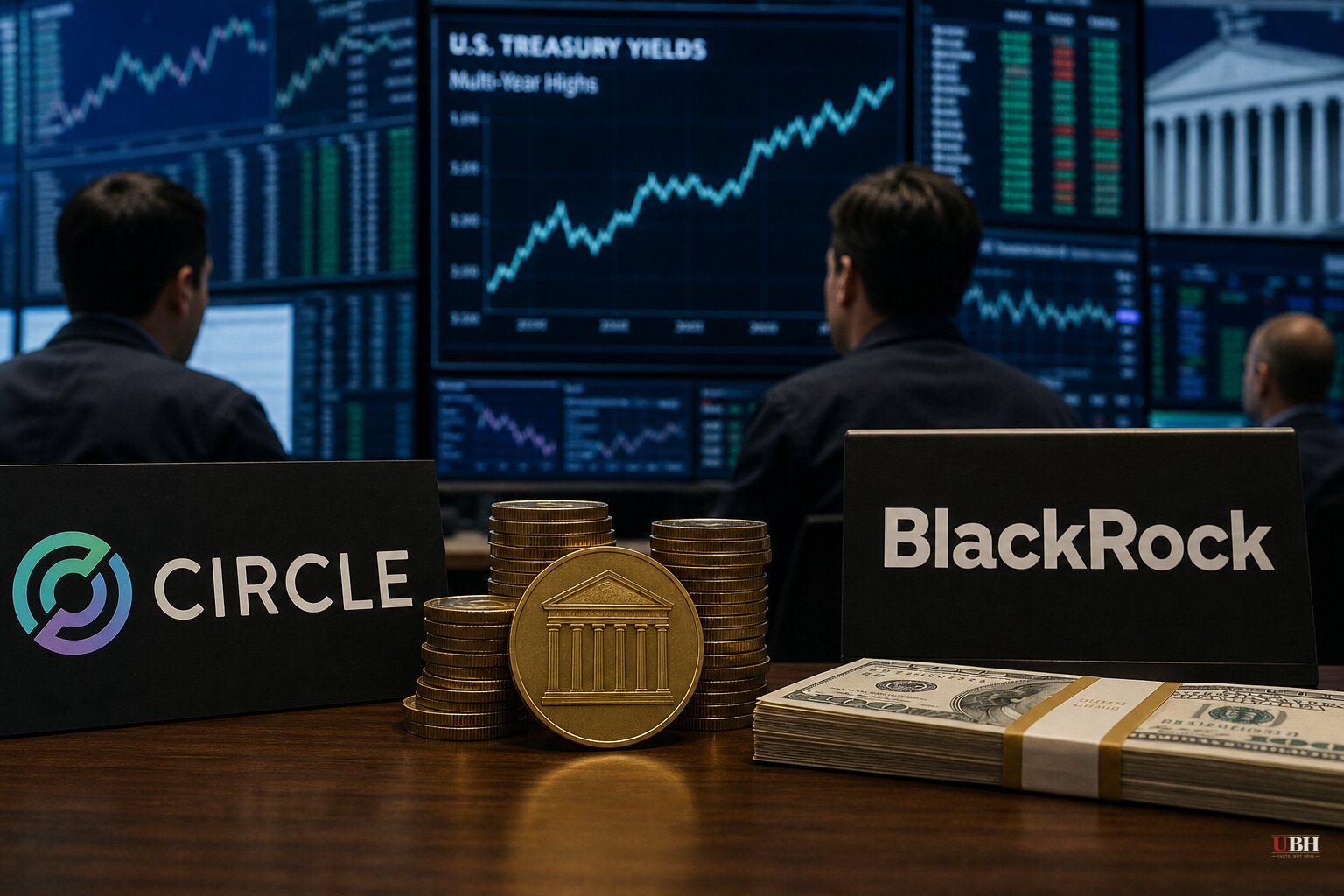
Circle's USYC has passed BlackRock's BUIDL as the largest tokenized U.S. Treasury fund on the market, according to data from Token Terminal cited by EdgeX Exchange. USYC grew from roughly $600 million to about $2.9 billion in market cap over the past year. BUIDL sits at approximately $2.7 billion.
The overall tokenized Treasury market hit $15.2 billion, up 107% year-over-year, according to the same Token Terminal data. The entire U.S. Treasury market runs about $6.7 trillion, according to Crypto Briefing. Tokenized Treasuries remain a rounding error by comparison.
Crypto Briefing reported BUIDL alone added $52.1 million in market cap in a single 24-hour period, and cited a separate seven-day stretch in mid-August where the fund grew $32.5 million. Those numbers don't contradict the EdgeX reporting on USYC's lead. Both funds are growing. USYC is just growing faster right now.
KuCoin's research adds a third name to the leaderboard: Franklin Templeton's BENJI, at roughly $1.5 billion. Combined, the three tokenized fund giants have added about $7.1 billion in market cap since the start of the year, which KuCoin says makes fund products the single biggest driver of growth in the entire tokenized asset space, a market running between $33.9 billion and $36.7 billion total.
The Catch Nobody's Advertising
Despite billions in assets, these funds barely touch decentralized finance. KuCoin's data, tracked through DeFiLlama, puts DeFi utilization for the three major funds between 0% and 1.05%. That's essentially nothing.
Compare that to smaller credit-focused tokens like Maple and Janus Henderson's offerings, which KuCoin says show DeFi utilization rates between 50% and 97%. The big institutional Treasury funds use blockchain for issuance and bookkeeping, not for composable, stackable collateral—the thing DeFi was actually built for.
These funds are exactly what they claim to be: regulated, boring, yield-bearing cash parking spots for institutions, dressed up in blockchain wrapping paper. Circle acts as a transfer agent on USYC and both funds pass Treasury yield straight through to holders instead of pocketing it, per EdgeX's reporting.
Why the Timing Matters
This growth coincides with significant moves in the bond market. The Epoch Times reported that the 30-year Treasury bond yield topped 5.33% on a Tuesday in mid-August, its highest level since 2007, while the 10-year note topped 4.74%, its highest so far this August. The Dow, S&P 500, and Nasdaq all posted weekly losses, with the Nasdaq down 2.05% for the week, according to the Epoch Times.
Treasury Secretary Scott Bessent announced expanded long-maturity debt buybacks midweek to try to cool yields, which worked briefly before yields crept back up by Thursday, the Epoch Times reported. Melissa Cohn of William Raveis Mortgage told the Epoch Times the bond market is "more concerned with inflation, and more concerned with the burgeoning federal deficit," and called the buyback timing questionable given rising oil prices tied to U.S.-Iran tensions over the Strait of Hormuz.
Fox News aired similar concerns, with portfolio manager Adam Johnson telling viewers that rising bond yields are a real threat to growth and AI stocks specifically. Higher yields make future tech earnings worth less today, and they make the AI infrastructure spending binge more expensive to finance.
That AI spending binge is enormous. Breitbart reported that Nvidia signed memorandums of understanding with Apollo Global Management, Blackstone, BlackRock, Brookfield Asset Management, Goldman Sachs, and KKR to mobilize more than $500 billion in financing so hyperscalers can buy GPUs without loading up their own balance sheets. Nvidia CEO Jensen Huang told CNBC this is "really the first time that technology chips have become an investable asset class."
Higher Treasury yields raise the cost of that kind of leverage across the board, whether it's Nvidia's compute-financing platforms or a corporate treasurer parking cash in a tokenized Treasury fund instead of a zero-yield bank account. Coinchange.io reported that corporate treasuries now hold over $35 billion in idle onchain stablecoin reserves generating zero return, which is part of why yield-bearing products like BUIDL and USYC are pulling in institutional cash in the first place.
Tokenized Treasuries are a genuinely useful wrapper for parking cash and earning government-backed yield around the clock, something Crypto Briefing correctly notes traditional money-market funds can't match given their market-hours settlement limits. The yield these funds pass through is still a Treasury yield, and Treasury yields are climbing because the market is nervous about inflation and a "burgeoning federal deficit," in Cohn's words. If Washington's borrowing costs keep rising, that shows up in every product built on top of it, tokenized or not. Federal Reserve Chair Kevin Warsh and the FOMC's July minutes, released in mid-August and cited by the Epoch Times, showed division among Fed officials over where rates go next. That fight isn't settled, and neither is the direction of the yields these crypto products depend on.
Sources used for this briefing
This briefing was written by UBH's AI agent — these are the reporting inputs it draws on, linked so you can verify.


