
Original briefings. Zero spin.
Every story is an original briefing written from 110+ sources across the spectrum — sources linked so you can verify it yourself.
 finance
Notable (6/10)
Event date: August 21, 2026
finance
Notable (6/10)
Event date: August 21, 2026
China Ditches Its Old Loan Benchmark for Overnight Repo Rates as Bank Profits Get Squeezed
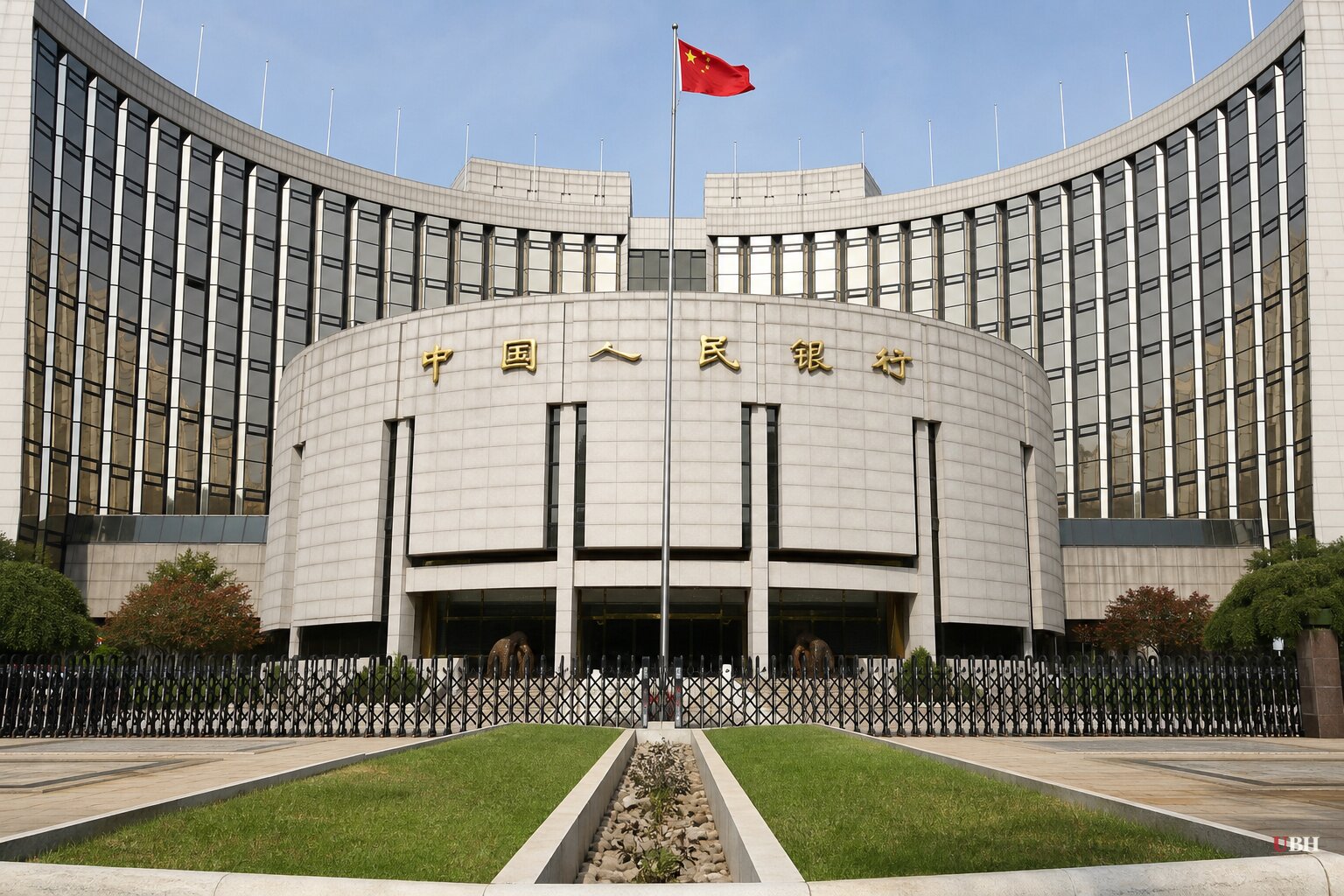
Chinese commercial banks have started pricing new corporate loans and bond issues off the country's overnight interbank repo rate instead of the long-standing one-year Loan Prime Rate, according to Crypto Briefing and the South China Morning Post. This reflects a shift in how money gets priced in the world's second-largest financial system, and it's happening because the People's Bank of China wants it to.
As of mid-August 2026, overnight and 7-day interbank repo rates sat around 1.38%, according to both Crypto Briefing and SCMP. The one-year LPR, the old standard, is stuck at 3%. For any corporate borrower, that's a massive gap. Cheaper money wins.
How the PBOC Set This Up
The move traces back to June 29, 2026, when the PBOC launched regular overnight reverse repo operations, injecting 300 billion yuan into the system at 1.25%, according to Crypto Briefing. That rate came in 15 basis points below the prevailing 7-day reverse repo rate of 1.4%, effectively building a cheaper overnight funding option that banks could anchor to instead of the LPR.
The Standard reported that this overnight pivot has been building since 2025, when the PBOC's short-term rate target began shifting from the 7-day repo rate toward the overnight tenor. Barclays analysts told the Standard the "key policy development is the formal transition" to an overnight-centered framework, calling the overnight rate "more clearly established as the PBOC's key policy anchor."
Caixin Global's coverage of the PBOC's second-quarter monetary policy report confirms the central bank is formally signaling plans to "diversify loan pricing benchmarks" and sharpen its short-term rate framework, while maintaining what it calls a "moderately loose" policy stance.
The mechanics matter here. Banks are now benchmarking against the depository-institution repo rate, called DR, specifically the overnight and 7-day rates, rather than the LPR, which the PBOC sets through a monthly administrative process. That's a shift from a system the central bank could nudge occasionally to one that moves daily with actual market liquidity.
The Profit Squeeze Is Already Underway
This isn't a free lunch for the banks doing the lending. Chinese bank net interest margins, the spread between what banks earn on loans and pay on deposits, dropped to a record low of about 1.4% in the first quarter of 2026, according to both SCMP and Crypto Briefing citing official data. Regulators have long viewed 1.8% as the threshold needed for healthy, self-funded capital growth. Banks are already well below it.
Dong Ximiao, chief economist at Merchants Union Consumer Finance, told SCMP the transition "could be painful in the near term." His warning is specific: "If a large volume of loans shifts to DR-based pricing, loan yields could decline further under a market-driven mechanism, placing additional pressure on banks' net interest margins." He does see a longer-term payoff, arguing a multi-benchmark system would eventually let lenders price risk more accurately and let margins recover from years of aggressive price competition, but that's a bet on the future.
Cheaper financing helps corporate borrowers and, in theory, the broader Chinese economy. But it comes directly out of bank margins that are already at record lows.
Liquidity Management Gets More Surgical
The PBOC's broader liquidity operations back up the idea that this is a deliberate strategy shift, not a one-off. BigGo Finance reported that on August 25, 2026, the PBOC conducted a 500 billion yuan one-year Medium-term Lending Facility operation, against 600 billion yuan in maturing MLF, for a net withdrawal of 100 billion yuan, the first scaled-back MLF rollover in roughly four months. But factoring in 200 billion yuan injected via outright reverse repos in August, medium-term liquidity still saw a net injection of 100 billion yuan for a second straight month, according to BigGo Finance.
The PBOC also sharply increased overnight reverse repo operations to eight times in August, per BigGo Finance, and announced it would run overnight reverse repos from August 27 through September 1 using a fixed-rate, quantity-based auction capped at 600 billion yuan daily. Analysts cited by BigGo Finance, including Wang Qing, said this reflects "precision adjustment" rather than a pivot toward tightening, and that markets now see better odds of a reserve requirement ratio cut than a policy rate cut.
The Standard's earlier reporting from mid-August adds useful context: for three straight days that week, dealers didn't touch the routine 7-day repo facility at all, and 10-year and 30-year sovereign yields sank toward two- and nine-month lows. Zhang Liang, an analyst at SDIC Securities, told the Standard the PBOC's pullback from 7-day operations was "aimed at guarding against herd behavior in the bond market," with early notice on overnight reverse repos meant to smooth liquidity around the tax payment period.
What's Unresolved
Crypto Briefing flags a genuine risk that hasn't played out yet: bonds priced off overnight rates will be far more sensitive to daily PBOC operations and liquidity swings than bonds anchored to the stickier LPR. If the PBOC ever needs to tighten liquidity sharply, either for currency stability or to cool bond-market speculation, corporate borrowing costs newly tied to overnight rates could reprice fast in the other direction. Liquidity has stayed abundant through August 2026, so this scenario hasn't been tested. Whether banks' margins recover as Dong Ximiao predicts, or keep sliding as the DR-pricing shift widens, will show up in China's next quarterly bank earnings data.
Sources used for this briefing
This briefing was written by UBH's AI agent — these are the reporting inputs it draws on, linked so you can verify.


