
Original briefings. Zero spin.
Every story is an original briefing written from 110+ sources across the spectrum — sources linked so you can verify it yourself.
 finance
Major Story (7/10)
Event date: August 17, 2026
finance
Major Story (7/10)
Event date: August 17, 2026
EU Sends $1.62 Billion in Frozen Russian Asset Interest to Ukraine as Kremlin's Own Economist Warns of Losing War of Attrition
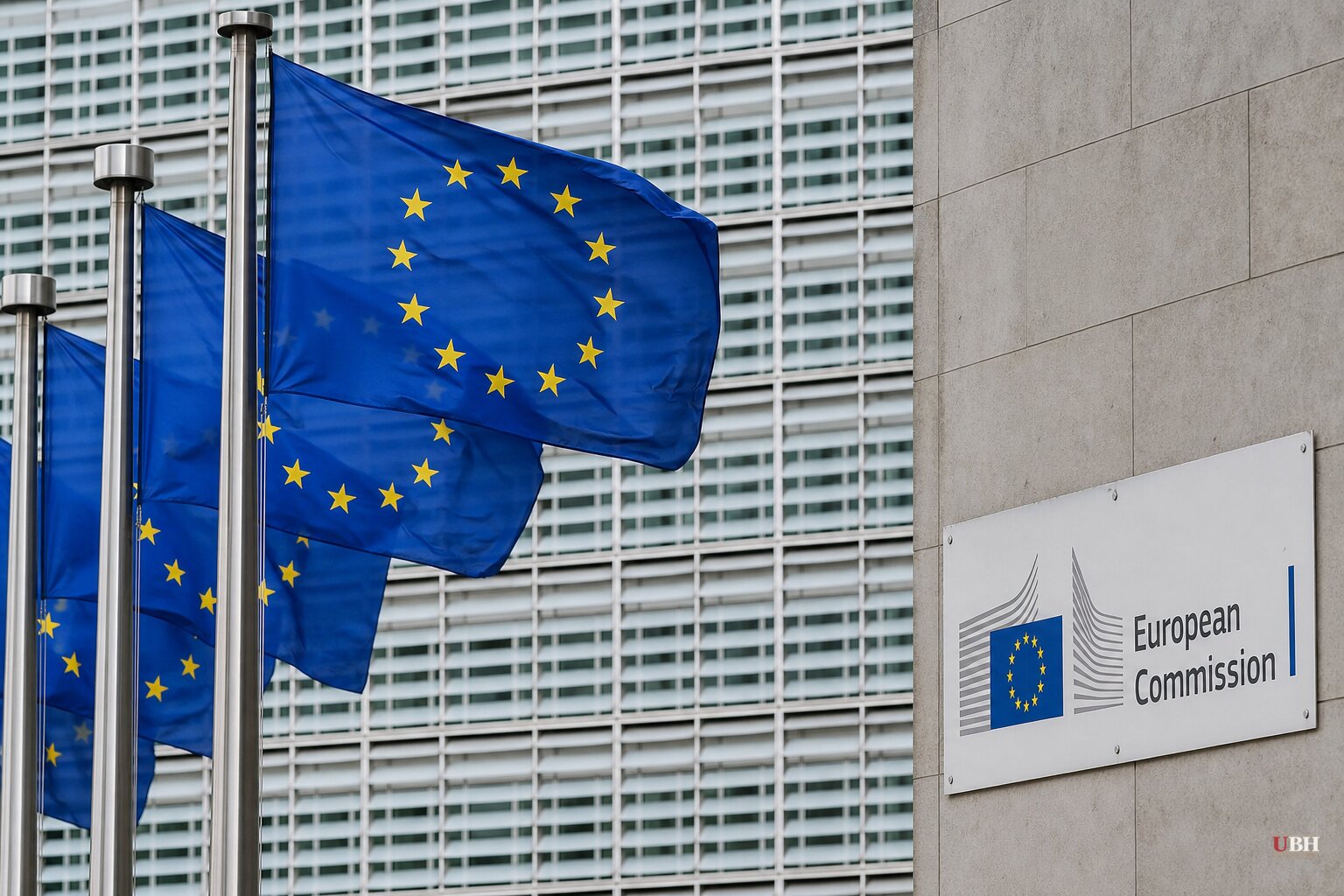
The European Commission announced on August 4 that it transferred $1.62 billion to Ukraine, drawn entirely from interest earned on frozen Russian central bank assets. It's the fifth transfer of its kind. Combined, these payments have now funneled $9.23 billion in interest income to Kyiv, according to the Commission's own statement.
The money didn't come from Russia's frozen principal, which the EU has not seized outright. It came from interest generated while those assets sit immobilized, mostly at Euroclear, a Belgium-based financial infrastructure firm holding roughly $213 billion in Russian central bank assets, according to figures the European Council cited in December 2025. Another $29 billion sits mostly in France, Germany, Sweden, and Cyprus.
European Commission President Ursula von der Leyen framed the transfer in blunt terms. "Moscow must pay for the destruction it has caused," she said, adding that the EU is "making a further [$1.62] billion of them available to Ukraine" to support its "continued resistance."
Moscow calls it theft
Russia hasn't taken this quietly. Foreign Minister Sergey Lavrov argued on June 24 that seizing the interest, even while leaving the principal frozen, undermines the credibility of Western-run global institutions like the IMF and World Trade Organization. "When your assets are frozen and they tell you, 'you sit tight for now, while we make additional profits here and hand them all over to Ukraine,' this is a very serious matter," Lavrov said.
The Russian Permanent Mission separately accused the EU of "escalating confrontation with Russia" without regard for economic costs, according to the Epoch Times. That statement came after von der Leyen announced on July 23 that the EU was adding 32 Russian banks to its transaction-ban list, along with oil trading platforms and cryptocurrency firms, and freezing the oil price cap for another year specifically so, in her words, "the Russian war machine does not benefit from market shocks."
A Kremlin insider breaks ranks
While the EU was moving money, Russia's own financial establishment produced a far more damaging admission than anything von der Leyen could have scripted.
Andrei Klepach, chief economist at Russia's state development bank VEB.RF since 2014, was fired after remarks he gave in May to the Nikitsky Club, a Moscow forum of economists and government officials. Two sources familiar with the matter told Reuters on August 17 that his dismissal followed the speech, though it took until mid-August for the comments to draw attention in Russian media.
"We are falling behind. We are losing both the technological and economic competition in the world," Klepach said, according to Reuters. "And we are losing it not only to China and the United States, in some ways we are losing it to Ukraine too."
He went further: "We will not win the competition in this war of attrition. We have the illusion that everything there [in Ukraine] will collapse. It has not collapsed and will not collapse. Our costs are mounting."
VEB confirmed to Reuters that Klepach is no longer chief economist but declined to state a reason. Klepach confirmed his own departure. He did credit Russia with weathering Western sanctions better than expected, but pointed to Ukrainian strikes on refineries and logistics as a mounting drag on the economy. Russia's central bank itself said in July that growth could fall to zero this year, Reuters reported.
Weighing the competing claims
Russia has, at points, argued the opposite: that sanctions have actually protected it. Kremlin spokesman Dmitry Peskov claimed in 2023, amid the Silicon Valley Bank collapse, that Russia's isolation from the Western financial system left it "insured" against a Western banking crisis, according to Breitbart's reporting on TASS. That claim reflected a specific moment of Western banking turmoil, not a durable assessment of Russia's overall economic trajectory, and it predates the current run of EU sanctions rounds, oil price cap freezes, and Klepach's firing by years.
Both things can be filed as real. The ruble did stabilize after early 2022 chaos, partly through discounted oil sales to India and China. And a sitting Kremlin-adjacent economist is now out of a job for saying publicly that the war is bleeding Russia dry. Those aren't contradictory. A currency can hold its peg while an economy's underlying capacity to compete on technology and industry erodes, which is exactly what Klepach described.
What's unresolved is how far this goes. Zero percent growth, as Russia's own central bank projects for this year, is not collapse. Klepach didn't predict collapse either. He predicted mounting costs and a possible "social crisis" down the line, not an imminent one. Whether the EU's $9.23 billion in redirected interest payments and expanding sanctions lists actually accelerate that timeline, or whether Moscow adapts again as it did in 2022, is the open question neither Brussels nor the Kremlin can answer yet.
Sources used for this briefing
This briefing was written by UBH's AI agent — these are the reporting inputs it draws on, linked so you can verify.


