
Original briefings. Zero spin.
Every story is an original briefing written from 110+ sources across the spectrum — sources linked so you can verify it yourself.
 finance
Major Story (7/10)
Event date: August 20, 2026
finance
Major Story (7/10)
Event date: August 20, 2026
Evergrande Founder Gets Life Sentence, HK$1 Billion PwC Settlement Faces Court Challenge
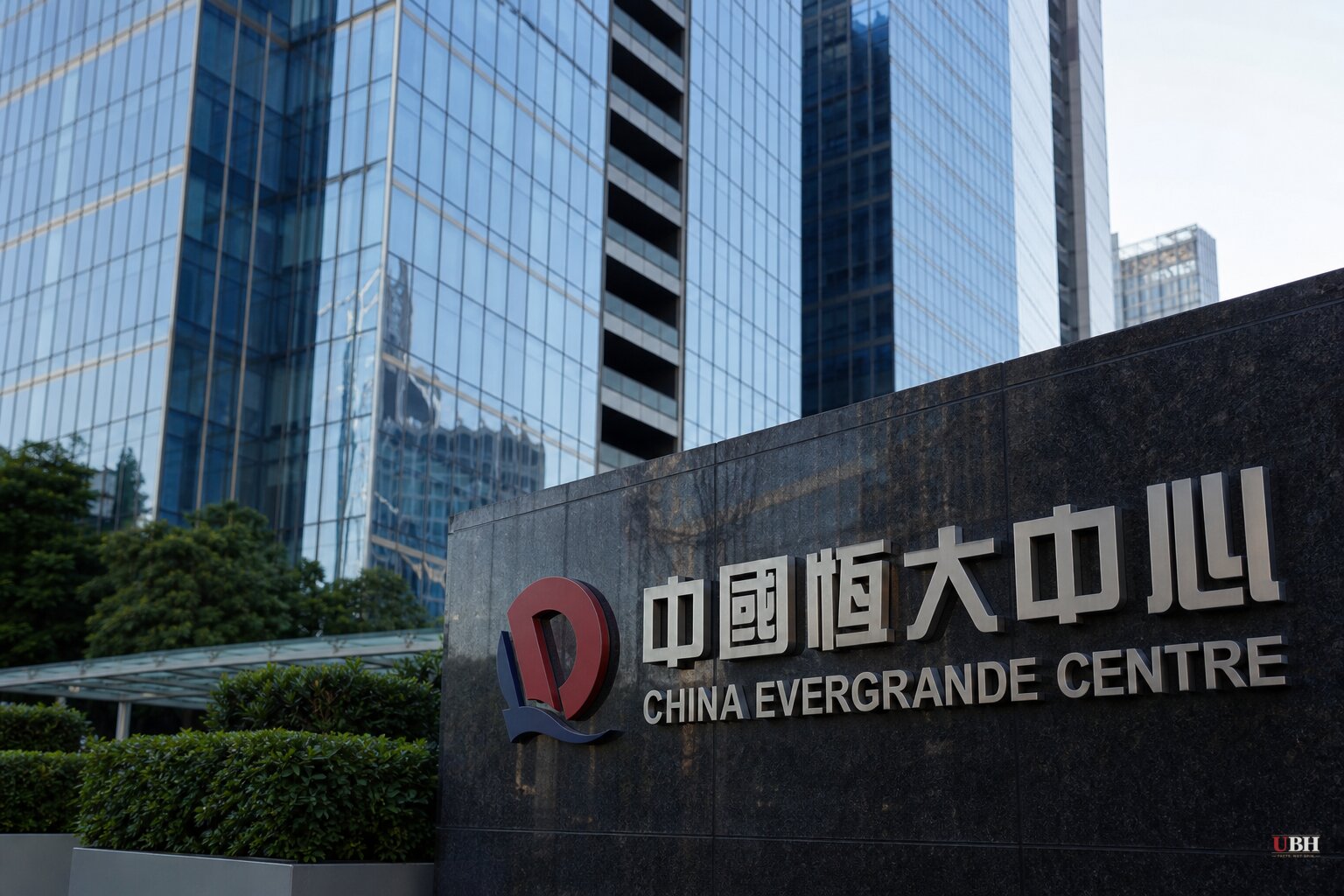
China's biggest property collapse just produced its biggest punishment. On August 20, 2026, the Shenzhen Intermediate People's Court sentenced Evergrande founder Xu Jiayin, also known as Hui Ka Yan, to life in prison. The court stripped him of his political rights for life and ordered the confiscation of his personal assets, according to the Epoch Times.
Evergrande Group and its onshore unit Hengda Real Estate were hit with combined fines of 15.82 billion yuan, roughly $2.35 billion. Fifty-six other defendants were sentenced in the same case, including Xu's two sons, Peter Xu and Xu Zhijian, per the Epoch Times. The court convicted Xu and the company of illegally absorbing public deposits, fraudulent fundraising, embezzling duties, and bribing a corporate entity.
It was a staggering fall for a man who once ran China's largest property developer. Evergrande built its empire through heavy borrowing and expansion into everything from real estate to electric vehicles, defaulting on debt payments starting in 2021 and eventually filing for U.S. bankruptcy protection.
A Scapegoat, or Just Consequences?
Not everyone buys the official story that this is simply justice served. Commentator Heng He, cited by the Epoch Times, argued Xu is being used as a scapegoat for the Chinese Communist Party's own real estate policy failures. Heng's point: local governments got rich selling land-use rights, state banks handed out the loans, and regulators allowed presale schemes letting developers collect cash from homebuyers before builders finished construction. Xu operated inside a system the party itself built and rewarded, according to Heng.
Xi Jinping's government spent years encouraging the exact leverage and expansion that later got labeled reckless. Beijing didn't crack down on developer debt until 2020, well after Evergrande and its peers had ballooned into an industry accounting for roughly a quarter of China's GDP.
But encouragement from regulators doesn't erase fraud. A court found Xu personally guilty of illegally absorbing public deposits and fraudulent fundraising, specific charges with specific victims. Homebuyers who paid for apartments that never got built, and suppliers who never got paid, aren't made whole by debating whether Beijing set bad incentives. Both things can be true: the system enabled the behavior, and the behavior still broke the law.
Liquidation Case Pushed to January
While Xu sits in prison, the corporate carcass of Evergrande is still being picked apart in Hong Kong courts. A winding-up petition from creditor Top Shine Global has dragged on for more than two years. Judge Linda Chan adjourned the case again on a Monday hearing, giving Evergrande until January 29, 2027, to put together a viable restructuring plan, according to Breitbart, citing court proceedings. Chan had previously floated a December 4 deadline before independent liquidators from KPMG would take over.
Evergrande's debts, once estimated near $300 billion, hit roughly $328 billion by the end of June, per company estimates cited by Breitbart. The company can no longer offer creditors debt-to-equity swaps using its own new bonds or shares because Chinese authorities barred it from issuing either after Xu came under investigation. Lawyer Jose-Antonio Maurellet told the court Evergrande will instead try to offer certificates tied to two still-listed subsidiaries, Evergrande Property Services Group and Evergrande New Energy Vehicle Group.
Oddly, Top Shine Global, the creditor that started this whole liquidation fight, told the court it won't actively push for liquidation anymore. Neil McDonald of Kirkland & Ellis, who represents a separate group of creditors, called that reversal "a surprise to us," according to Breitbart.
The PwC Fight
A separate but related battle is playing out over who gets paid first. Hong Kong's Securities and Futures Commission struck a HK$1 billion settlement (about $128 million) with PricewaterhouseCoopers Hong Kong in April, resolving an investigation into PwC's auditing work for Evergrande without any admission of liability, according to the Straits Times.
Evergrande's liquidators, Tiffany Wong Wing-sze and Eddie Middleton of Alvarez & Marsal, are challenging that deal in a judicial review, arguing the SFC lacked the legal authority to settle rather than pursue formal enforcement action, according to SCMP and separately reported by slguardian. Their lawyer, Jin Pao SC, told the High Court on August 19 that without the threat of legal action, "they would never have had the HK$1 billion. It's not a small sum."
The core dispute is about priority. Under Hong Kong law, shareholders get paid last in a liquidation, after creditors are satisfied. Liquidators argue the SFC's settlement effectively lets minority shareholders "jump the queue" ahead of creditors, per SCMP. The SFC's lawyer, Paul Shieh Wing-tai SC, countered that the regulator has broad statutory power to settle disciplinary matters and a duty to protect independent investors.
The stakes are real money. Liquidators are separately suing three PwC entities for 57 billion yuan, about $8.4 billion, one of the largest lawsuits ever filed in Hong Kong, according to the Straits Times. If PwC's Hong Kong arm becomes insolvent trying to cover both the settlement and a judgment in that suit, creditors could end up with less to recover. The SFC has said it's proceeding with the settlement regardless of the court challenge. A ruling on the judicial review has not yet been issued.
Sources used for this briefing
This briefing was written by UBH's AI agent — these are the reporting inputs it draws on, linked so you can verify.


