
Unbiased headlines. Facts, not spin.
Unbiased Headlines is an independently owned news organization. We bring you the facts, not opinions, written fresh from 110+ named sources. Sources linked so you can verify it yourself.
 defense
Major Story (8/10)
Iran's Revolutionary Guard Claims It Destroyed a US Early-Warning Radar in Bahrain; Washington and Manama Silent
Since the war began on Feb. 28 with US and Israeli strikes on Iran, the fighting has settled into a fragile lull, a US naval blockade of Iranian ports, and stop-start talks mediated by Qatar. On Thursday, Nov. 12, that lull took a hit.
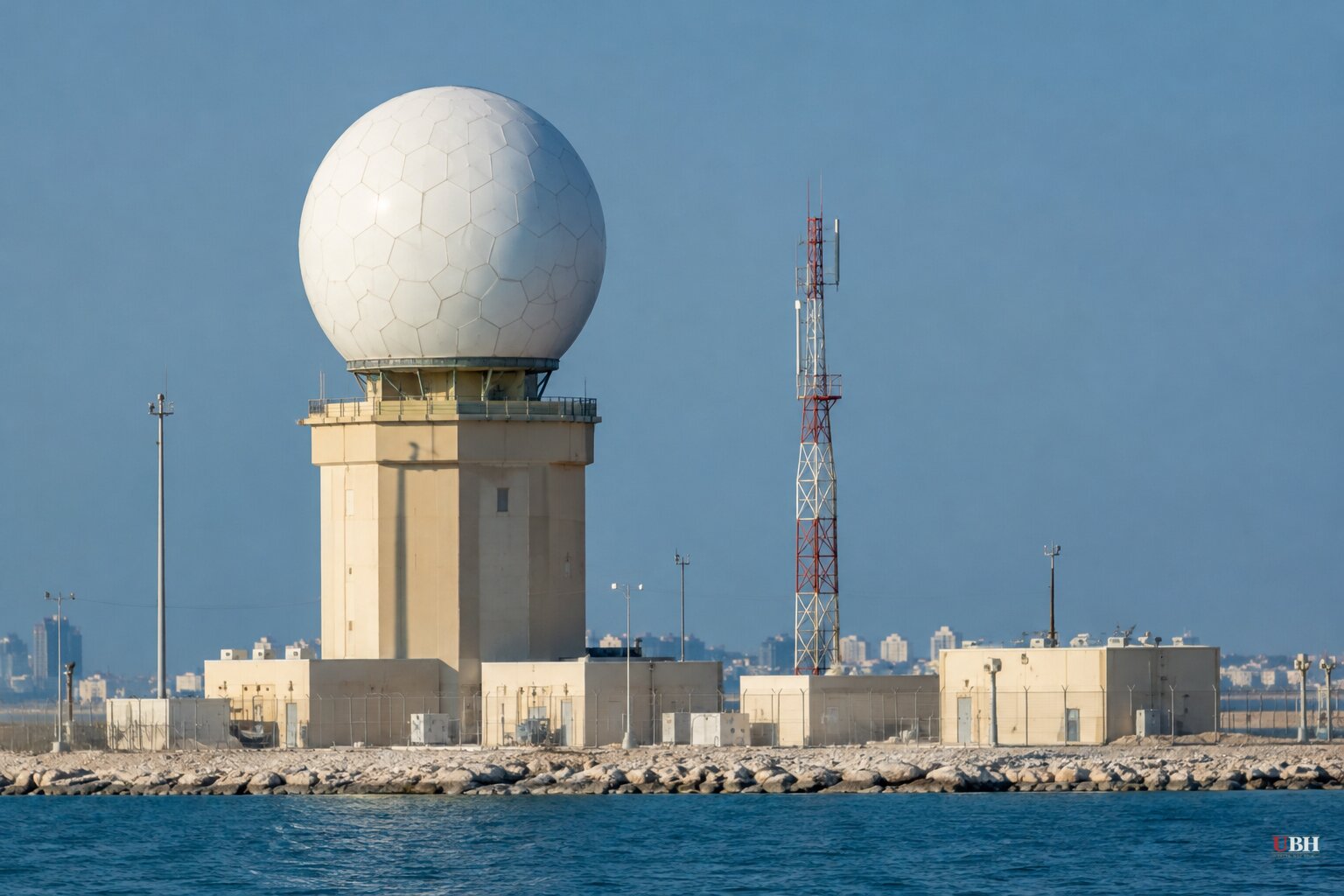
Iran's Islamic Revolutionary Guard Corps (IRGC) said its Aerospace Force "targeted and destroyed" a US early-warning radar on the island of Bahrain. The IRGC called it retaliation for an air attack on a telecommunications tower in Sirik, in southern Hormozgan province.
What Iran is claiming
Iran's state news agency IRNA, citing official sources, reported earlier Thursday that Sirik was hit by "enemy fire." The IRGC's statement, carried by the semi-official Tasnim agency, followed within hours.
The Guard described the radar strike as "a serious warning to the aggressor enemy to end its aerial provocations and oil smuggling in the Strait of Hormuz." It added that if the violations recur, the Aerospace Force "stands in full readiness to engage without limits." It also said companies it accuses of being deceived by the United States would face "more severe punishment."
None of this is independently verified. Washington and Manama have not commented. No one has publicly claimed responsibility for the Sirik strike, and the cause and extent of the damage there are unconfirmed.
Bahrain hosts the headquarters of the US Navy's Fifth Fleet, so any real strike there would be significant. Reuters counted it as the first time since early September that Iran has claimed an attack on American military assets in a Gulf country.
Radars were targets before
An Associated Press analysis of Iran's earlier strikes on more than two dozen US bases in the region found that Iranian fire went after early-warning systems first, before hitting aircraft and buildings. The analysis put the equipment damage at billions of dollars. Satellite imagery in that analysis showed damage to a US radar site at Jabal Ad-Dukhan in Bahrain, which housed a long-range air surveillance radar.
That pattern fits the logic. Knock out the radar and you blind the defenses before the main salvo.
Escalation talk on several fronts
The claim arrived alongside other warning signs. Israel's security cabinet has reportedly ordered the military to step up preparations for a possible attack on Iran, according to Israeli media including public broadcaster KAN.
Iran's security chief Mohsen Rezaei warned that if the US launches another war, every military base involved, "anywhere from West Asia to Europe," would be a legitimate target.
Jamal Shakerami, a senior adviser at the IRGC's Imam Ali Security Headquarters, told IRNA that "all US bases have now become accessible targets" and that new equipment had extended Iran's reach. He also claimed 16 American bases in the region were completely destroyed during the war. That figure comes from an Iranian official and has not been verified.
Washington is not speaking with one voice
In a Thursday interview with the Salem News Channel, Trump was asked whether he would hesitate to use force to keep Iran from threatening US allies and American vessels. "No, without hesitation," he said. He also claimed Iranian inflation has reached 301% and that Iran's military has been wiped out. Those figures are his own and were not backed by data in his remarks.
Trump has said he is prepared to return to war if the Qatari-brokered diplomatic track fails to produce a deal. Secretary of State Marco Rubio has taken a different line. He says economic pressure on Iran is working well enough that resuming large-scale military operations is unnecessary.
US Central Command says its forces are still strictly enforcing the naval blockade of Iranian ports.
Iran's negotiating position
Iranian parliament speaker and lead negotiator Mohammad Bagher Ghalibaf told Al Jazeera on Wednesday that the Strait of Hormuz "would never go back to how it was before the war." He said "the ball is now in the American court."
Earlier in the talks, Iran offered to reopen the strait within a week if the US lifted its blockade, released frozen Iranian assets and eased limits on Iranian oil exports. The US rejected that offer, according to the Associated Press.
The Guard's "oil smuggling" accusation also points at the flashpoint. The IRGC says the blockade and the shipping around Hormuz are provocations, while Washington says it is enforcing the blockade.
What to watch
The immediate question is whether the US confirms or denies the radar strike, and whether it acknowledges any role in the Sirik attack. If Washington confirms damage in Bahrain, pressure for a response will build, with Rubio's pressure-first approach and Trump's stated readiness to resume strikes pulling in different directions. If the claim is overstated, the IRGC will still have put a threat on the record while Israel's military prepares for a possible strike.
Sources used for this briefing
7 links from 7 independent newsrooms (syndicated copies of the same report count once)
These are the sources it draws on, linked so you can verify.


