
Unbiased headlines. Facts, not spin.
Unbiased Headlines is an independently owned news organization. We bring you the facts, not opinions, written fresh from 110+ named sources. Sources linked so you can verify it yourself.
 defense
Major Story (7/10)
UN Extends Houthi Sanctions to November 2027 as Coalition Reports More Drone Interceptions Over Riyadh and Eastern Province
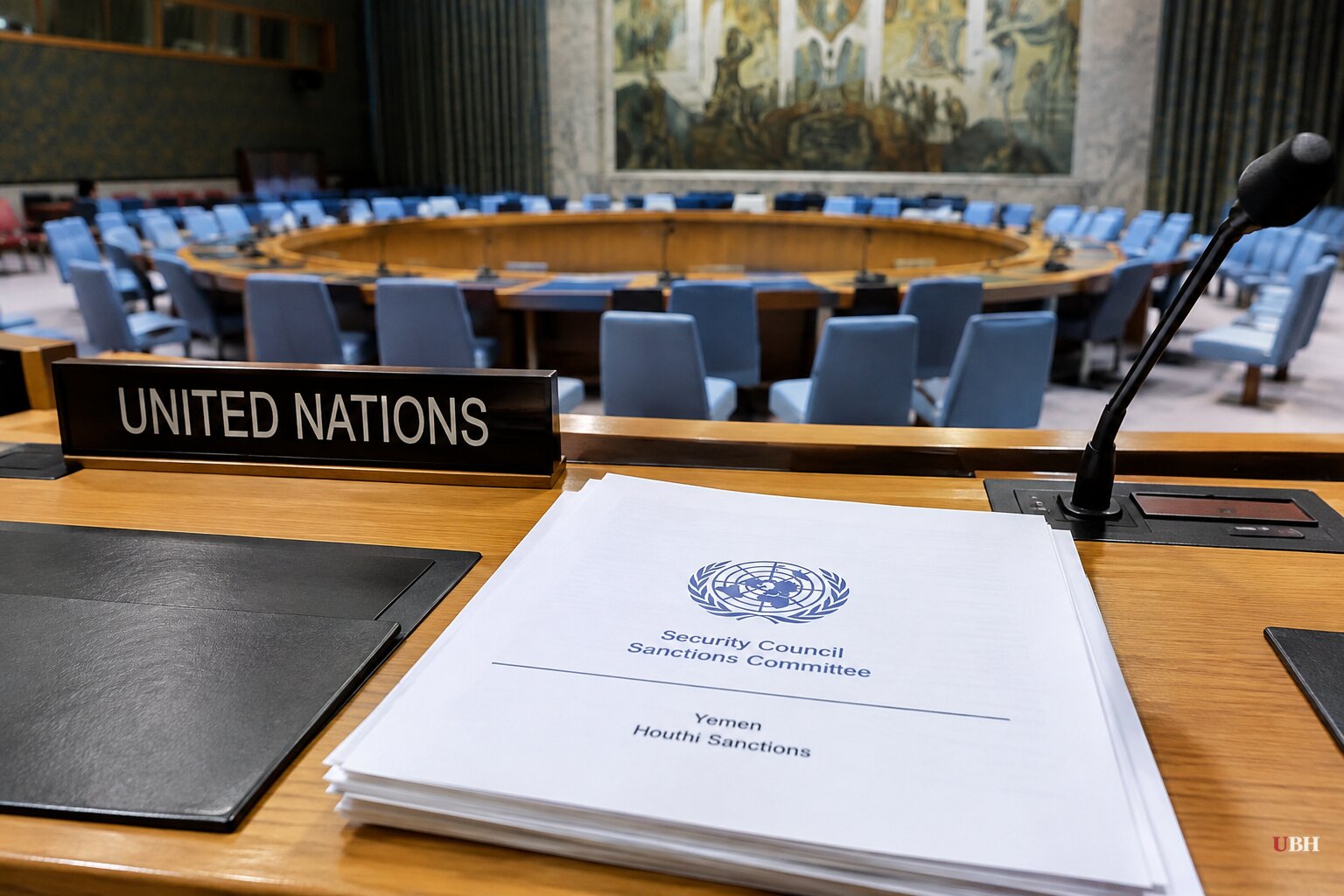
Since Saudi Arabia said debris from two Houthi missiles landed in the Mecca region on Wednesday, Nov. 11, the war has added a diplomatic move and another round of claimed strikes. On Thursday, Nov. 12, the UN Security Council renewed its Yemen sanctions on the Houthis, and the Saudi-led coalition said it intercepted more suspected Houthi drones.
What the Security Council actually renewed
The UK-drafted resolution extends asset freezes and travel bans under the Resolution 2140 regime until Nov. 14, 2027. It renews the mandate of the UN Panel of Experts until Dec. 15, 2027. Al Jazeera described the vote as unanimous. Gulf News, citing Security Council Report, said it was adopted by consensus without a recorded vote.
The arms embargo was not on the table. It dates to Resolution 2216 in April 2015 and has no expiry date, so it continues whether the Council meets or not.
The text condemns what it calls the Houthis' military escalation, their maritime and cross-border attacks on Saudi Arabia, and their threats to commercial shipping. It demands an immediate and unconditional end to hostilities. It states there is "no military solution" to the Yemen conflict. It does not authorize force or impose blanket sanctions on Yemen.
Two changes are new. The resolution adds language aimed at components and precursor chemicals used to build Houthi drones and missiles. It also expands the Panel of Experts to include maritime-security expertise. The Council also voiced concern about Houthi revenue from international sources and control of sectors such as energy and telecommunications, which it said helps pay for weapons.
British Ambassador Sarah MacIntosh said the adoption showed the Council's determination to act against "reckless attacks by the Houthis" in Yemen, Saudi Arabia and the wider region. Britain said it would work with Council members to update the sanctions list so enforcement keeps pace with the threat.
The embargo problem
The House of Saud Daily Briefing reports that the Panel of Experts has called the arms embargo "totally ineffective." It says the Panel received no information on any state investigating the weapons transfers it had detected.
That is the weak point of the whole exercise. New wording on dual-use parts does not stop components already moving through Iranian supply chains. The same outlet says the new language does not include any mechanism for that.
Drones over Riyadh and the Eastern Province
Coalition spokesman Maj. Gen. Turki al-Maliki said forces intercepted suspected Houthi drones over the Riyadh region and the Eastern Province. The statement was carried by the Saudi Press Agency. The sources show no Saudi account of damage from these drones.
Houthi military spokesman Yahya Saree claimed a wider set of operations:
- A drone strike on a pumping station on the East-West Pipeline.
- A strike on the Yanbu oil facility on the Red Sea.
- A drone attack on a military cargo plane at Sharurah airport near the Yemeni border.
- A ballistic missile at Khamis Mushait airbase that he said "scored a direct hit."
- A strike on Saudi Aramco's headquarters in Riyadh.
These are Houthi claims. Saudi Arabia has not confirmed hits on any of those targets.
Saree also rejected as a "grave falsehood" the Saudi assertion that the group targeted the Mecca region on Wednesday. The Houthis have repeatedly denied having plans to attack Mecca or Medina.
The pipeline matters because of what rides on it. Riyadh says it has rerouted about 4 million barrels of crude per day through the East-West Pipeline to Yanbu. That is roughly 4 percent of global supply.
Ground fighting and Egypt's role
On the Yemeni side, the Defence Ministry, citing the Saudi-backed Presidential Leadership Council, said the fight against the Houthis is moving toward its "desired objectives." Saba, the pro-government news agency, said the ministry held a meeting in Marib governorate on coordination among units in the "Dawn of Yemen" offensive. Coalition forces say they are confronting the Houthis on all frontlines.
Separately, Egyptian Foreign Minister Badr Abdelatty told France24 on Tuesday, Nov. 10, that Egyptian forces are in Saudi Arabia for "defensive objectives to defend sensitive sites, including holy sites and others." He said Egypt has a presence there at Saudi Arabia's request and is strengthening it. He said the first troops arrived "a few months ago" after attacks on Saudi Arabia during the escalation with Iran.
Egypt's parliament voted in late October to give President Abdel Fattah el-Sisi authority to order such a deployment. The Houthis denounced that vote as a "declaration of war."
The National, citing unnamed sources, reported that "hundreds" of Egyptian soldiers are on the ground with armor, anti-aircraft batteries and surface-to-surface missiles. One of its sources said the force is there to defend Saudi Arabia, not attack the Houthis, though it may defend itself if attacked. Cairo has reportedly been weighing membership in the Mecca Joint Defense Agreement, which the other members of the Saudi-Turkey-Pakistan-Egypt grouping signed in August 2026.
What comes next
The sanctions run for a year, and the Panel of Experts keeps reporting under its renewed mandate through December 2027. Britain says it will update the sanctions list. Whether any state investigates the weapons transfers the Panel has documented remains an open question, since the Panel says it has received no information that any has.
Egypt has not said whether it will join the Mecca Joint Defense Agreement.
Sources used for this briefing
8 links from 7 independent newsrooms (syndicated copies of the same report count once)
These are the sources it draws on, linked so you can verify.


