
Unbiased headlines. Facts, not spin.
Unbiased Headlines is an independently owned news organization. We bring you the facts, not opinions, written fresh from 110+ named sources. Sources linked so you can verify it yourself.
 defense
Notable (5/10)
Event date: November 12, 2026 ·
Ex-NATO Chief Rasmussen Urges British and French Troops Into Ukraine Before Any Ceasefire
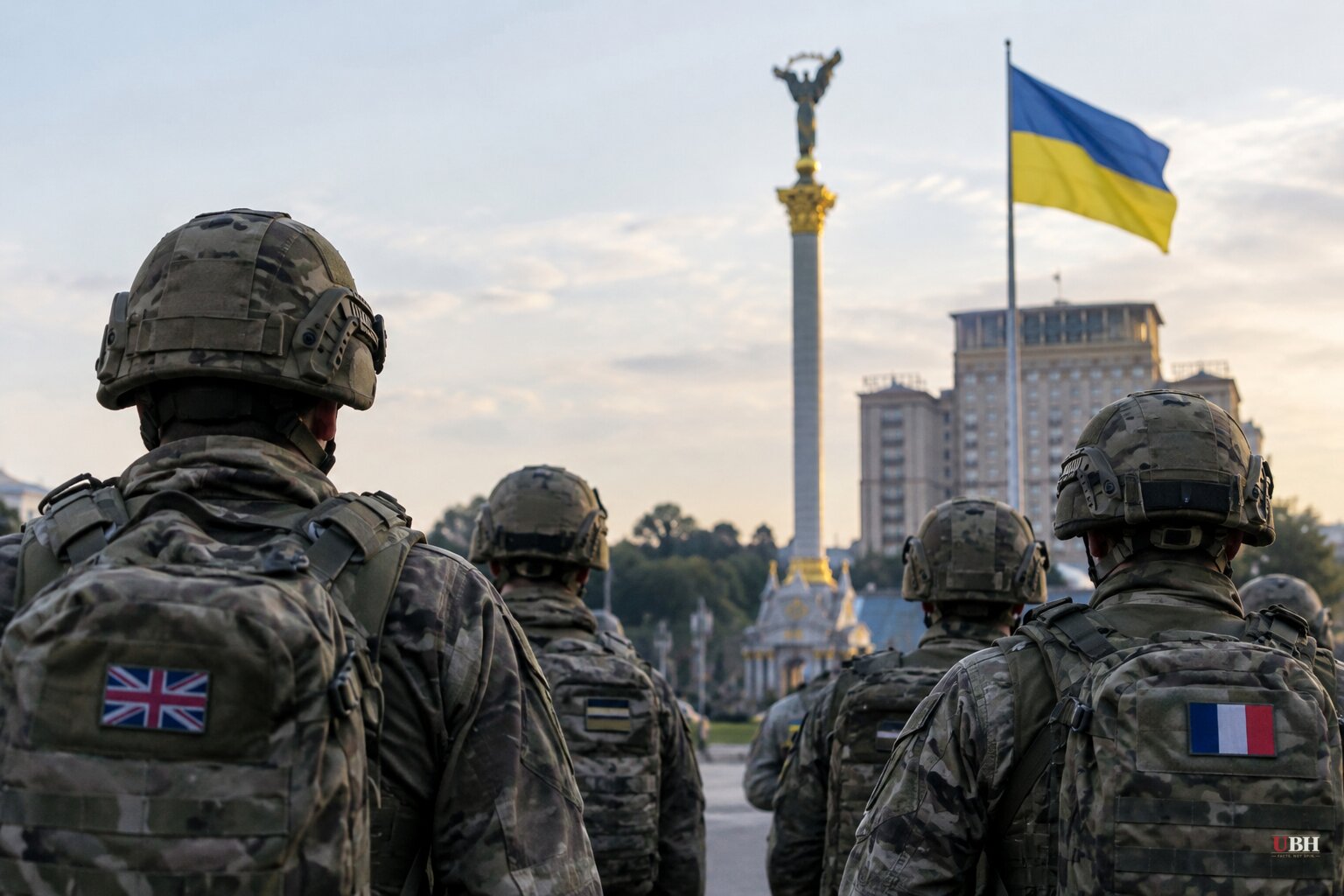
Anders Fogh Rasmussen wants Europe to stop waiting. The former NATO secretary general, who held the post from 2009 to 2014 and now advises Ukraine, says Britain and France should put troops into Ukraine now instead of after a ceasefire.
He made the case to Euronews and The Daily Telegraph. "Europe is begging for a place at the table, but you cannot beg your way to a seat at the table," he told Euronews. "Europe will not talk its way to the negotiating table. We must force our way there, with action."
The Rasmussen plan
The Anglo-French-led Coalition of the Willing plans to deploy a reassurance force only once the war is over and a ceasefire is signed. Rasmussen says that makes it a "Coalition of the Waiting." He wants it turned into a "coalition of the doing."
As described in his Telegraph interview, the troops would sit in rear areas defending Ukrainian cities and critical infrastructure. That would free more Ukrainian soldiers to go to the front.
Rasmussen said Europe should not wait for a deal but "push for peace by telling Putin 'you cannot deter us, and we will help the Ukrainians defend against attacks against their critical infrastructure.'" He also argues that Russia will never engage meaningfully in talks until its calculus changes. "Changing Putin's calculus requires a show of strength," he said. "And that means going further than we have gone before."
His list of steps reportedly goes further still. It includes giving the cold shoulder to any ally unwilling to deploy.
Rasmussen also says President Trump is siding with Putin. He made his remarks while U.S., Russian and Ukrainian delegations held trilateral talks and European delegates were kept out of the room.
What Washington says about the talks
U.S. envoys Steve Witkoff and Jared Kushner have been the main channel to Moscow. Kushner said after the Abu Dhabi round that "there is no trust right now between the sides and that is to be expected after a conflict like this." He said the talks touched on territorial issues, which he expects to be the hardest to resolve.
The record of that diplomacy is thin. The most concrete result cited so far is a four-day localized ceasefire in the Oleshky region. The White House said First Lady Melania Trump and her representative worked directly with Russian and Ukrainian leadership to define its terms. It also showed that Russia can halt fighting when it chooses.
On the same Abu Dhabi round, Russia's head negotiator declared, "Every inch of our land will be returned," and called Ukraine "an abscess that burst." Strikes on power plants and grain cargo ships came as the round wrapped up.
Putin's stated position
Putin gave Russia's position in blunt terms on Oct. 22. "It is impossible to defeat Russia on the battlefield," he told state television correspondent Pavel Zarubin. He said "historical Russia" includes all Ukrainian territories, so giving up conquered land is not possible.
Some Kremlin-watchers read that as positioning rather than bravado. "Putin is using history to make a political statement and a political claim," said Eugene Miakinkov, a Canadian-Latvian historian who lectures at Swansea University in Wales. British analyst Mark Galeotti told CBC News that "everyone is moving into that kind of preparatory position of establishing their negotiating stances." Miakinkov says the message is aimed especially at Europeans: a humiliating defeat that remakes the Russian state will not happen.
Putin's maximalist claim runs straight into Rasmussen's argument. If Moscow's opening position is that no territory comes back, Europe's leverage depends on what it is willing to put on the ground. A seat at the table is the stated goal.
The risk Rasmussen's plan carries
The plan puts NATO-member soldiers inside a country Russia is actively striking. Rear-area air defense of cities and power plants means troops operating where Russian missiles and drones land. Rasmussen's own framing includes the possibility of a direct fight with Russia. No government has said it will take that step.
The Coalition of the Willing's current design is built to avoid it. Its force goes in after a ceasefire, not before.
That leaves an open question for London and Paris. Will either commit troops before a ceasefire exists, or does Europe stay outside the room while Witkoff and Kushner carry on with Putin?
Sources used for this briefing
3 links from 3 independent newsrooms (syndicated copies of the same report count once)
These are the sources it draws on, linked so you can verify.


