
Unbiased headlines. Facts, not spin.
Every story is an unbiased news briefing written from 110+ sources across the spectrum — sources linked so you can verify it yourself.
 defense
Low Interest (3/10)
July 5, 2026 at 06:25 AM
defense
Low Interest (3/10)
July 5, 2026 at 06:25 AM
Iran's Post-Khamenei Leadership Is Fractured, Public, and Increasingly Contested
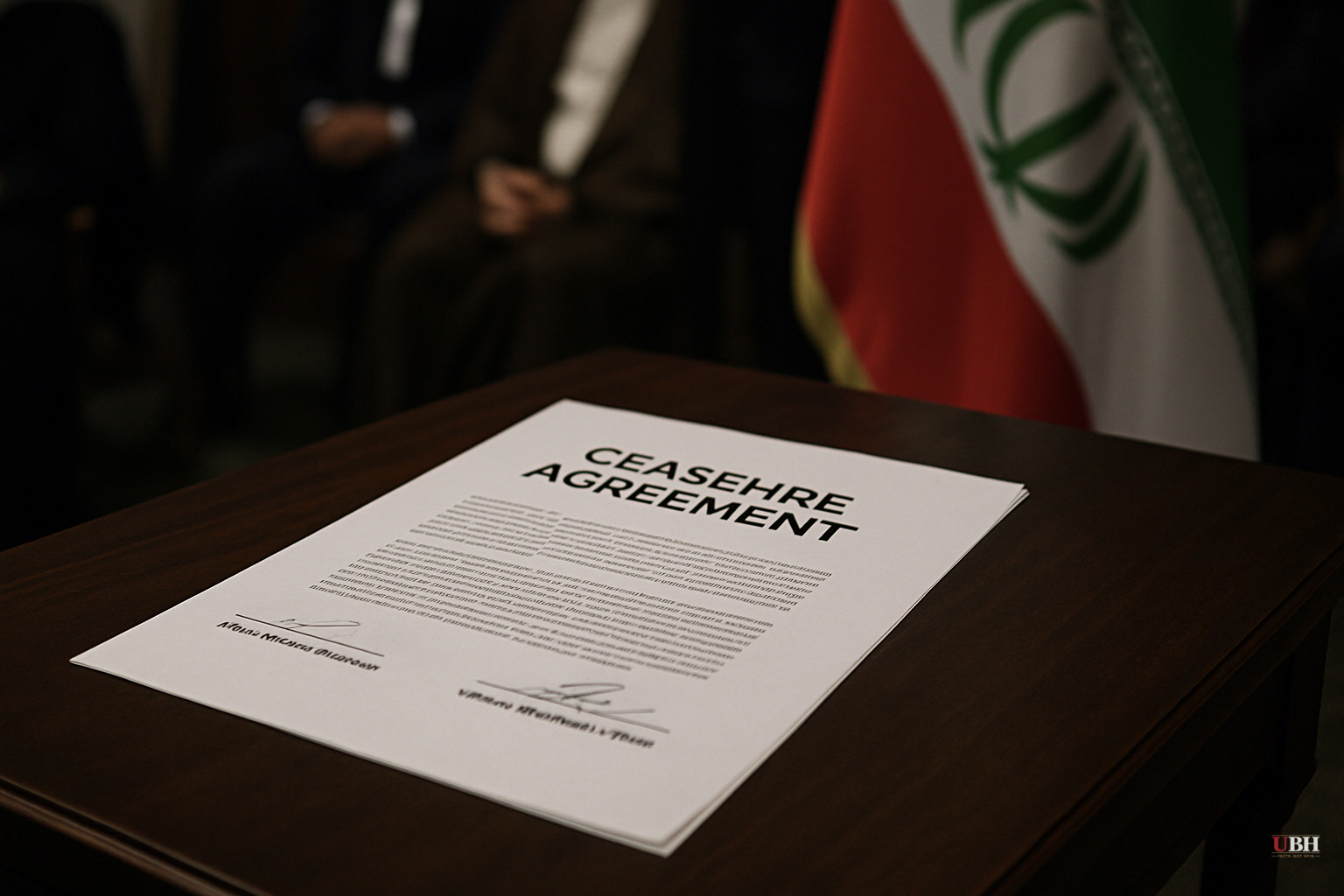
Since Khamenei's death in the U.S.-Israeli airstrikes that opened the war, Iran's power structure has fractured into competing factions with no single figure wielding consolidated authority.
The funeral ceremonies for the former supreme leader, which began Saturday, are being watched closely as the first major public gathering of Iran's new leadership collective, according to AFP reporting via Al-Monitor.
Who Is Actually Running Iran
Mojtaba Khamenei was named supreme leader after his father's death but has NOT appeared in public. Officials say he was wounded. He has issued written statements, but as Al-Monitor's AFP analysis notes, he is "far from replicating the one-man rule of his father." In practice, decision-making has been distributed across a group of military, theocratic, and civilian figures.
Parliament Speaker Mohammad Bagher Ghalibaf has been the most visible face of the new leadership. He led Iran's negotiating team in talks with the United States in Pakistan and then Switzerland. President Masoud Pezeshkian, described by Al-Monitor as belonging to Iran's more moderate wing, formally signed the ceasefire accord with the U.S. last month. Foreign Minister Abbas Araghchi, a veteran diplomat with a doctorate from the University of Kent, represented Iran in earlier talks in Oman in February and has been outspoken in defending Iran's position publicly.
Ahmad Vahidi, a former interior and defense minister, rounds out the core group.
Trump described this "third set" of Iranian leaders last month as "smart," "very rational," and "not radicalised." That assessment may be optimistic.
The Ceasefire Deal Is Already Under Stress
The Memorandum of Understanding signed at the Palace of Versailles is a one-and-a-half page document. BBC News noted the inevitable comparison to the 1919 Treaty of Versailles, signed in the same hall, which reshaped Europe but ultimately helped produce another catastrophe. The analogy is imperfect, but the fragility is real.
Nearly three weeks after the ceasefire, skirmishes have continued in and around the Strait of Hormuz, according to BBC News. None of the underlying issues that triggered the war have been resolved.
Vali Nasr, professor of International Affairs and Middle East Studies at Johns Hopkins' School of Advanced International Studies, told BBC News: "This war is much more consequential and larger than we have given it credit for thus far. All major wars of this magnitude ultimately reorder the chess board. This will do it for the Middle East."
The Internal War Over the Deal
The most concrete sign of Iran's internal breakdown came on June 30, 2026, when state television abruptly cut off a pre-recorded broadcast by Ghalibaf mid-sentence, according to the National Council of Resistance of Iran. Iran's parliamentary media center publicly blasted the state broadcaster for what it called "unauthorized censorship."
Hardline MP Mahmoud Nabaviyan openly condemned the diplomatic team on June 29, stating: "The expediency that officials recognize but the Supreme Leader has a different opinion on is not expediency, it is pure corruption."
Presidential deputy Mohammad-Jafar Ghaempanah fired back on June 30, telling state media: "If only the Leader's opinion is to be implemented, then the Parliament and the Supreme National Security Council make no sense."
Foreign Minister Araghchi was met with chants of "Death to the compromiser!" by hardline Iranian pilgrims in Karbala. Meanwhile, the IRGC-affiliated Javan newspaper warned on June 30 that "if this agreement fails, the entire nation will pay the cost."
This is not quiet factional maneuvering. It is open, televised conflict between the people who signed a deal with the United States and the people who consider that deal a betrayal.
The Strongest Case for the Hardliners
The hardline position deserves fair statement. Their core argument is not simply ideological stubbornness. Iran's nuclear program was damaged but not eliminated. Its uranium stockpile, estimated sufficient for 10 to 11 weapons if further enriched, is believed to be buried near the Isfahan complex rather than destroyed, according to BBC News. From the hardliner perspective, accepting a ceasefire deal under duress, without resolving the nuclear question, the sanctions regime, or Iran's regional position, is a strategic capitulation that weakens Iran permanently. They are not wrong that the deal is lopsided. Whether that makes resistance to it rational or suicidal is the actual debate inside Tehran.
The Domestic Collapse Behind the Diplomatic Theater
While factions fight over the ceasefire, ordinary Iranians are facing conditions that have worsened significantly since the January 2026 unrest.
According to the NCRI, citing the state-run Donya-e-Eqtesad newspaper, a single course of chemotherapy has risen from 7 million tomans two years ago to nearly 70 million tomans as of mid-2026. Iran's Central Bank recorded a monthly healthcare inflation rate of 23.1% in May 2026.
An Energy Institute report cited by the NCRI found Iran's greenhouse gas emissions surpassed one billion tons in 2025, a 31% increase over the prior decade, making Iran the world's fifth-largest polluter. That environmental degradation is generating localized revolts alongside the economic ones.
What Comes Next
The ceasefire holds, barely, and the funeral ceremonies offer the new leadership its first major test of public cohesion. But Mojtaba Khamenei has still not appeared in public, the deal's chief negotiator had his broadcast cut off by his own government's television, and the foreign minister is being called a traitor by Iranian pilgrims abroad.
The open question is whether the factions blocking the deal's implementation can be contained, or whether the ceasefire collapses before the underlying MoU can be formalized into something more durable. Ghalibaf's ability to return to any further negotiating table may depend on whether his own government allows him to speak.
Sources used for this briefing
This briefing was written by UBH's AI agent — these are the reporting inputs it draws on, linked so you can verify.


