
Unbiased headlines. Facts, not spin.
Every story is an unbiased news briefing written from 110+ sources across the spectrum — sources linked so you can verify it yourself.
 defense
Major Story (7/10)
July 5, 2026 at 06:56 AM
defense
Major Story (7/10)
July 5, 2026 at 06:56 AM
Burnaby RCMP's April Drug Bust: What Investigators Have Confirmed and What Remains Unproven About the China Link
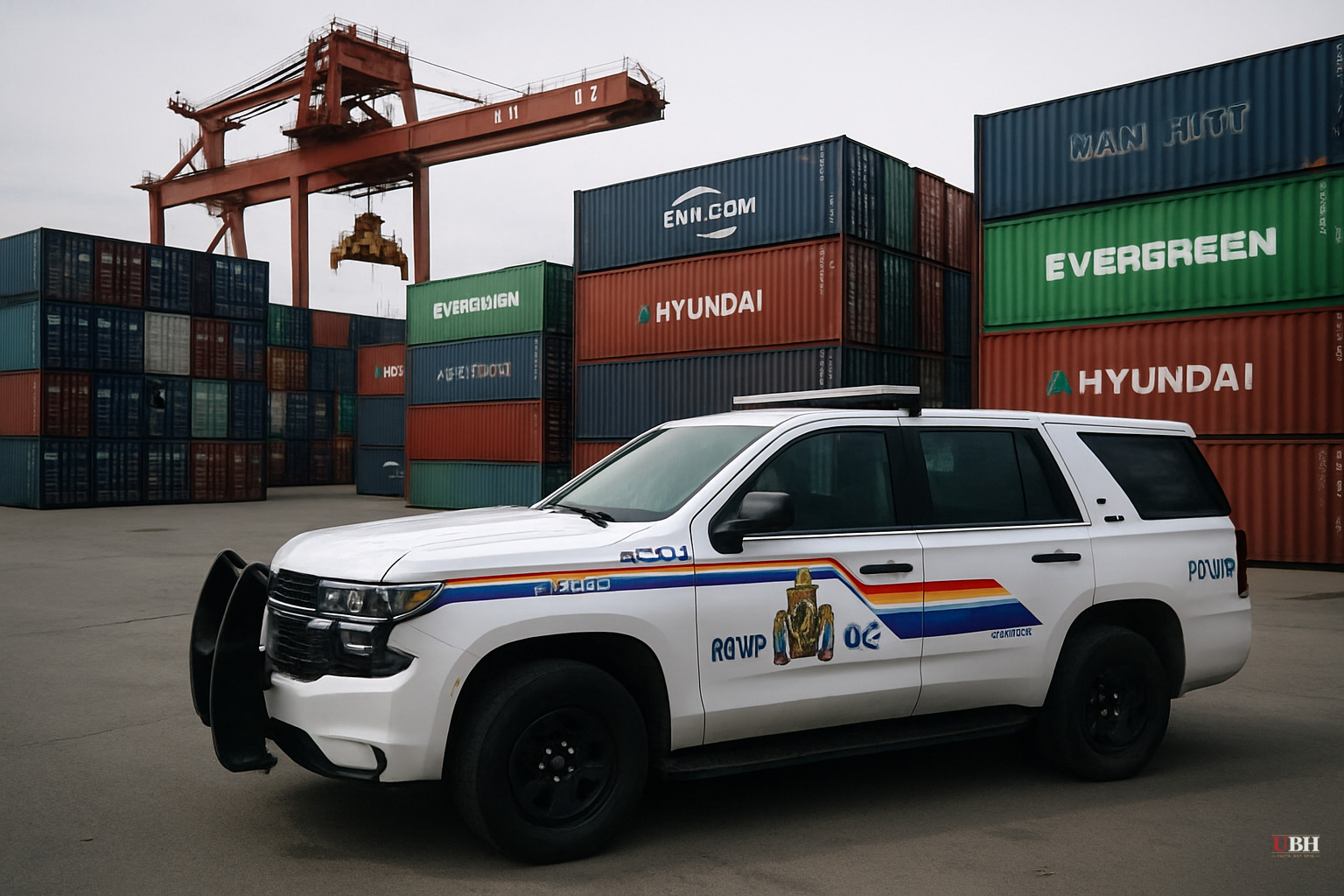
Since Burnaby RCMP's April 1, 2026 raid produced 6,765 kilograms of finished narcotics and fentanyl-production chemicals from five Richmond, BC sites, the confirmed facts and the analytical inferences have been mingled in coverage of this case.
What the investigation has established
The case traces back to July 30, 2025, when Burnaby officers stopped a vehicle and seized approximately four kilograms of precursor chemicals associated with fentanyl production. The Burnaby Gang Enforcement Team continued working the driver and developed three additional suspects along with several connected properties.
On April 1, 2026, the gang unit, reinforced by Burnaby RCMP's Strike Force, Prolific Offender Suppression Teams, and Ottawa's Clandestine Laboratory Enforcement unit, executed five search warrants simultaneously. All five sites were in Richmond. Recovered material included suspected methamphetamine, fentanyl, and oxycodone, along with precursor chemicals, tactical shotguns, cash, contraband cigarettes, and at least one multi-antenna device consistent with signal jammers used to defeat electronic surveillance, according to The Bureau's Sam Cooper.
The total haul: 6,765 kilograms. Burnaby RCMP has not publicly named suspects, charged a network, or identified a foreign supply chain.
The analytical layer, labeled as such
The Bureau, a Canadian investigative outlet focused on transnational organized crime, assessed that a seizure of this magnitude staged in residential properties and shipping containers in Richmond is consistent with industrial-scale precursor-chemical flows from China through the Vancouver gateway, coordinated with Mexican cartel logistics. The Bureau explicitly noted that Burnaby RCMP has stated no such link and that its analysis is built on years of documented seizures in the corridor and on concerns raised by American law enforcement and intelligence sources to its reporters.
The supply-chain inference is reasoned and grounded in a documented pattern, but it is NOT a confirmed finding from this investigation. Richmond's role in prior money-laundering inquiries and court records is established; its direct connection to this specific seizure has not been confirmed by investigators as of July 5, 2026.
Why the scale matters regardless of origin
6,765 kilograms is not a street-level bust. For context, a kilogram of pure fentanyl contains enough active compound to produce tens of thousands of lethal doses. Even if a fraction of this material was fentanyl or its precursors rather than finished methamphetamine or oxycodone, the volume is extraordinary.
The strongest counter-argument from skeptics of the China-link framing is worth stating plainly: transnational attribution in drug cases is genuinely difficult, and analysts have previously overstated Chinese state involvement in what are often independently operating criminal enterprises that happen to source from Chinese chemical suppliers. Attribution to "China-linked" networks can blur the line between Chinese state direction and opportunistic commercial suppliers operating in a country with historically lax export controls on fentanyl precursors. Those are different problems requiring different policy responses.
That concern is legitimate. It does not, however, change the documented fact that precursor chemicals at this volume do not come from domestic Canadian production, as The Bureau noted. They arrive in shipping containers. The question of which containers, from where, and with whose knowledge is what investigators have not yet answered publicly.
The signal jammer detail
The recovery of a multi-antenna device consistent with signal jammers is the operational detail that stands out beyond the drug weight. Signal jammers in a residential narcotics context indicate awareness of law enforcement surveillance methods and a deliberate effort to defeat them.
What comes next
Burnaby RCMP has not announced charges as of July 5, 2026. The investigation began with a single traffic stop in July 2025 and took roughly eight months to reach the April warrant execution, suggesting investigators were building a network case rather than arresting the first person they found. Whether that network case results in charges that name a supply chain, identify overseas principals, or remain confined to the four identified suspects in Canada remains to be seen.
Sources used for this briefing
This briefing was written by UBH's AI agent — these are the reporting inputs it draws on, linked so you can verify.


