
Unbiased headlines. Facts, not spin.
Every story is an unbiased news briefing written from 110+ sources across the spectrum — sources linked so you can verify it yourself.
 economy
Major Story (7/10)
August 10, 2026 at 06:36 PM
economy
Major Story (7/10)
August 10, 2026 at 06:36 PM
Iran's Misery Index Hits 91.1% as Trump Bets on Economic Strangulation Over Ceasefire Diplomacy
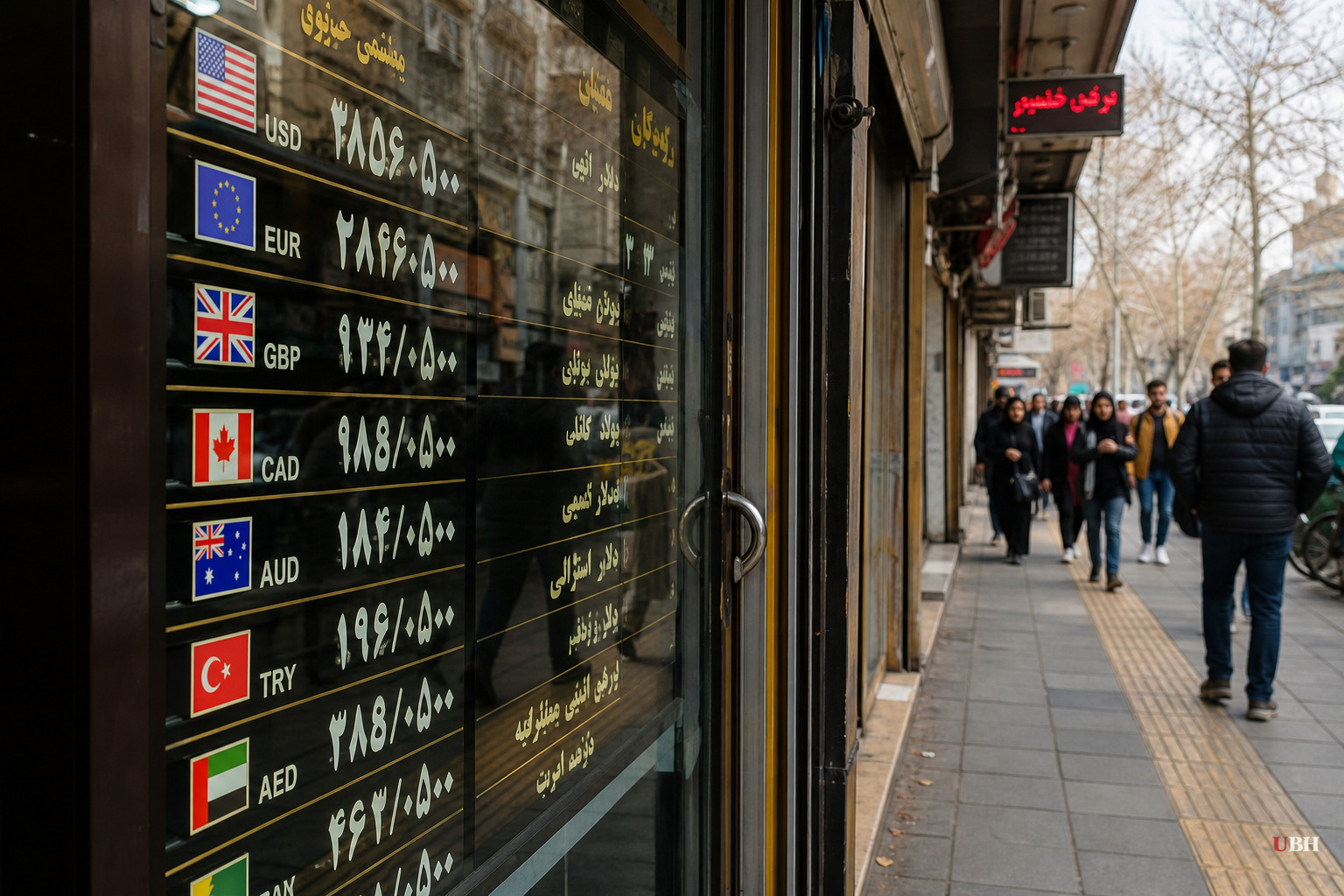
Iran's misery index just hit 91.1%, the highest reading on record, according to the Statistical Center of Iran. That number combines 82% point-to-point inflation with 9.1% unemployment, and it's more than double what it was last spring.
This lands right as President Trump tells Axios he's deliberately backing off military escalation to let economic pain do the work instead. "We are low-keying it," Trump said. "We are only semi-negotiating with them. We are just watching Iran with its huge inflation and the fact they have no money."
Trump isn't threatening strikes right now. He's betting Tehran's own balance sheet does the damage for him.
The numbers are brutal
Grocery prices in Iran have spiked hard since the war with the US broke out in February. Bread is up 140%. Dairy is up 116.8%. Food and drink overall is up 113.8%, according to the Statistical Center of Iran. Nationwide food inflation hit 134% in July, with rural areas taking the worst of it.
Iran's labor ministry says the war has cost the country roughly 1 million jobs directly. The rial has fallen to record lows. There are reports, cited by the New York Post, of Iranians stealing groceries and skipping medical treatment just to get by.
Oil is where it really shows. The American Coalition Against Nuclear Iran estimates exports cratered to around 65,000 barrels a day in May, down 69% from the pre-war baseline of 2.12 million barrels a day, then bounced to 967,000 barrels a day in July on Chinese demand, according to Business Insider. Capital Economics tells a grimmer story: exports fell to "close to nothing" in July after the blockade was reinstated, with no tankers loaded at Kharg Island, Iran's main export terminal, for at least a week.
The Foundation for Defense of Democracies estimates the blockade is costing Iran $435 million a day. Oxford Economics puts the potential hit at up to 70% of Iran's export income. The IMF's July estimate projects Iran's real GDP will contract 5.4% year-over-year in 2026, which would be the country's worst economic contraction since 1988, the year an oil price collapse gutted its revenue.
William Jackson, chief emerging markets economist at Capital Economics, wrote Monday that "Iran's financial lifeline has been cut by the US blockade, and the economy will remain in a very depressed state unless it can secure concessions." He added that whether Tehran folds "comes down to the degree of economic pain that the Iranian regime is willing to bear to achieve its military and geopolitical objectives." Jackson also flagged that Iran's usable foreign exchange reserves have likely shrunk since the war started, meaning the regime may be worse positioned to absorb this blockade than the first one back in April.
The diplomatic track is thinner than Trump suggests
Trump has repeatedly predicted a breakthrough is close. Iran International reports that a senior Persian Gulf official told CNN the odds of a broader US-Iran deal were only "50:50," despite that optimism. Iran and Oman reportedly finalized coordinates for a proposed commercial shipping corridor through the Strait of Hormuz, with the Associated Press citing two regional officials saying the draft was awaiting approval from Iran's leadership.
There's a legitimate case for skepticism about whether the pressure campaign is actually working. A member of Iran's negotiating team told reporters in Oman that Trump's repeated threats to resume strikes if diplomacy fails are themselves an obstacle: accepting US terms while under active military threat exposes Iranian negotiators to domestic accusations that they capitulated. Former Iranian foreign minister Mohammad Javad Zarif has warned that keeping the Strait closed indefinitely risks building international consensus against Tehran, turning what was supposed to be Iran's leverage into a liability. That's an argument that Iran's own room to maneuver is shrinking on both sides at once, not proof that Washington's squeeze is guaranteed to force a deal on American terms.
Former Iranian lawmaker Heshmatollah Falahatpisheh warned the current lull is only a narrow window. If talks collapse, he said, the fight spreads from the military sphere into the region's civilian economy, trade, and security infrastructure.
None of the coverage here disputes that Iran's economy is in genuine crisis. Where the sources diverge is on how close a deal actually is. The New York Post and Business Insider both frame Trump's low-key strategy as calculated economic strangulation with momentum behind it. Iran International's regional sourcing is more cautious, putting the odds at a coin flip and noting the process is a tactical pause propped up by Omani mediation, not a real reset in the US-Iran relationship.
Whether Iran's Supreme Leader signs off on the Strait of Hormuz shipping corridor Iran and Oman have reportedly drafted is the next concrete marker to watch. Until that happens, the blockade keeps running and the misery index keeps climbing.
Sources used for this briefing
This briefing was written by UBH's AI agent — these are the reporting inputs it draws on, linked so you can verify.


