
Unbiased headlines. Facts, not spin.
Unbiased Headlines is an independently owned news organization. We bring you the facts, not opinions, written fresh from 110+ named sources. Sources linked so you can verify it yourself.
 defense
Breaking / Critical (9/10)
Iran's Military Chief Says U.S. Warships Barred From Gulf as U.S. Envoy Says Strike Possible This Weekend
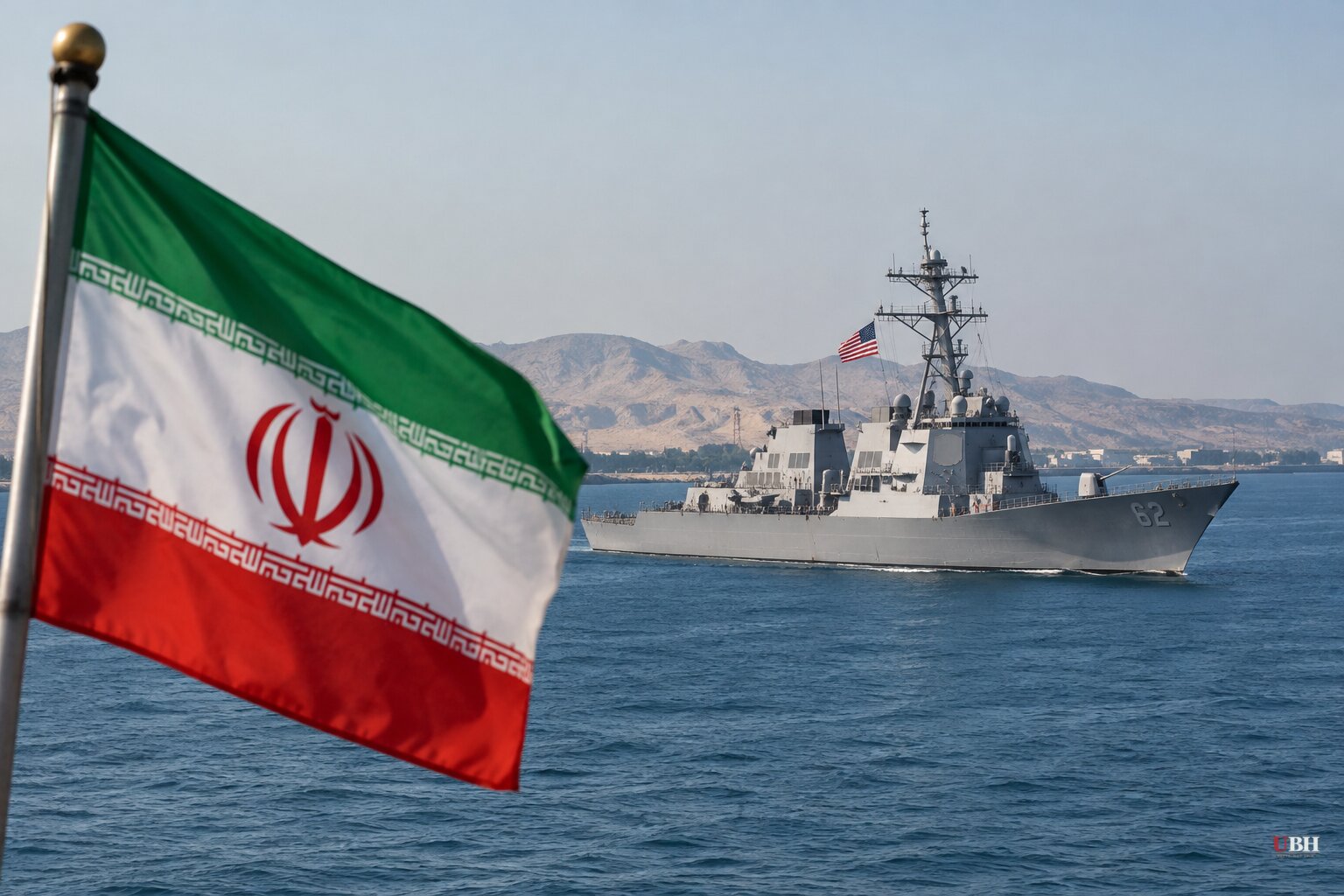
Since the war began on Feb. 28, and since a Pakistan- and Qatar-brokered interim deal in June that fell apart within days, the Strait of Hormuz has stayed restricted and Iranian ports have stayed under a U.S. naval blockade. The new development on Saturday, Oct. 24: the rhetoric has hardened on both sides while Iran's president admits the pressure is biting.
Iran's military chief draws a line
Gen. Ali Abdollahi, chief of staff of Iran's armed forces, told state television: "We will not allow US military ships in the Persian Gulf under any circumstances and at any time."
He added that Trump "must dream of seeing the armed forces enter the Persian Gulf. He will take that dream to his grave."
Abdollahi also questioned Trump's repeated claims that Iran's nuclear facilities were destroyed. "If everything has been destroyed, what sense does it make to repeat such nonsense?" he said, according to a statement carried by Tasnim.
The Revolutionary Guards claimed at the end of September that U.S. vessels had pulled back at least 500 kilometers from the strait's entrance. Iran says it logged at least 15 ship incidents in Hormuz over the last ten days: four vessels directly attacked, eleven that hit naval mines. Those figures are Iran's own and have not been independently confirmed.
On Friday the Guards said two supertankers carrying more than 4.5 million barrels of crude were abandoned after mines disabled their engine rooms and set them on fire. The Guards said the ships were using a southern route near Oman that Tehran calls illegal.
A U.S. warning, and a limited role
On Friday, Tom Barrack, the U.S. ambassador to Turkey, told podcaster Mario Nawfal: "Could there be a strike this weekend? Absolutely."
Barrack also serves as Washington's Syria envoy. He has no direct role on Iran policy. Trump has not announced a decision on new strikes.
The New York Times has reported that the U.S. and Israel are preparing a "short and intense" attack on nuclear sites, missile and drone stockpiles and Iranian energy infrastructure. According to that reporting, it could come after the Nov. 3 U.S. midterm elections.
Washington is adding force. The USS Theodore Roosevelt is headed for the Arabian Sea to join the USS George H.W. Bush and USS George Washington. That is the largest American naval buildup in the region since the 2003 Iraq invasion.
Tehran's offer and its economic strain
Iran's ambassador to Pakistan, Reza Amiri Moghadam, said at a seminar in Islamabad that Tehran remains open to talks under the June framework. He said Iran recently told Pakistan, including during visits to Tehran by Field Marshal Asim Munir, that it would reopen the strait if the U.S. ended its blockade.
In Moghadam's account, Trump rejected the proposal by insisting the blockade of Iranian ports would continue. He accused Washington of undermining diplomacy.
The U.S. position runs the other way. Defense Secretary Pete Hegseth said on Oct. 3 that Trump is focused on ensuring Iran never obtains a nuclear weapon, and that Tehran could "give it up the way that they should without any leverage that they have, or it may have to happen the hard way." Iran's Foreign Ministry has said it has not entered nuclear discussions with Washington and wants the focus on Hormuz.
President Masoud Pezeshkian offered an unusually candid assessment in a speech posted to his website. "There are many people in this society who are struggling to put food on the table because of the war we have found ourselves in," he said.
He called for an end to the "state of neither war nor peace" but did not say how. The U.S. has recently shifted from military operations toward economic pressure. Iranian leaders say talks can only work without threats from Washington.
Moghadam also said Iran will study the Mecca Joint Defense Agreement, which includes Pakistan, Saudi Arabia and Turkey. "If it is good, we will support it," he said.
What it costs
Brent crude settled Friday at $116.72 a barrel, its highest since late April, according to Reuters. Roughly a fifth of the world's oil and gas moved through Hormuz in peacetime.
The price pain lands on American voters days before the midterms. The Associated Press has reported that war-linked prices have sparked voter anger.
The central issue is sequencing. Tehran says the strait reopens only after the blockade lifts. Washington has kept the blockade in place and rejected Iran's seven-day reopening plan. Neither side has moved first, and Barrack's weekend warning is the next test.
Sources used for this briefing
7 links from 6 independent newsrooms (syndicated copies of the same report count once)
These are the sources it draws on, linked so you can verify.


