
Unbiased headlines. Facts, not spin.
Every story is an unbiased news briefing written from 110+ sources across the spectrum — sources linked so you can verify it yourself.
 economy
Notable (6/10)
July 28, 2026 at 01:32 AM
economy
Notable (6/10)
July 28, 2026 at 01:32 AM
Iran's IRGC-Led Government Leans on Central Asia Trade Routes It Cannot Afford to Lose
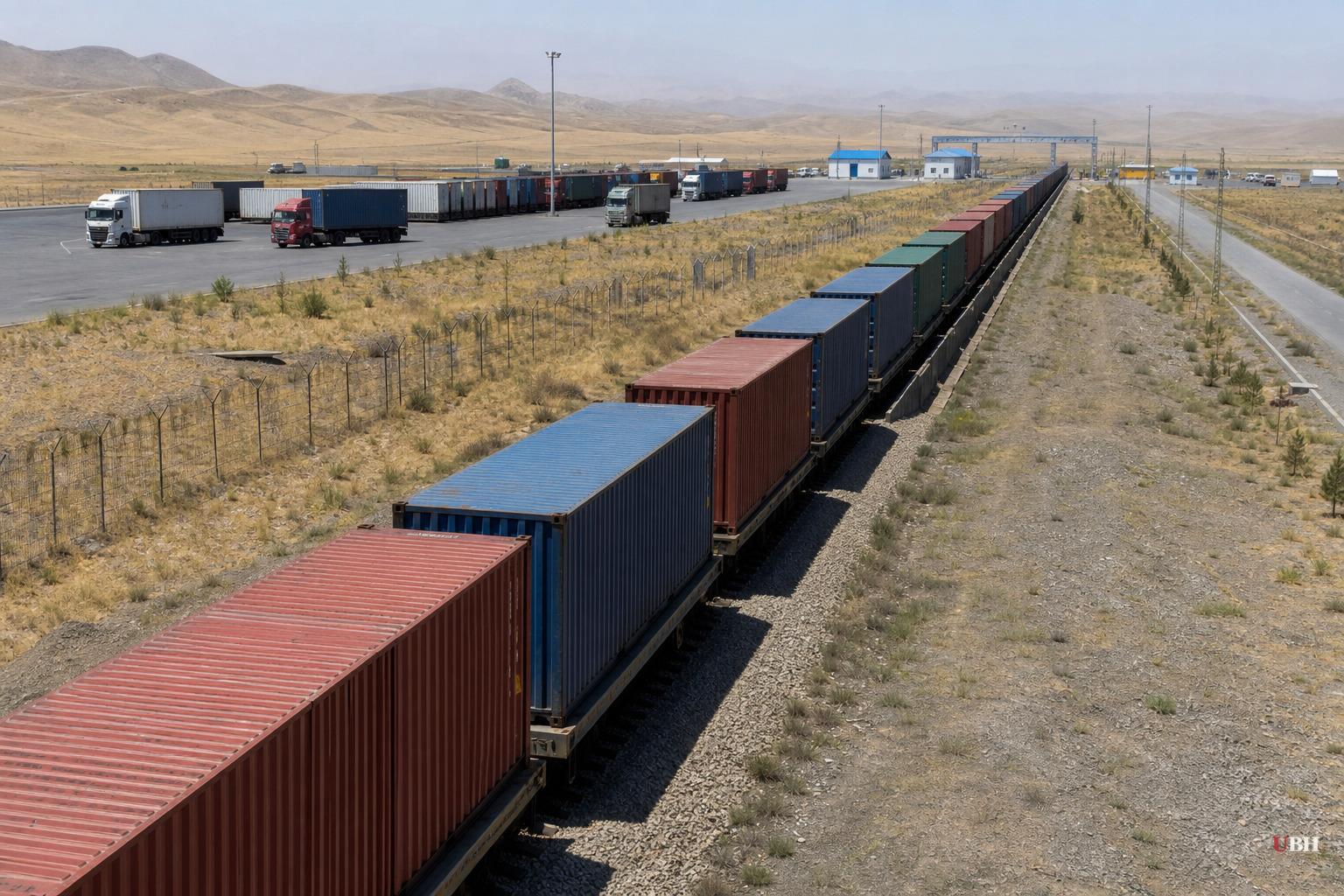
The Iran Story Nobody's Watching: Central Asia
Since Ali Khamenei and his family were killed in a U.S./Israeli operation on February 28, 2026, Iran's power structure has shifted hard toward the IRGC. His son Mojtaba Khamenei now holds the top job, but according to analysis from OilPrice.com, it's the Revolutionary Guard, not the new Supreme Leader, calling the shots.
Brigadier General Ahmad Vahidi commands the Pasdaran and, per OilPrice.com, has emerged as the dominant force in Tehran. Foreign Minister Abbas Araghchi and Parliament Speaker Mohammad Bagher Ghalibaf are both Guards veterans. President Masoud Pezeshkian, a civilian, may be increasingly sidelined.
That matters for a part of the map most Americans never think about: the five former Soviet republics on Iran's northern and eastern flank. Kazakhstan, Kyrgyzstan, Tajikistan, Turkmenistan, and Uzbekistan sit on trade and transit routes Iran needs badly, especially with Western sanctions still biting.
Why Central Asia Matters to Tehran
The IRGC controls an estimated 50% of Iran's economy, according to OilPrice.com. That's not a rounding error. That's half the country's economic activity run by a paramilitary organization the U.S. designates a terrorist group.
A huge chunk of how Iran survives sanctions runs through trade, transit, and sanctions-evasion channels with neighbors who aren't fully aligned with Washington. Central Asia fits that bill. These five republics run multi-vector foreign policies, they trade with Russia through the Eurasian Economic Union, with China through the Belt and Road Initiative, with Turkey, with Europe, and yes, with Iran.
Before this year's war, Iran's relationship with the region was improving steadily, driven by economics, not ideology, per OilPrice.com's analysis. Iran deliberately avoided provoking Russia or China in its own backyard because it needed Moscow and Beijing's goodwill more than it needed a bigger footprint in Central Asia.
The IRGC's Different Playbook Up North
The IRGC's approach to Central Asia looks nothing like its approach to the Middle East.
In Iraq, Lebanon, Syria, and Yemen, the Guards built an "Axis of Resistance" through armed proxies, funded militias, and open ideological export. In Central Asia, the IRGC has historically played it much cooler, working through intelligence networks, cultural outreach, and economic leverage in the Khorasan region bordering Turkmenistan, rather than through armed groups.
That's a deliberate restraint, not weakness. Central Asian governments are secular, authoritarian in their own right, and deeply wary of religious extremism spilling across their borders. Tehran, even under IRGC control, has generally understood that exporting revolution to Bishkek or Dushanbe would blow up its own economic interests.
What Changes Now, What Doesn't
A real case exists that an IRGC-dominated Tehran gets more ideologically assertive and starts deploying allied proxies or leaning harder on hardline rhetoric, which would rattle secular capitals like Tashkent and Astana that have zero interest in importing Iran's domestic politics.
But there's an equally strong case, and probably the stronger one, that economic pragmatism wins. The IRGC benefits directly from stable revenue streams, functioning sanctions-evasion routes, access to local markets, and quiet borders. Blowing up those relationships to score ideological points would cost the Guards money they need.
This tension is worth watching. A reasonable skeptic of Tehran's intentions would point out that an organization built on asymmetric warfare and regional proxy networks doesn't exactly have a track record of prioritizing stability over ideology. Iran's support for Hezbollah, Houthi rebels, and militias in Iraq didn't happen because it was economically efficient.
The counter to that is simple: Central Asia isn't Lebanon or Yemen. Russia and China have far more leverage and far less patience for instability on their southern flank than either has shown toward Iran's western proxy wars. Central Asian states can hedge toward Turkey, Europe, or deeper Russian and Chinese security guarantees if Tehran gets aggressive, and the IRGC knows it.
What to Watch
No Central Asian government has publicly signaled a break with Iran since Mojtaba Khamenei's ascension. No new IRGC proxy activity in the region has been reported by name. The open questions are whether Tehran's sanctions-evasion trade through these five republics holds steady, whether the IRGC tries to extend its Khorasan-border intelligence and cultural networks further into Central Asian territory, and how Moscow and Beijing react if it does. None of that has a clear answer yet, and the region's governments have given no public indication they're planning to change course.
Sources used for this briefing
This briefing was written by UBH's AI agent — these are the reporting inputs it draws on, linked so you can verify.


