
Unbiased headlines. Facts, not spin.
Unbiased Headlines is an independently owned news organization. We bring you the facts, not opinions, written fresh from 110+ named sources. Sources linked so you can verify it yourself.
 energy
Major Story (7/10)
Event date: November 10, 2026 ·
Iran's Budget Planners Told to Prepare for Zero Oil Revenue as Kpler Projects Payments Stop by Mid-December
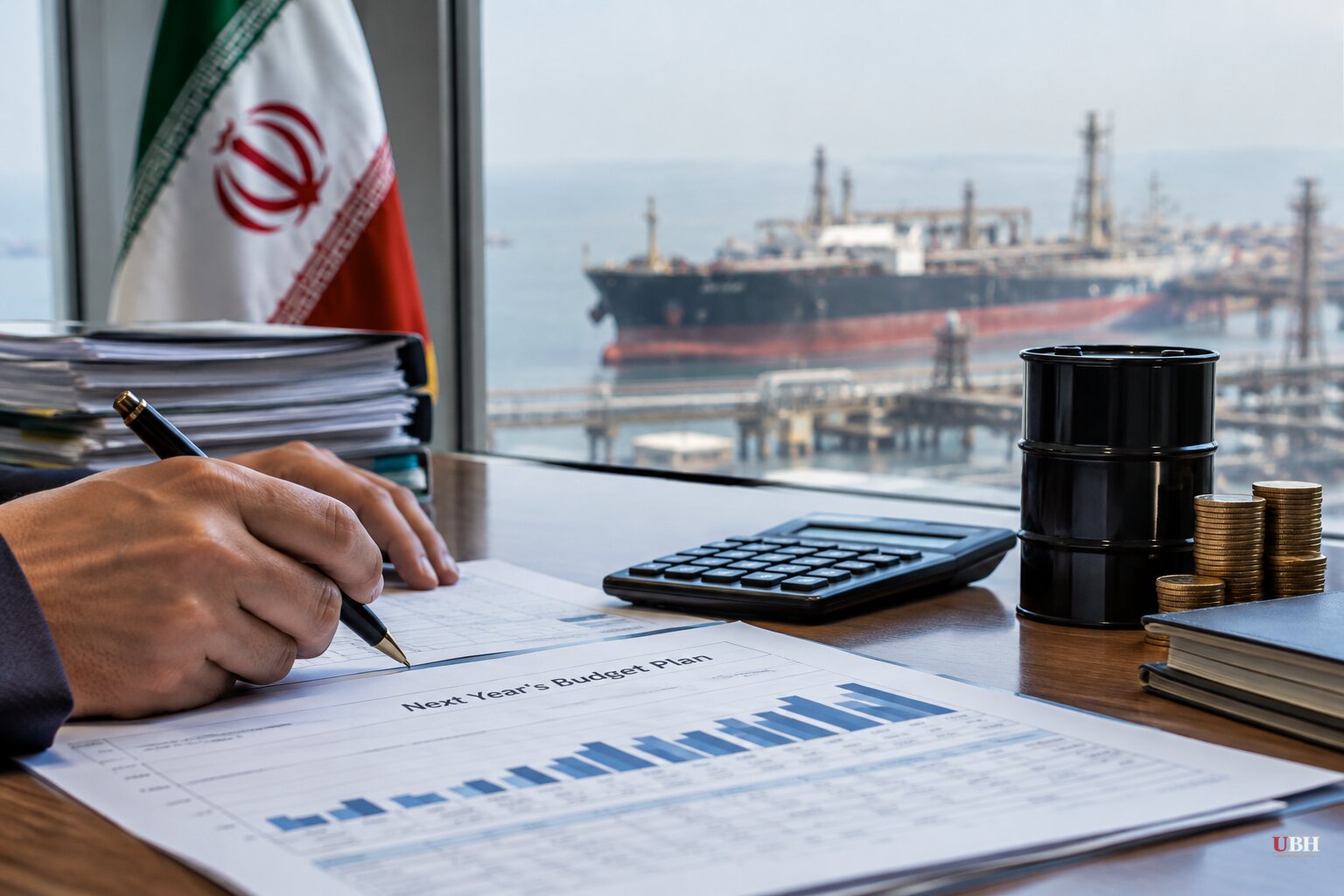
Nine months after the war began in February, and seven months after the U.S. naval blockade started on April 13, Tehran's own budget planners are now writing next year's spending plan around the possibility that oil brings in nothing.
Mohammad Ghasemi, a senior official at the Planning and Budget Organization, told the government on Monday, Nov. 9, to prepare for a zero-oil-revenue scenario. The budget circular for the Iranian year 1406 sets "stability, resilience and reconstruction" as its three axes. It restricts new hiring, new government projects and administrative spending. Its baseline assumes sanctions, the maritime blockade and current regional conditions all continue.
The numbers behind the warning
The U.S. Treasury says Iran has loaded no crude since Aug. 25. Crude and condensate Iran held at sea outside the blockade zone fell from 88.8 million barrels on July 14 to zero by mid-October, according to Kpler. Another 43 million barrels remain stranded inside the zone.
Chinese buyers pay one to two months after delivery. Kpler therefore expects Iran's oil revenue to stop around mid-December, once the last outstanding payments are settled.
Production has dropped too. Kpler puts Iranian output below 2 million barrels per day in the months before late October, down from 3.59 million in February. OPEC's latest report has output at almost half its pre-war level.
Oil directly accounts for roughly 30% of the government budget, according to Gregory Brew of Eurasia Group and Miad Maleki of the Foundation for Defense of Democracies. Maleki puts oil and refined products at 50% to 60% of total regime revenue once indirect income is counted. Brew says Iran began the year planning to export about 1.7 million barrels per day at roughly $54 a barrel.
What Tehran says it will do
The Planning and Budget Organization's guidelines project an average 35% pay raise for government employees next year, weighted so lower salaries rise more. Planning Coordination Deputy Mohammad Qasemi said the priority is protecting payroll and avoiding direct borrowing from the Central Bank. He said the deficit from lost oil income is meant to be pushed into non-inflationary channels.
Qasemi also said warnings went to executive bodies in May 2025 that part of the expected foreign exchange, including money needed to secure about €12 billion of essential goods, might not arrive. A contingency program moved into execution when the war broke out, he said. He added that the government had wanted a contraction-oriented budget this year, but Parliament rewrote it and lifted nominal growth from about 2% to about 30%.
The Iranian press describes strain beneath the plan. NCRI, the Iranian opposition group, cites Donya-e Eqtesad reporting that businesses face effective financing costs of 45% to 47%. It also cites Ebtekar on a dispute among the government, parliament and the Audit Court over who should keep receiving food subsidies, since inflation has gutted the electronic food allowance.
Cash squeeze, not a cliff
Washington's framing is that the pressure is working. Treasury Secretary Scott Bessent said Iran would have "nothing left to trade for anything" within about two weeks of his Sunday remarks, and that the country would reach no oil at sea and no oil revenue for the "first time in history."
The analysts Bessent's side cites are more cautious about what follows. "The December timeline is more of a cash flow kind of disruption, and not really a collapse state," Maleki told Fox News Digital. He said Tehran could shield military spending while cutting civilian programs and letting inflation and the weakening rial absorb the shock. "The purchasing power of Iranians incrementally declines," he said.
Mohammad Tabibian, a former deputy director of the Planning and Budget Organization under President Rafsanjani, told the Shargh newspaper that endurance is the wrong yardstick. "Adapting to sanctions does not mean eliminating their harm," he said. "A society can therefore gradually become poorer without experiencing a sudden halt to all economic activity."
That leaves open whether the blockade changes Iranian behavior or only Iranian living standards. Bilal Saab of Chatham House says the leadership is betting that Saudi Arabia, the UAE, Qatar and Kuwait, the states with the most to lose, will press Washington harder to find an exit.
Diplomacy on hold
President Trump is not signaling that he will move. He wrote on Truth Social on Thursday, Nov. 12: "We don't need a deal with Iran. Those days have long since passed. We've got their money." He has said Qatar, Saudi Arabia, the UAE, Bahrain, Kuwait and others "would prefer the status quo." OilPrice.com reports he has also removed Vice President JD Vance from the negotiations, closing the channel Vance opened with a letter to Mohsen Rezaei, secretary of Iran's Supreme National Security Council.
Rezaei welcomed the tone of that letter, then said Washington must accept Iran's conditions first and that no enriched uranium would leave the country.
The Gulf states' own position is harder to read. The International Monetary Fund says they are in economic recession because of the war, despite higher oil prices. UAE diplomat Anwar Gargash told an Abu Dhabi audience this week the region must "prepare for a prolonged period of uncertainty."
The test comes in mid-December, when Kpler expects the last Chinese payments to stop. Tehran's budget bill for 1406 is still being drafted, and its final wage and subsidy numbers will show how much of the oil shortfall the government intends to push onto households.
Sources used for this briefing
6 links from 5 independent newsrooms (syndicated copies of the same report count once)
These are the sources it draws on, linked so you can verify.


