
Unbiased headlines. Facts, not spin.
Unbiased Headlines is an independently owned news organization. We bring you the facts, not opinions, written fresh from 110+ named sources. Sources linked so you can verify it yourself.
 energy
Major Story (7/10)
Brent Settles Near $96 as Trump Says US Doesn't Need an Iran Deal, Second Straight Weekly Decline
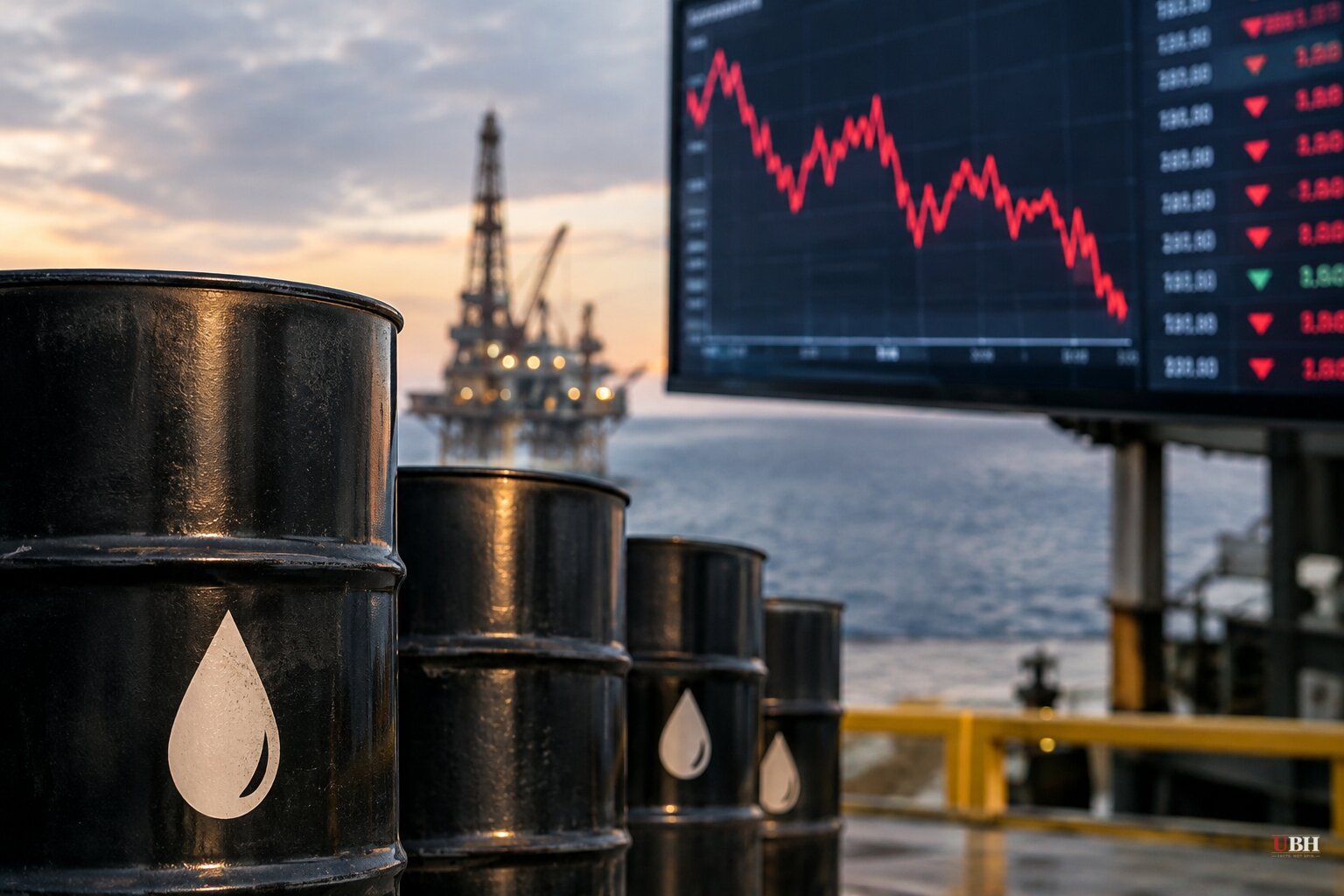
Brent crude traded at about $72 a barrel in February, before the US-Israeli war with Iran began, and hit $126 a barrel by the end of April, according to The Guardian. This week it fell to $89.66, its lowest level since late August, and bounced back to about $96. Friday's settlement leaves the benchmark in a narrow, nervous range.
Brent swung within a $2 band on Nov. 13 before settling little changed near $96. West Texas Intermediate closed near $88.50. Brent logged a second straight weekly decline after touching a six-month high at the end of October.
The Trump post that reversed the slide
Trump said the war was "effectively over," and Brent fell 24% in 10 days through Tuesday to $90, according to TIKR's tally. Oil settled that Monday at its lowest level since August.
On Thursday, Nov. 12, Trump posted on Truth Social: "We dont need a deal with Iran. Those days have long since passed. Weve got their money, Hundreds of Billions of Dollars, and weve got their Strait!" Brent settled at $95.82 that day, up $3.06, or 3.3%.
That same day, Houthis claimed strikes on a pumping station on Saudi Arabia's East-West pipeline, an oil facility in Yanbu and an Aramco building in Riyadh. The Saudi-led coalition said it intercepted and destroyed two drones. Prices had fallen about $1 in early Asian trade before Trump posted, so the rebound has more than one trigger.
Bloomberg reported that Trump instructed Vice President JD Vance to focus on domestic issues rather than negotiations with Tehran, which threw cold water on back-channel talks. Axios reported, citing three sources, that the Mossad director is in Washington meeting senior administration officials about the war in Iran. Prime Minister Benjamin Netanyahu has pressed Trump to resume attacks. The Financial Times, citing a diplomat, reported that Netanyahu calls Trump every day to urge him to resume the war and that Gulf leaders are alarmed.
Blockade stays, Tehran digs in
Earlier in the week, after a meeting with Qatari Prime Minister Sheikh Mohammed bin Abdulrahman Al Thani, Trump said the US would keep its "status quo" posture, including the port blockade and Operation Iron Gate. He said Qatar, Saudi Arabia, the UAE, Bahrain, Kuwait and others prefer that outcome.
Iran's Supreme National Security Council chief, Mohsen Rezaei, answered on X that Washington should "SURRENDER to the seven conditions" Tehran has set out and stop "manufacturing FAKE NEWS about imaginary talks." Washington says it holds the leverage. Tehran says there are no talks to hold.
Iran's military said four oil tankers were hit by explosions in the Strait of Hormuz after ignoring warnings. That claim could not be independently verified.
The supply data points the other way
The International Energy Agency said Friday that supply outstripped demand by almost 2 million barrels a day in October, the first surplus since the war started. The agency said "Gulf exports recovered much faster than global oil demand."
It expects fourth-quarter supply to average 105 million barrels a day, 1.7 million above forecast demand. It had previously expected a deficit. Global demand is forecast to fall by 2.68 million barrels a day this year to 103.2 million.
IEA members will also speed up release of emergency stocks, adding 71 million barrels by the end of February.
US data was bearish too. Crude and product inventories rose last week and refinery runs hit a seasonal record.
Why the risk premium persists
Verisk Maplecroft counted 36 confirmed attacks on commercial ships in the Persian Gulf, Strait of Hormuz and Gulf of Oman in October, the most in any month of the war. More ships were hit this week.
Goldman Sachs estimates Middle East shipping risk accounts for most of a $20-a-barrel year-over-year rise in average shipping costs.
"When you combine those physical supply risks with a more confrontational tone from Washington, the market has a reason to put some geopolitical risk premium back into crude," said Sid Perkins, chief executive of Snapper Creek Energy.
Timothy Snyder, chief economist at Matador Economics, said investors seem "weary from hearing the same song on peace prospects."
Politics and the pump
Democrats flipped both the House and Senate in the Nov. 3 midterms. Vance blamed the Iran war for Republican losses, and Trump told reporters that assessment was largely true because the war drove up gasoline prices. The AAA national average was $4.10 a gallon on Nov. 5, against almost $3.08 a year earlier.
House Minority Leader Hakeem Jeffries wrote colleagues on Nov. 4 that House Democrats must act in their first 100 days in the majority to stop the war. ING's Warren Patterson and Ewa Manthey said funding the war could become harder, but the new Congress does not take office until January, "leaving room for escalation."
GasBuddy's Patrick De Haan said the national average could fall to $3.65 in the weeks ahead based on the Nov. 4 close. This week's rebound complicates that forecast.
Who gains
ExxonMobil's annual report estimates that every $1 a barrel on Brent is worth about $700 million a year in earnings. Analysts tracked by TIKR expect its normalized EPS to rise from $6.99 in 2025 to $13.66 this year. Chevron's earnings came to $24.2 billion in the first nine months, up from $9.5 billion in the same stretch of 2025.
The Gulf states backing the blockade are also pumping more. Saudi Arabia's Energy Ministry reported a 26% month-on-month jump in oil production to 10.56 million barrels a day, though its supply to the market was only 9.2 million barrels a day.
The open questions are specific: whether the Mossad director's visit leads to renewed strikes, and whether the Iran blockade holds as Gulf output climbs. Until the new Congress takes office in January, neither depends on a vote.
Sources used for this briefing
7 links from 7 independent newsrooms (syndicated copies of the same report count once)
These are the sources it draws on, linked so you can verify.


