
Unbiased headlines. Facts, not spin.
Unbiased Headlines is an independently owned news organization. We bring you the facts, not opinions, written fresh from 110+ named sources. Sources linked so you can verify it yourself.
 energy
Notable (6/10)
Germany Reportedly Weighing €4 Billion Purchase of RWE and E.ON's One-Third Urenco Stake
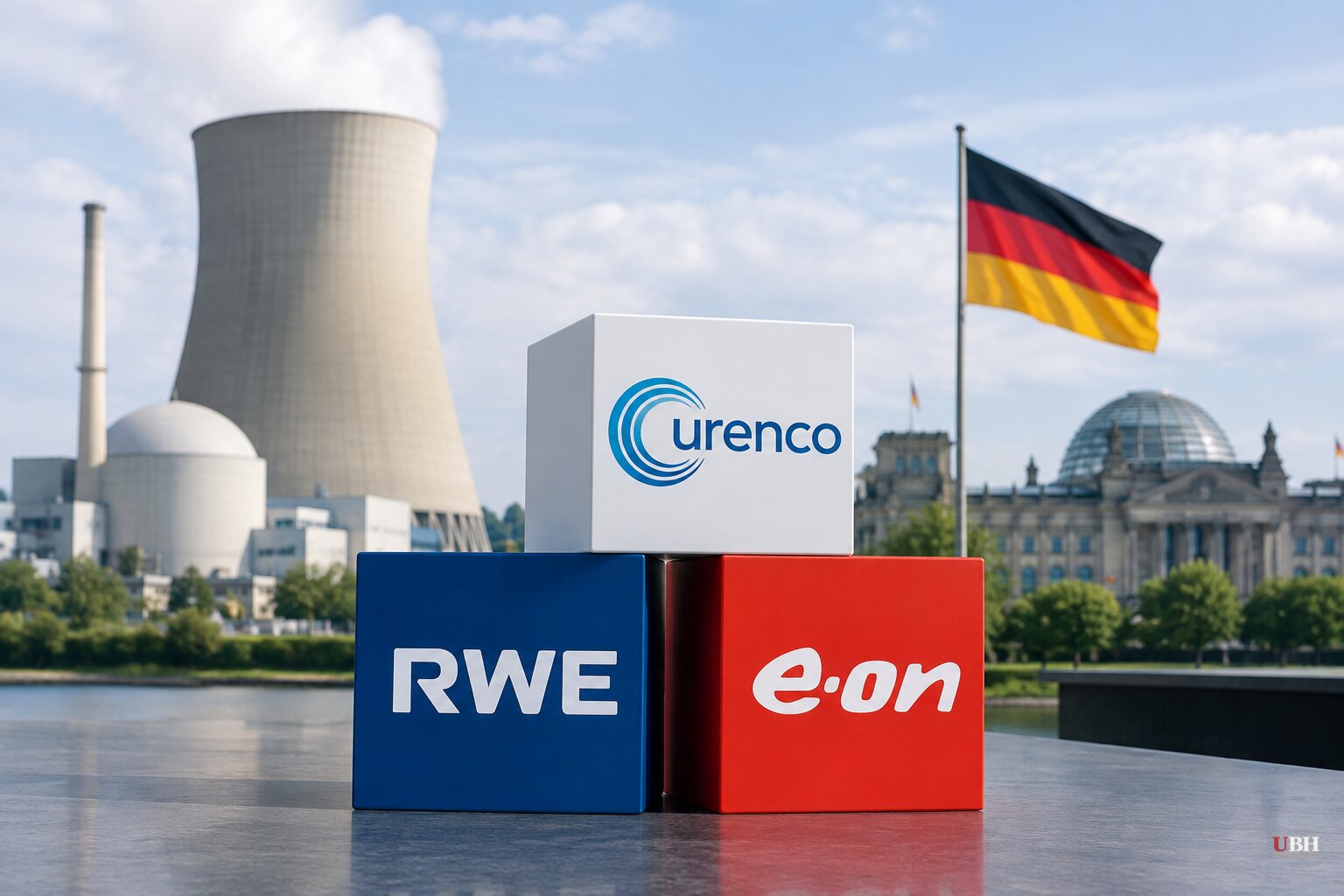
A €4 billion line item showed up in Germany's 2027 draft budget on Thursday, Nov. 12, and nobody in the government will say what it is for.
The entry reads: "Expenditure related to the acquisition and holding of stakes in companies in the energy sector." It surfaced during the Bundestag's final budget deliberations.
Welt reported Thursday evening that the money is meant to buy the Urenco shares held by utilities RWE and E.ON. Süddeutsche Zeitung and Handelsblatt, the latter citing government circles, reported the same plan. Welt's account rests on unnamed sources.
What the government and companies are saying
The Finance Ministry and the Economics Ministry both declined to say which energy-sector stake the money targets. A spokesperson for Economics Minister Katherina Reiche (CDU) said only that the ministry, as usual, does not comment on confidential proceedings.
RWE and E.ON also declined to comment. According to dpa-AFX, they said they do not want to "comment on rumors."
RWE has said repeatedly that it wants to sell its minority stake. E.ON CEO Leonhard Birnbaum has said his company could consider a sale only with the consent of the federal government.
That makes Berlin a gatekeeper as well as a potential buyer.
Who owns Urenco
Urenco is split three ways. The United Kingdom and the Netherlands each hold one-third. The remaining third sits with RWE and E.ON through the holding company Uranit UK Limited.
The company has mostly made fuel for civilian nuclear plants. That is changing. Britain has asked Urenco to build a fuel cycle for defence-related reactor fuel, the first time the company has explicitly opened itself to military nuclear work.
Süddeutsche Zeitung reported that Urenco is set to produce highly enriched uranium for British nuclear submarines at its Gronau enrichment plant in Germany.
Why the utilities want out, according to Welt
Welt's sources give two reasons for the sale. After Germany's nuclear phase-out, a stake in a nuclear fuel producer has lost strategic value for both companies. And Urenco's push into military nuclear work, driven mainly by London, has caused unease at RWE and E.ON.
The government's reported motive is geostrategic, according to the press accounts. Germany would gain a seat in the nuclear fuel supply chain, including at an enrichment plant on its own soil. Berlin has not laid out that rationale itself.
The markets
The DAX closed Friday at roughly 26,750, down about 0.1%, but gained 3.6% for the week, its best week since June. E.ON rose 1.6% and RWE 0.6% on the reports, according to Trading Economics.
The €4 billion is a budget allocation. It is not a confirmed purchase price. How any proceeds would be divided between RWE and E.ON has not been disclosed.
The taxpayer question
This is public money, and the budget line gives lawmakers and voters almost nothing to evaluate. No ministry has described the target, the valuation, the timeline or the conditions. A €4 billion entry added late in deliberations, with every official declining to explain it, is a thin basis for a state equity stake in anything.
There is also the awkwardness of a government that ended domestic nuclear power now looking at ownership in a uranium enricher. Supporters of a deal, as reflected in the press accounts, point to security and supply-chain control, not energy policy.
No investigation, formal offer or signed agreement has been announced. The UK and Dutch co-owners have not been quoted in any of the reporting, and no source says how they view a German state shareholder.
The open questions are specific. Is the €4 billion actually earmarked for Urenco? What price would RWE and E.ON receive? And will the federal government give Birnbaum the consent he says E.ON needs? Neither ministry has answered any of them.
Sources used for this briefing
7 links from 6 independent newsrooms (syndicated copies of the same report count once)
These are the sources it draws on, linked so you can verify.


