
Unbiased headlines. Facts, not spin.
Every story is an unbiased news briefing written from 110+ sources across the spectrum — sources linked so you can verify it yourself.
 economy
Notable (6/10)
June 29, 2026 at 01:47 AM
economy
Notable (6/10)
June 29, 2026 at 01:47 AM
Iran's Assembly of Experts Splits Over Trump-Iran MOU, Members Call for Killing U.S. and Israeli Leaders
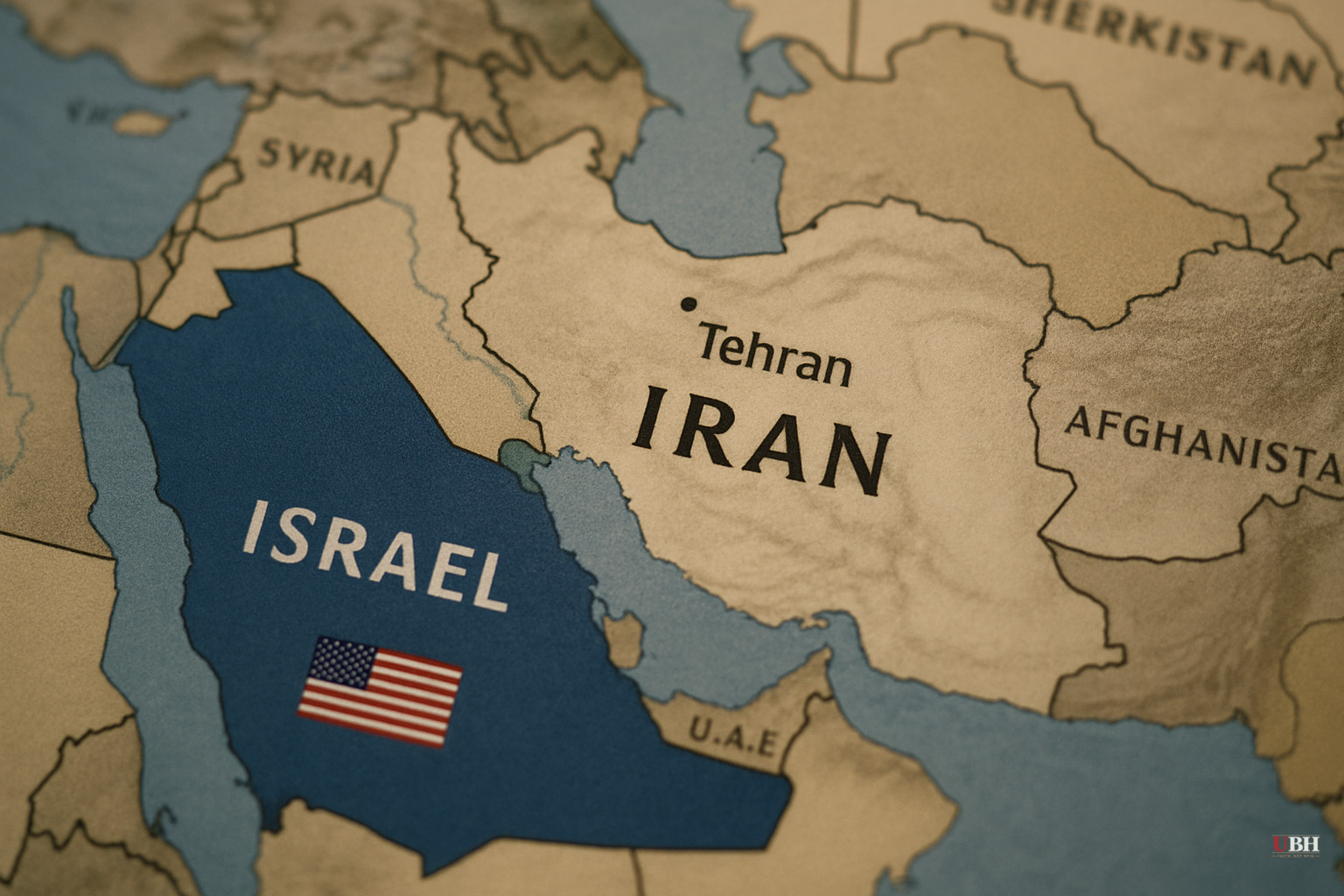
A Public Rupture at the Top of Iran's Clerical Establishment
Iran's Assembly of Experts, the 84-member clerical body responsible for appointing and theoretically overseeing the supreme leader, erupted in public infighting over the U.S.-Iran memorandum of understanding, according to Iran International.
The controversy began when more than 60 members published a joint statement on Saturday taking detailed positions on the MOU, the Strait of Hormuz, Lebanon, nuclear negotiations, and what they framed as permissible retaliation against the United States and Israel. This represented a majority of the body operating far outside the Assembly's customary lane.
The statement's most incendiary passage declared that anyone with access to the U.S. president or the Israeli prime minister had a religious duty to kill them, calling the two leaders responsible for the death of former Supreme Leader Ali Khamenei, according to Iran International.
The statement also labeled reopening the Strait of Hormuz while Israeli operations continued in Lebanon a "strategic error," and insisted Iran's nuclear rights must be kept off the negotiating table entirely.
The Leadership Pushed Back Fast
Within hours of the statement's publication, the Assembly's presidium and secretariat issued a public clarification. An extraordinary move for a body not known for airing internal disputes.
The secretariat reaffirmed support for new Supreme Leader Mojtaba Khamenei and stated that officials must follow his guidance on the MOU and broader negotiations. But it also called out the signatories directly: issuing a statement under the Assembly's name outside its established procedures was, in the secretariat's words, unprecedented, according to Iran International. Official positions, it said, must come through the full Assembly, its chairman, the presidium, or the secretariat itself.
Raja News, an outlet aligned with ultrahardline factions that have consistently opposed negotiations with Washington, quickly attacked that response, according to Iran International. The outlet is often critical of Parliament Speaker Mohammad Bagher Ghalibaf, who has led the talks.
What the MOU Actually Is
The document at the center of all this is a 14-paragraph ceasefire agreement signed by Trump and Iranian President Masoud Pezeshkian. According to CBC News, it commits both sides to achieving a final deal within 60 days of signing. Trump signed it on Wednesday at the G7 summit in Évian-les-Bains, France, according to CBC News.
Comparing it to the 2015 Joint Comprehensive Plan of Action is genuinely difficult, as CBC noted. The JCPOA was a 159-page document negotiated over 18 months with six other nations — the U.S., Russia, China, France, Britain, and Germany. The MOU is bilateral, short, and preliminary.
Trump has consistently described the JCPOA as, in his own words on Truth Social this week, "one of the worst and dumbest" deals the U.S. ever signed. His White House during his first term argued it merely delayed Iran's nuclear program, failed to address Iran's missile program, and handed Tehran a financial windfall, according to CBC News. Trump withdrew from it in May 2018.
Former U.S. Ambassador to Israel Daniel B. Shapiro was cited by CBC News as writing that while Trump is mainly focused on comparing his deal favourably with the JCPOA, "we are a long way from being able to make that comparison."
The Strongest Case Against the MOU
The Assembly members who signed Saturday's statement represent a coherent, if extreme, position: Iran gave up too much, too fast, to a country they hold responsible for a war that killed the previous supreme leader. From that vantage point, opening the Strait of Hormuz — a significant piece of leverage — while Israeli military operations in Lebanon were still ongoing looks like a concrete strategic concession with nothing guaranteed in return. The concern that a 14-paragraph document will produce a durable 60-day final deal, when the JCPOA took 18 months and eventually collapsed anyway, is not an unreasonable one to hold.
That argument does not justify calling for the assassination of a sitting U.S. president and Israeli prime minister. But the underlying skepticism about whether a short MOU with a 60-day clock produces anything durable is a legitimate question, separate from the violent language wrapped around it.
What Comes Next
The 60-day clock on the MOU's final-deal deadline is now running. The Assembly's public fracture over the document's core terms — nuclear rights, the Strait, and the scope of compromise — signals that any Iranian negotiating team will face serious domestic pressure from hardline clerics who believe Mojtaba Khamenei's "red lines" prohibit the concessions a durable deal would require.
No investigation or legal proceeding has been announced regarding the Assembly members who signed the statement calling for killings of foreign leaders. Whether Mojtaba Khamenei intervenes directly to discipline the signatories or lets the secretariat's rebuke stand as the official response is the unresolved question that will tell observers how much actual authority the new supreme leader has inside his own institutions.
Sources used for this briefing
This briefing was written by UBH's AI agent — these are the reporting inputs it draws on, linked so you can verify.


