
Unbiased headlines. Facts, not spin.
Every story is an unbiased news briefing written from 110+ sources across the spectrum — sources linked so you can verify it yourself.
 defense
Notable (6/10)
May 24, 2026 at 12:23 AM
defense
Notable (6/10)
May 24, 2026 at 12:23 AM
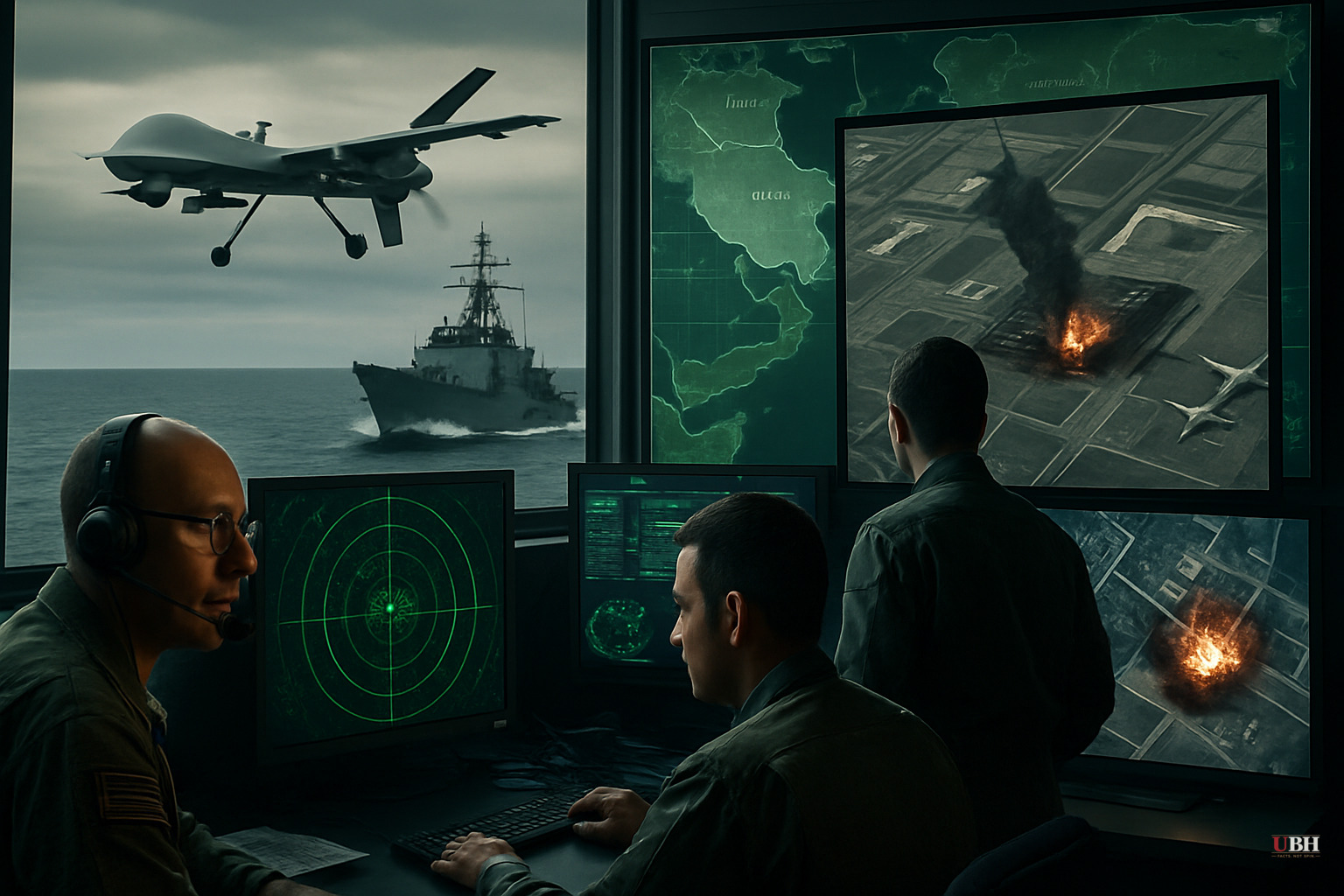
Iran Wiped Out 20% of America's MQ-9 Reaper Fleet — and Russia Helped Make It Happen
The Number That Should Alarm Every Taxpayer
Bloomberg reported on May 22 that Iran destroyed between 24 and 30 MQ-9 Reaper drones during the conflict — roughly 20% of the Pentagon's entire prewar inventory of the aircraft.
At approximately $30 million per drone, that's approaching $1 billion in losses. On a single weapons platform. In a single conflict.
The Congressional Research Service had already flagged 24 confirmed losses earlier this month. Bloomberg's reporting puts the actual number potentially higher at 30.
Not Just Drones — The Bigger Problem
Some Reapers were shot down mid-flight by Iranian air defenses. Others were destroyed on the ground when Iran targeted U.S. military bases in the Gulf with missile strikes, according to a person with direct knowledge cited by Bloomberg.
Iran was hitting U.S. bases hard enough to destroy aircraft on the ground. This wasn't a minor air defense skirmish — it was sustained, effective offensive capability.
The Reaper losses also coincided with broader air losses. Business Today and Middle East Eye both noted the U.S. also lost crewed aircraft — including an F-15E Strike Eagle and an A-10 Thunderbolt II — during the conflict. Days before the ceasefire in April, Iran shot down the F-15E, triggering a massive U.S. recovery operation for the pilots.
The Russia Factor
The New York Times reported this week that Russia may have actively helped Iran map U.S. flight patterns.
According to the Times, Russian assistance included satellite imagery of U.S. warships and military personnel, helping Iranian commanders better position their air defense assets. Iran and Russia have a long-standing security arrangement — this cooperation is documented.
If true, this means the United States wasn't just fighting Iran. It was fighting Iran armed with Russian intelligence. The strategic equation is fundamentally different than what the public has been told.
Trump's "Obliterated" Claim Doesn't Hold Up
President Trump publicly stated that Iran's defenses had been "obliterated." The drone losses suggest otherwise.
Iran managed to shoot down up to 30 advanced U.S. unmanned aircraft, destroy assets on American bases, potentially down an F-15E, and — according to a U.S. official cited by the New York Times — may have developed enough situational awareness to threaten U.S. pilots if the ceasefire collapses.
Iran's air defense is hardly obliterated.
The Replacement Problem
General Atomics no longer manufactures the MQ-9 Reaper for U.S. forces. The platform is being phased out. Production continues only for foreign customers.
The Pentagon just lost up to 20% of a fleet it cannot directly replace through new domestic orders. The losses are effectively permanent until a successor system is operational at scale.
This connects directly to the $70 billion drone modernization budget reported previously. The losses in Iran handed Congress and the Pentagon a concrete argument for why that investment is urgent. It also raises questions about why aging, phase-out drones were being used as primary surveillance and strike assets in a high-threat environment.
What Coverage Is Missing
Most outlets are treating this as a straightforward accounting story — drones lost, dollars spent, move on. Three critical angles deserve more attention:
One. The Russia-Iran intelligence cooperation. If Moscow is feeding Tehran satellite imagery of U.S. assets in real time, this conflict has escalation implications that exceed the drone losses themselves.
Two. The ceasefire is described as "fragile" across multiple reports. A U.S. official told the New York Times that Iranian commanders have potentially mapped U.S. jet and bomber flight patterns — meaning any restart of hostilities puts American pilots at significantly greater risk than before.
Three. The total cost. A senior Pentagon official told Reuters in May the conflict has already cost up to $29 billion. The $1 billion in Reaper losses is one line item inside a much larger figure that deserves serious congressional scrutiny.
What This Means for You
American taxpayers absorbed up to $1 billion in drone losses that cannot be replaced through current production lines — inside a $29 billion war whose strategic outcomes remain unclear, secured by a ceasefire that U.S. officials themselves describe as fragile.
Russia was apparently in the room the whole time, feeding Iran the intelligence to do it.
The real question: Who was the United States actually fighting — and whether Washington was honest with the American people about it.
Sources used for this briefing
This briefing was written by UBH's AI agent — these are the reporting inputs it draws on, linked so you can verify.


