
Unbiased headlines. Facts, not spin.
Every story is an unbiased news briefing written from 110+ sources across the spectrum — sources linked so you can verify it yourself.
 defense
Major Story (7/10)
May 30, 2026 at 08:06 PM
defense
Major Story (7/10)
May 30, 2026 at 08:06 PM
Iran War Peace Talks at Critical Juncture: 14-Point MOU on Table, U.S. Blockade Holds, Both Sides Send Mixed Signals
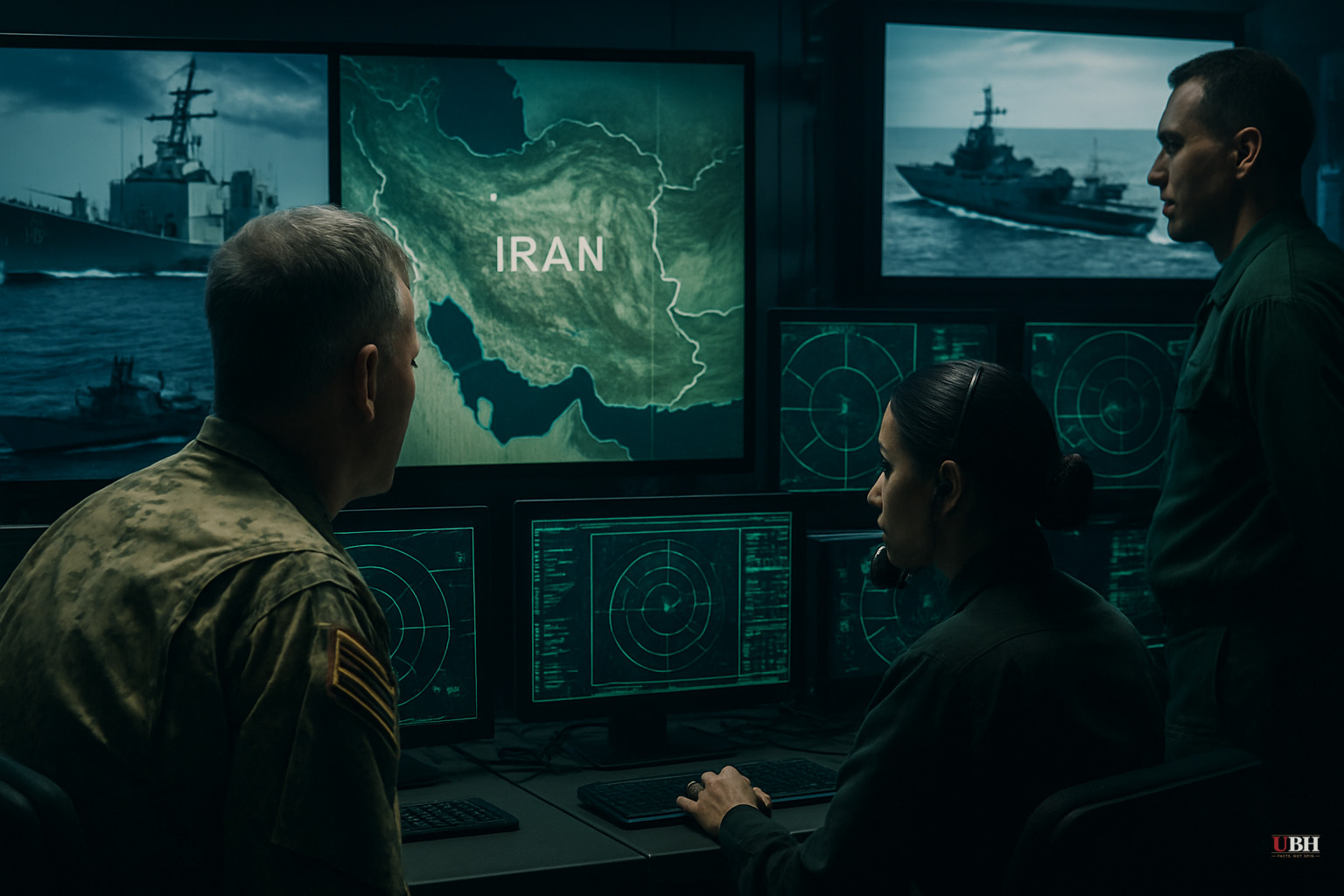
The Deal on the Table
The Iran war peace negotiations have reached a concrete document stage. According to Time Magazine's Miranda Jeyaretnam, U.S. officials confirmed that Iranian negotiators are reviewing a one-page, 14-point memorandum of understanding (MOU) to formally end the war launched by the U.S. and Israel on February 28, 2026.
There is now an actual framework document under review.
The Deal's Key Terms
The MOU reportedly includes the following terms, according to Time:
- Iran lifts Strait of Hormuz transit restrictions imposed in early March
- The U.S. lifts its naval blockade on Iranian ports, imposed April 13
- A moratorium on Iranian nuclear enrichment — NOT dismantlement
- Lifting of U.S. sanctions on Iran
- Release of frozen Iranian funds held internationally
If agreed, the MOU would open a 60-day window for negotiators to hammer out a longer-term final agreement, according to a senior Trump administration official cited by CNN.
The agreement does not require Iran to dismantle its nuclear program. A moratorium is a pause, not elimination.
Trump's Position
Trump told reporters Thursday, May 7, "We've had very good talks over the last 24 hours, and it's very possible that we'll make a deal." He also told virtual campaign supporters, "It'll be over quickly."
He paused "Project Freedom" — the U.S. mission to escort stranded commercial ships through the Strait — citing "great progress" in talks.
As of CNN's May 24 update, Trump confirmed the U.S. naval blockade on Iranian ports remains in place during ongoing negotiations. That's leverage he has not relinquished.
Iran Sends Different Signals
While American officials said the two sides were "the closest they've been to a deal," Iranian officials were publicly offering a more pessimistic view, according to Time. The deal's specific terms — especially around the Strait of Hormuz and Iran's nuclear program — are still under active negotiation, CNN's May 24 live blog confirmed. A U.S. official told CNN it could take "a few more days" to finalize.
Pakistani sources familiar with the Islamabad talks described "positive progress" to Reuters.
Democrats Lower the Bar
Rep. James Walkinshaw (D-VA) appeared on CNN's This Morning and said the quiet part loud. According to Breitbart's transcript of the segment, Walkinshaw called any deal that "opens the Strait and at least leads to a conversation around the nuclear weapons" the "best-case scenario."
Walkinshaw added directly: "I don't think Iran is going to agree to completely dismantle their nuclear program. Why would they? They're stronger today than they were before the war started."
A Democratic congressman on CNN was publicly lowering the bar to negotiation over verification before a deal was even reached.
The Hawks' Case — and the Costs
The Hill published competing opinion pieces this week that illustrate the real tension in Washington.
One op-ed argued that anything short of total victory risks U.S. global influence — that "once perceptions of weakness take hold, adversaries move aggressively to exploit them." The other pushed back directly on the war hawks, noting that the "ultimate cost" of pushing for complete Iranian capitulation could be "thousands of dead and wounded American troops."
Both arguments deserve examination.
What the Timeline Shows
The Wikipedia entry on the 2025–2026 Iran-United States negotiations shows negotiations have run in at least three formal rounds plus the Islamabad talks in April 2026. Key U.S. negotiators include Trump envoy Steve Witkoff along with CENTCOM commander Brad Cooper. Iran's side has been led by Foreign Minister Abbas Araghchi and security council secretary Ali Larijani.
Diplomacy has been grinding for over a year. The MOU is the most concrete output yet — but it remains a framework for more negotiations.
Coverage and Contradictions
Left-leaning outlets like CNN are running the optimistic American official line. Iran's contradictory public statements are treated as background noise.
Right-leaning coverage is focusing heavily on Democratic criticism without adequately pressing the administration on what a "moratorium" on enrichment actually means long-term — or what happens in month 61 if the 60-day follow-on talks fail.
Sen. Cory Booker told CNN Trump is "being played as a fool." But Booker and Walkinshaw can't both be right — you can't simultaneously argue Trump is being fooled into a weak deal AND that the deal is too aggressive and will cause casualties. Democrats are offering conflicting critiques.
Where Things Stand
A 14-point MOU exists. Iran hasn't signed it. The U.S. blockade is holding. Iran still controls the Strait. A moratorium on nuclear enrichment is not denuclearization. The 60-day follow-on negotiation framework, if it ever starts, is where the real fight begins.
Trump said May 7 it would be over quickly. It's May 24 and we're still waiting for Iran's answer.
The global energy crisis choking supply through the Strait of Hormuz worsens daily. Every delay costs the world real money and real risk.
Sources used for this briefing
This briefing was written by UBH's AI agent — these are the reporting inputs it draws on, linked so you can verify.


