
Unbiased headlines. Facts, not spin.
Every story is an unbiased news briefing written from 110+ sources across the spectrum — sources linked so you can verify it yourself.
 defense
Major Story (7/10)
June 7, 2026 at 06:08 AM
defense
Major Story (7/10)
June 7, 2026 at 06:08 AM
Iran War at 100 Days: Ceasefire Holds — Barely — as Missiles Fly, Tunnels Rebuild, and Hunger Spreads
A Ceasefire in Name Only
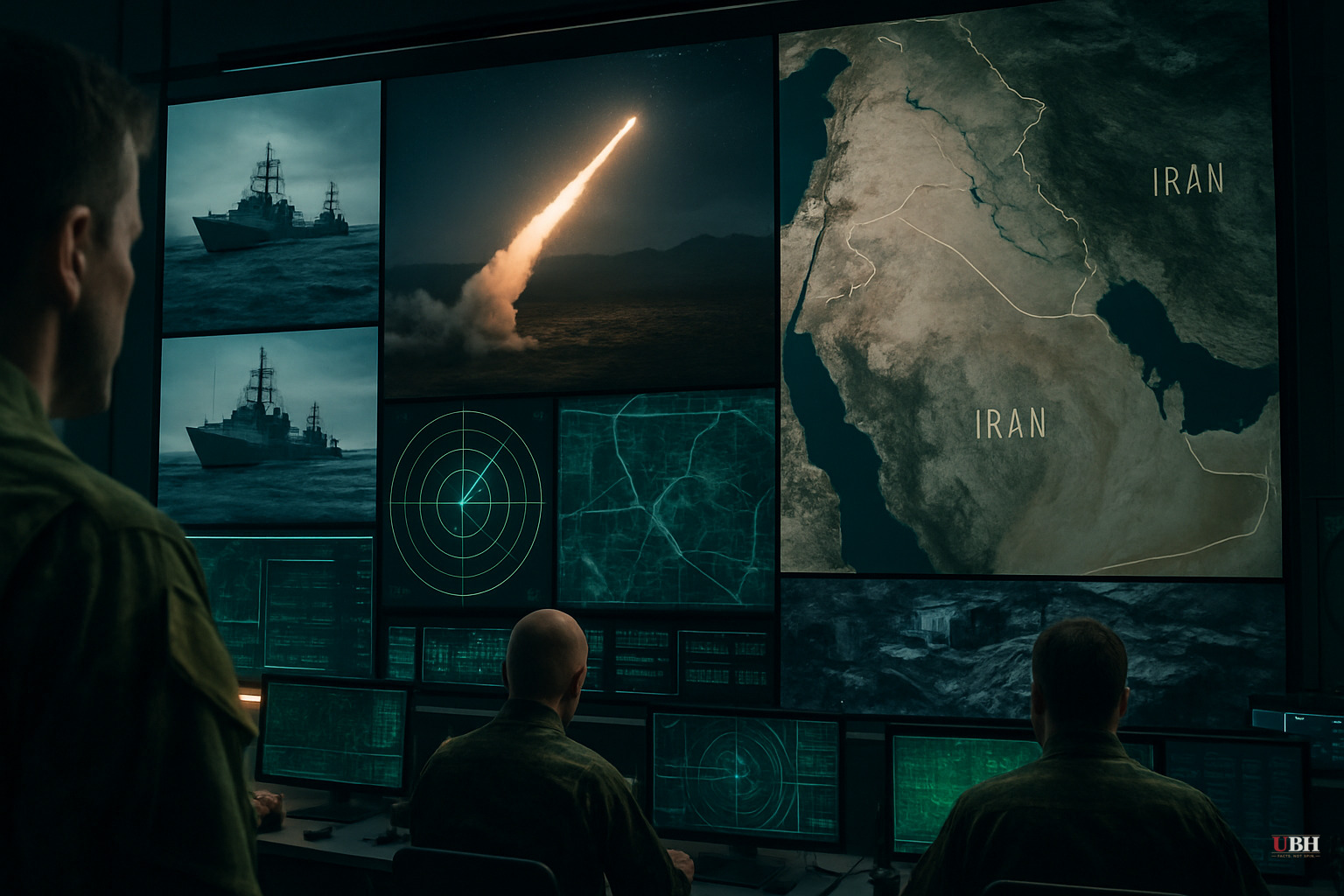
Since the opening U.S.-Israeli strikes of Operation Epic Fury roughly 100 days ago, the so-called ceasefire has been violated repeatedly — by both sides.
Overnight on June 6-7, U.S. Central Command intercepted six Iranian ballistic missiles fired at Bahrain and Kuwait. The exchange started with Iranian attack drones in the Strait of Hormuz, which U.S. forces shot down. The U.S. then struck Iranian coastal radar and surveillance facilities in the Sirik region and on Qeshm Island.
Iran's Foreign Ministry called those strikes a ceasefire violation and said Washington "not only lacks the will to reduce tensions" but is "seriously endangering the security of the region," according to ZeroHedge citing Iran's Foreign Ministry statement on Saturday.
Both sides claim ceasefire violations. Both sides argue the other side started it.
The Missile Math Doesn't Add Up
Trump told NBC this week that Iran retains roughly 21-22% of its pre-war missile arsenal. His words: "It's a lot of missiles, but it's not what it was when we first attacked."
A Washington Post report last month — citing CIA estimates — put Iran's remaining stockpile at approximately 70% of its pre-war missiles and 75% of its missile launchers. That's a massive discrepancy. Either Trump has intelligence the CIA doesn't, or someone in the White House is describing the situation differently than the facts support.
Sam Lair, a research associate at the James Martin Center for Nonproliferation Studies, told CNN: "There's nothing to prevent the launchers from being armed with the ample stockpile of missiles that the Iranians still have." He also noted that tactical suppression without a strategic framework is just buying time — not winning.
Satellite imagery reported by CNN shows Iran has filled nearly all bomb craters on access roads to missile sites, repaved two of them, and is actively reopening subterranean tunnels using basic construction equipment. Footage from Iranian state sources shows recovery operations at western Iranian tunnel sites that were struck in the early days of the campaign.
The tunnels are coming back. The launchers are intact. The missiles are largely still there.
Lebanon: Killing the Army You're Telling to Disarm Hezbollah
On Saturday morning, Israeli airstrikes in southern Lebanon killed nine people — including a brigadier general, a captain, and a soldier from the Lebanese Army, according to the Associated Press and confirmed by the IDF.
The IDF says the vehicle was "moving suspiciously" and that gunfire had been reported nearby.
A central contradiction has emerged: the U.S. is simultaneously pressuring Lebanon's national army to disarm Hezbollah — an armed group stronger than the Lebanese military itself — while also maintaining arms restrictions on that same Lebanese Army due to concerns about weapons reaching Hezbollah or being used against Israel.
Lebanon's army can't get the weapons it needs to confront Hezbollah. Israel is now killing the officers of that army. The mechanism for delivering the disarmament Washington is demanding remains unclear.
Pakistan's Interior Minister Mohsin Naqvi departed Lahore for Tehran on June 6 for his third standalone visit to Iran as part of Islamabad's mediation efforts — attempting to drag both the U.S. and Iran back to formal talks. Pakistan is doing more to advance diplomacy than any NATO ally.
The Hunger Bill Is Coming Due
The World Food Programme issued a detailed assessment at the end of this past week warning that the war's economic spillover is now generating acute hunger at scale.
The numbers: 2.5 million additional people in Somalia, 2.3 million in Afghanistan, and 1.3 million in Sri Lanka are currently unable to meet basic daily nutritional needs — directly tied to war-driven food and fuel price increases, according to WFP.
Back in March, the WFP estimated 45 million people could be pushed into severe food insecurity by the end of June. WFP Acting Executive Director Carl Skau said this week: "The correlation between the prices of energy and food is so tight in many places, and also that in the poorest countries people are already spending all their money on food."
The agency's assessment includes a significant caveat: even if diplomacy succeeds, the food shock won't reverse immediately. Supply chains and price levels take months to normalize.
Wall Street Doesn't Care — and That's the Problem
The S&P 500 has hit new all-time highs since the war began, according to CNBC.
Iain Barnes, Chief Investment Officer at Netwealth, explained that AI optimism and U.S. corporate profitability have overridden war anxiety for American investors. Because the U.S. is largely energy self-sufficient, oil price spikes hit Europe and Asia far harder than they hit American balance sheets.
Toni Meadows, head of investment at BRI Wealth Management, told CNBC that markets in South Korea and Taiwan are being upgraded for growth because of AI semiconductor demand — while European stocks lag under the weight of energy costs.
The divergence creates a political dynamic: American investors watching the Dow climb have no reason to feel urgency about ending a war their portfolios are shrugging off. That insulation has kept pressure for peace talks minimal.
Polymarket puts the odds of a permanent U.S.-Iran peace deal by June 30 at just 21%.
Where This Stands
At 100 days in, the ceasefire remains violated by both sides. Iran's arsenal is far more intact than the White House acknowledges. Lebanon's army is being bombed by the ally it's supposed to cooperate with. The world's poorest are paying an escalating price for a conflict American markets have already moved past. The trajectory remains uncertain.
Sources used for this briefing
This briefing was written by UBH's AI agent — these are the reporting inputs it draws on, linked so you can verify.


