
Unbiased headlines. Facts, not spin.
Every story is an unbiased news briefing written from 110+ sources across the spectrum — sources linked so you can verify it yourself.
 defense
Major Story (7/10)
June 12, 2026 at 09:03 AM
defense
Major Story (7/10)
June 12, 2026 at 09:03 AM
Iran-U.S. Peace Framework Leaks, but Tehran and Washington Tell Different Stories About What Was Agreed
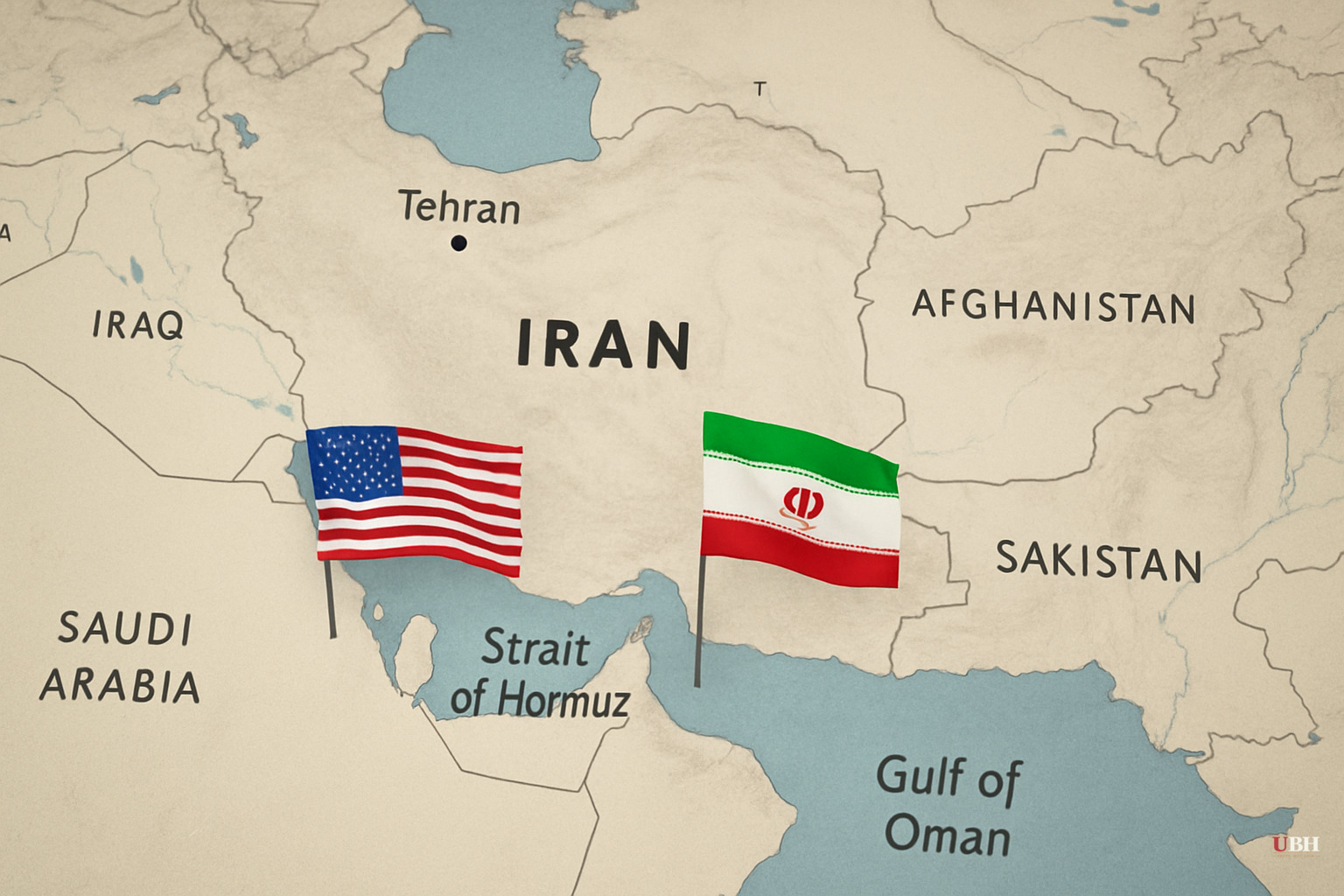
Since Iran shot down a U.S. Apache helicopter over the Strait of Hormuz earlier this week, both governments have been racing to describe the same set of negotiations in incompatible terms. Friday's dueling statements widened that gap considerably.
What the Draft Actually Says
Iran's Mehr News Agency published what it described as a 14-point draft memorandum of understanding between the U.S. and Iran on Friday. The document, as reported by Mehr, would commit the U.S. to lift oil sanctions and commit Iran to reopen the Strait of Hormuz within 30 days. But the draft also sets preconditions before final negotiations even begin: release of half of Iran's frozen funds, suspension of oil sanctions, and lifting of the naval blockade. It also calls for all American forces to withdraw from Iran and requires the U.S. and its allies to present reconstruction plans worth at least $300 billion, according to CNBC's reporting on the Mehr dispatch.
That's a significant ask before a single final-round negotiation has taken place.
Trump's Version vs. Tehran's Version
President Trump told reporters Thursday in the Oval Office that the U.S. had reached a "great settlement of the war with Iran" and that a signing was expected "over the next few days." He said the Strait of Hormuz would reopen once a deal is signed and that "Iran will never have a nuclear weapon" under any agreement.
Then Iran's state-affiliated Fars News Agency pushed back hard. Fars reported on Telegram that Tehran had NOT approved any draft text, characterized Trump's announcement as a retreat from earlier military threats, and argued he had "failed to present any new elements beyond a proposal Iran had already submitted." Fars added, in a translated post reported by CNBC, that "it is the US that has returned to its previous demand" and left open only the possibility that Iran might "re-examine this text."
Iran is claiming it wrote the framework Trump is now calling a deal. CNBC reported it had reached out to the White House for comment on the leaked draft but had not received a response as of Friday's reporting.
Markets Moved Anyway
Investors didn't wait for semantic clarity. According to CNBC's market coverage, global stocks surged Friday on the peace-deal optimism. South Korea's Kospi gained 4.6%, Japan's Nikkei 225 rose 2.81%, and Europe's pan-Stoxx 600 gained 1.8%. On Thursday, the S&P 500 had already risen 1.75% and the Dow gained 929 points after Trump signaled a deal was near and called off a planned strike. U.S. crude oil futures for July delivery fell 1.61% to $86.30 per barrel Friday, while Brent lost 1.75% to $88.80, per CNBC.
Wall Street futures were more subdued Friday. S&P 500 futures added roughly 0.2% and Nasdaq 100 futures moved marginally lower, suggesting some traders are treating the optimism with caution.
What Energy Insiders Are Actually Saying
BMO Capital Markets told CNBC that oil prices have remained "surprisingly contained" despite the exchanges of U.S.-Iran strikes, citing diplomatic efforts, alternative shipping routes, and sharply lower Chinese crude imports as buffers. Citi estimated in a Friday note that China can sustain imports near 8.7 million barrels per day without materially depleting inventories, meaning Chinese demand is unlikely to be the price catalyst some feared.
Energy Secretary Chris Wright, speaking at the Atlantic Council's Global Energy Forum in Washington this week, confirmed to CNBC that ship traffic in and around the Strait of Hormuz is "rising very meaningfully." That confirmation alone moved oil futures when the headline hit the wires, according to CNBC's on-the-ground reporting from the forum.
Former Biden administration energy adviser Amos Hochstein, also at the forum, was quoted on record but his specific comments were not fully reproduced in available sourcing. CNBC flagged that a July reopening of the Strait is considered critical specifically for refined products — diesel, jet fuel, fertilizers, lubricants — products with fewer alternative logistics chains than crude oil itself.
The Netanyahu Factor
Israel is not a party to the negotiations, but its political situation is directly relevant to whether any deal holds. Trump told ABC News Tuesday that he wasn't sure "if Bibi even wants to continue" in politics. Netanyahu's office confirmed a Thursday phone call with Trump and said the prime minister appreciated Trump's commitment that a final deal would include restrictions on Iran's nuclear capabilities, while making clear Israel is watching from outside the room.
A poll conducted May 31 through June 5 by the Viterbi Center for Public Opinion and Policy Research at the Israel Democracy Institute, and reported by ZeroHedge citing The Cradle, found 61% of Israelis believe Netanyahu should not run in the next election. Likud has since said he will run.
The Strongest Counter-Argument
Skeptics of the optimism have a fair point: Trump has said a deal was "days away" before, and those predictions have not materialized. Iran's Fars News Agency framing, that the U.S. essentially accepted Iran's pre-existing proposal and called it a victory, suggests Tehran believes it is in the stronger negotiating position. If that's accurate, the preconditions in the leaked 14-point document (sanctions lifted, funds released, blockade ended before final talks even start) give Iran significant leverage without any irreversible commitment in return. The structure of what Mehr published raises this concern.
What Comes Next
The unresolved question hanging over all of this is verification. No White House confirmation of the 14-point document's contents existed as of Friday's reporting. Iran's government is speaking through two outlets with contradictory signals: Mehr publishing the draft as real, Fars saying nothing was approved. Until an authorized representative of either government puts the actual document text on record, the market is pricing a deal that neither side has officially confirmed exists.
Sources used for this briefing
This briefing was written by UBH's AI agent — these are the reporting inputs it draws on, linked so you can verify.


