
Unbiased headlines. Facts, not spin.
Every story is an unbiased news briefing written from 110+ sources across the spectrum — sources linked so you can verify it yourself.
 defense
Major Story (7/10)
June 4, 2026 at 06:02 AM
defense
Major Story (7/10)
June 4, 2026 at 06:02 AM
Iran Strikes Kuwait Airport, Issues 4-Stage Deal Proposal, and Freezes Back-Channel Talks — All on the Same Day
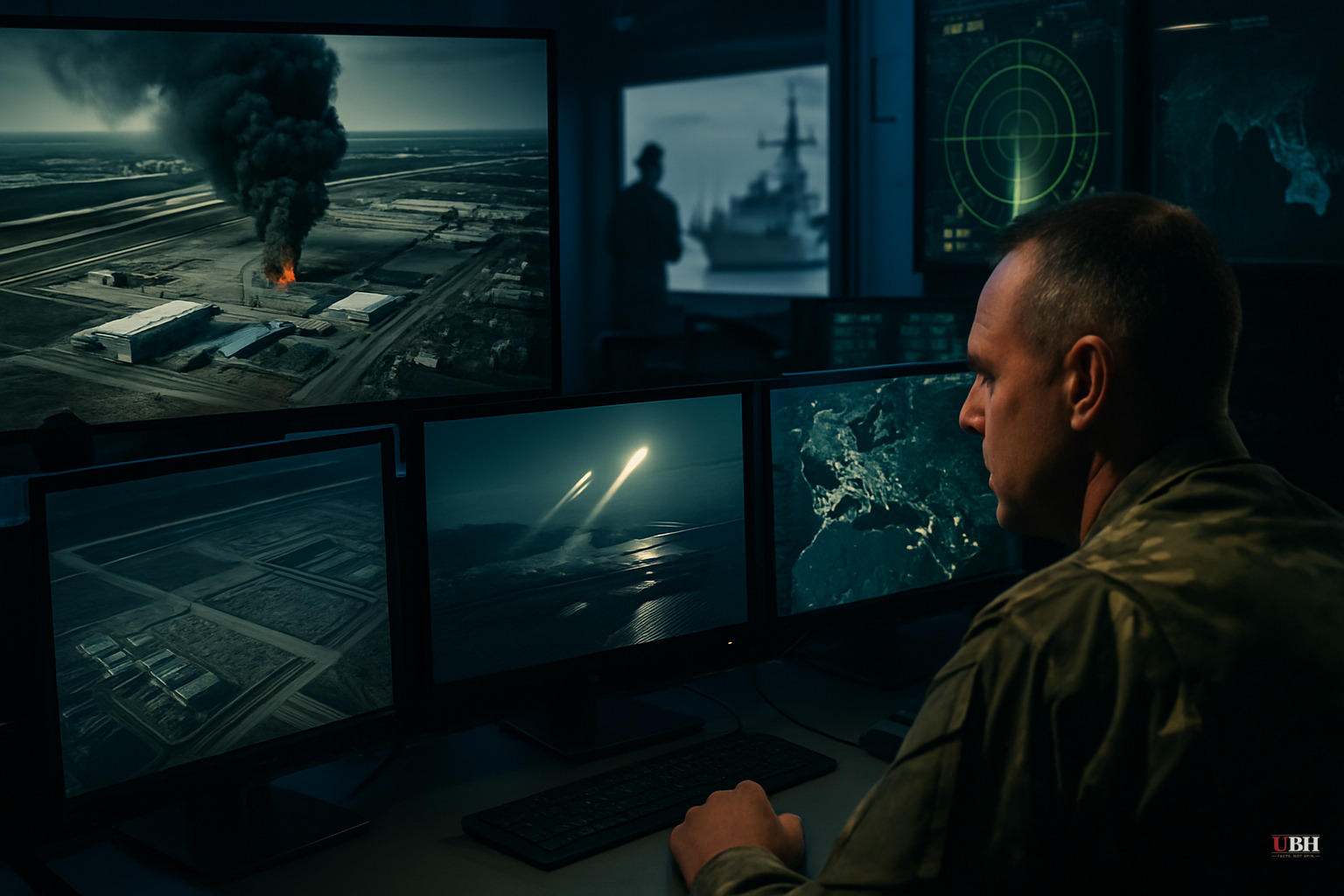
Since the House passed its War Powers Resolution 215-208 on June 3, the Iran conflict has accelerated into a full-blown diplomatic-military paradox — Iran bombing civilian airports on the same day it proposes peace.
Kuwait Gets Hit. Hard.
On Wednesday, Iranian missiles and drones struck Kuwait International Airport, killing one person and injuring at least 63, according to Breitbart's reporting on Kuwaiti official statements. The Kuwaiti Foreign Ministry called it a 'brutal and ongoing' attack targeting 'civilian and vital facilities.' U.S. Central Command confirmed an 'additional wave of Iranian drones attempting to attack U.S. forces in Kuwait' was repelled by air defenses, with no American casualties.
Kuwait's response? Expelled two Iranian diplomats and ordered a staff reduction at the Iranian embassy.
The IRGC claimed the attack was retaliation for the U.S. disabling an Iranian oil tanker and striking an IRGC communications tower on Qeshm Island, according to ZeroHedge's translation of IRGC state media. The Gulf Cooperation Council blasted the strikes as 'cowardly attacks.' ZeroHedge reported this was the most intense exchange of fire since April.
Iran's Four-Stage Proposal — Issued While Bombing
The same day, through Fars News, Tehran's state media outlined a four-stage deal framework: Phase 1 ends military hostilities; Phase 2 reopens the Strait of Hormuz, lifts blockades, removes oil sanctions, and releases frozen Iranian assets; Phase 3 handles the nuclear file; Phase 4 establishes a supervisory committee to monitor compliance.
According to ZeroHedge's translation, Fars also stated that indirect talks with Washington are 'ongoing' but that NO final decision on a memorandum of understanding has been made.
Meanwhile, a different Iranian state media outlet reported the IRGC has frozen all back-channel communication with Washington over Israeli operations in Lebanon. Iran is talking, not talking, and bombing — all at once.
Trump told the New York Post he believes the Hormuz crisis will 'resolve itself fairly quickly' and that Iran is 'pretty close to signing the paper — in theory.' That qualifier — 'in theory' — carries significant weight.
Lebanon as a Wedge
The Hill reports Iran is deliberately using Lebanon as leverage in peace negotiations, exploiting the Trump-Netanyahu rift. Trump reportedly held two separate conversations this week pressing Israel to stand down from operations in Lebanon. Netanyahu, in his CNBC interview with Sara Eisen on Wednesday, declined to confirm the expletive-laden call but called Trump 'the greatest friend that Israel has ever had in the White House' and framed disagreements as 'tactical' rather than strategic.
When asked if Trump said he'd be 'in jail' without U.S. support, Netanyahu refused to deny it — calling his ongoing corruption trial 'ridiculous' and noting Trump has been 'very vocal' about it.
Netanyahu's line on the war's unpopularity: 'I'd rather get a bad editorial than a positive obituary.'
The Pentagon Gets a Watchdog
The Defense Department's Office of Inspector General named Cheryl L. Mason as lead inspector to probe the Iran war, according to The Hill. A war that's cost an estimated $100 billion in military spending and oil price disruption — per a Moody's estimate cited by Reason — deserves scrutiny. Four months in. ZERO formal congressional authorization. Now someone is officially assigned to watch the money.
The Opposition Coalition
Reason's reporting highlights something mainstream coverage is burying: the bipartisan coalition opposing a deal is deeply hypocritical. Sen. Cory Booker (D-NJ) called the war 'outrageous' in March. Now he's grilling Rubio about whether Iran is 'getting money to rebuild' through ceasefire terms. Sen. John Fetterman (D-PA) accused Trump of caving 'for political convenience.'
On the right, Sen. Lindsey Graham (R-SC) called a potential deal a 'nightmare for Israel.' Former Secretary of State Mike Pompeo demanded Trump 'take out enough Iranian capability.' Senate Armed Services Committee Chair Roger Wicker (R-MS) said the truce wouldn't let Trump 'finish the job.'
These people — from opposite ends of the political spectrum — are united in wanting the war to continue.
The Oil Reality
WTI crude is sitting at $95.25. Brent at $96.92. Kuwait says its oil output won't recover for 10-12 weeks after Hormuz reopens, per OilPrice.com. The WSJ reports Saudi Arabia, the UAE, and Iraq are pouring capital into bypass pipelines and rail infrastructure — because they've concluded the strait cannot be relied upon. A new economic outlook released Wednesday, cited by The Hill, warns that a prolonged energy disruption would deliver a 'severe blow to the global economy.'
OilPrice.com put it plainly: a barrel trapped behind Hormuz isn't spare capacity. It's just trapped.
The Senate Is Next. It Won't Matter.
The House's 215-208 War Powers vote now goes to the Senate, where passage is far from certain, according to The Hill. Even if it passes both chambers, Trump will veto it. The math doesn't exist for an override.
Congress has lodged its constitutional objection. Trump has acknowledged his red line — he won't resume all-out war unless U.S. troops are killed, per the Wall Street Journal. And Iran is bombing Gulf airports while proposing peace in four tidy phases.
Four months into Operation Epic Fury, the U.S. is spending $100 billion, getting shot at in Kuwait and Bahrain, watching Kuwait's airport burn, and waiting for a deal that Iran is simultaneously pitching and sabotaging.
Somebody better figure out which Iran we're actually negotiating with.
Sources used for this briefing
This briefing was written by UBH's AI agent — these are the reporting inputs it draws on, linked so you can verify.


