
Unbiased headlines. Facts, not spin.
Every story is an unbiased news briefing written from 110+ sources across the spectrum — sources linked so you can verify it yourself.
 defense
Major Story (7/10)
June 9, 2026 at 05:23 PM
defense
Major Story (7/10)
June 9, 2026 at 05:23 PM
Iran Shoots Down U.S. Apache Helicopter Over Hormuz — Trump Vows Response While Claiming Peace Deal Is Days Away
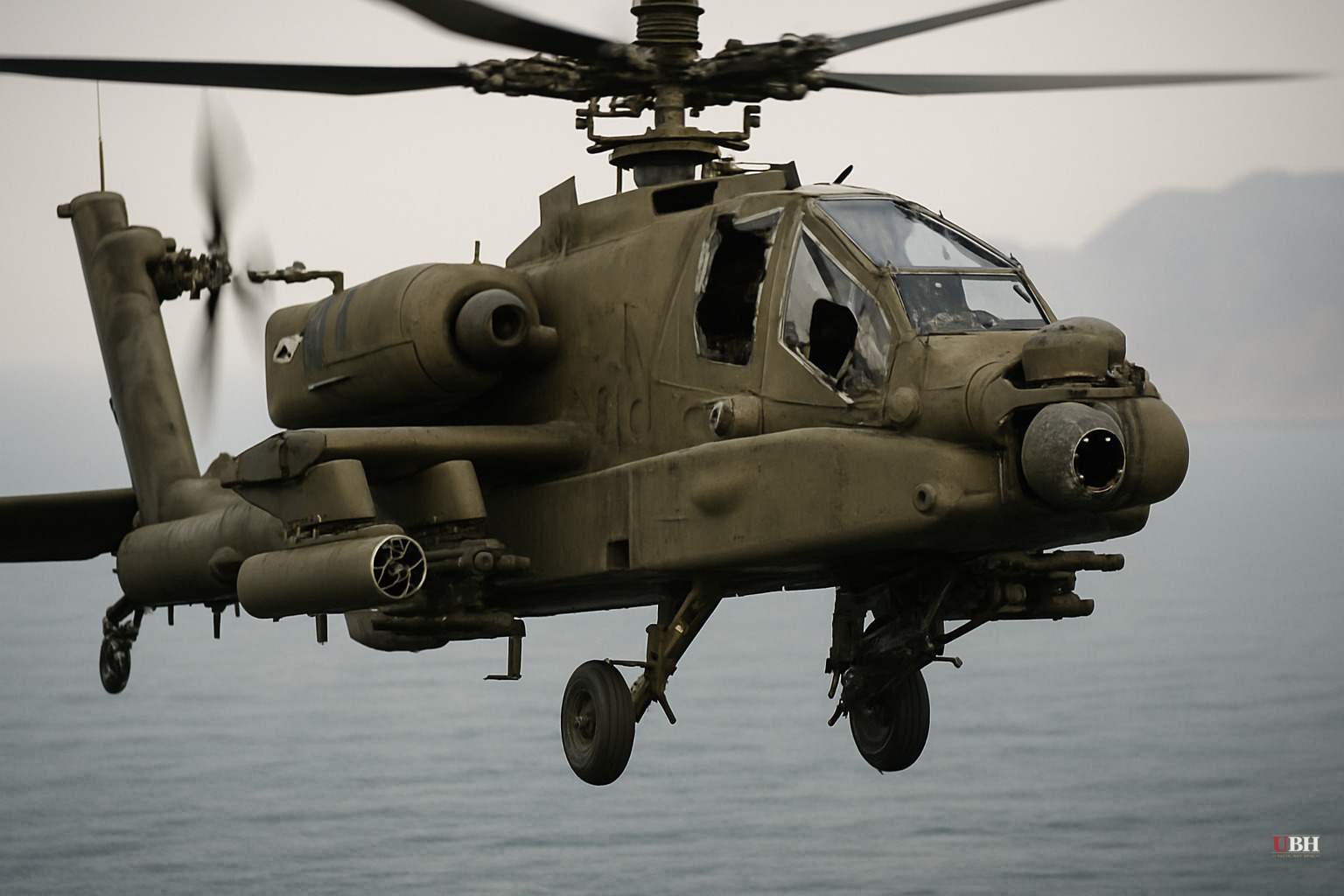
Since the U.S. Army AH-64 Apache went down near the coast of Oman on Monday evening, the war in the Strait of Hormuz has lurched into its most dangerous 24-hour stretch yet.
Both crew members were rescued safely — that was confirmed by U.S. Central Command and reported earlier by this outlet. Trump publicly blamed Iran for the shootdown, posting on Truth Social that "the Iranians shot down one of our highly sophisticated Apache Helicopters while patrolling over the Strait of Hormuz." He added that "the United States must, of necessity, respond to this attack."
Centcom, notably, has NOT attributed the shootdown to Iran in its official statement. The investigation is ongoing, according to Centcom's own post. Trump's Truth Social accusation and the military's formal position diverge — a gap most coverage has overlooked.
'Days Away' — Again
Within hours of posting that the U.S. must respond to an Iranian attack, Trump told reporters after attending Monday's NBA Finals at Madison Square Garden that a deal with Tehran could be signed in "two or three days." He described the two sides as being in the "final throes" of a "very, very good deal" that will prevent Iran from getting nuclear weapons and reopen the Strait of Hormuz "immediately upon signing," according to CNBC.
Sky News Arabia reported Monday that a draft agreement had been sent to Washington and is "preliminarily acceptable" to the White House. A White House official told CNBC that "talks on a deal are continuing at a rapid pace and are going very well."
Trump has claimed a deal was days away repeatedly throughout this conflict — which crossed the 100-day mark on Sunday, according to CNBC. No deal has materialized.
Lebanon: The Ceasefire Is Coming Apart
Israeli airstrikes hit the southern Lebanese city of Tyre on Tuesday. At least eight people were killed and dozens wounded, according to Lebanon's health ministry, as reported by the New York Times and cited by ZeroHedge. The Israeli military issued evacuation orders for Tyre beforehand, but according to Lebanon's state-run news agency, strikes also hit towns and villages not covered by those warnings.
Israeli Prime Minister Benjamin Netanyahu said Monday that the war against Iran and Hezbollah "has not yet ended," and that he rejects Iran's attempt to set a red line against attacking Lebanon. Israeli Defense Minister Israel Katz made it explicit: any Hezbollah attack from southern Lebanon will trigger strikes on Beirut's Dahieh suburb, according to Bloomberg as cited by ZeroHedge.
Iran fired ballistic missiles at Israel on Sunday in response to Israeli strikes on Beirut's southern suburbs, then announced it was ceasing fire. Netanyahu called the situation on that front "contained." But Iran's Foreign Ministry told CNBC it would resume hostilities if Israel continues striking Lebanese territory.
The Oil Market Is Reading the Confusion Correctly
Oil surged immediately when Trump's "must respond" post hit, then reversed sharply — WTI and Brent both fell more than 3% on Tuesday, according to CNBC, after Energy Secretary Chris Wright told the network that Hormuz traffic is rising "very meaningfully" and "will continue to rise."
IMF PortWatch data tells a different story. A seven-day moving average of just five ship arrivals moved through Hormuz as of Sunday. Before the war began in February — when the U.S. and Israel struck Iran — that number was above 100, according to CNBC. About 20% of global oil shipments moved through the strait pre-war.
Kuwait has offered its first crude cargoes to Asian buyers since the war started, according to OilPrice.com. LNG tankers are also slipping through the strait in greater numbers. These are incremental signs of normalization — but calling it "very meaningful" recovery while five ships a day traverse a passage that used to see 100+ is a stretch.
India's fuel demand has fallen 6.5% and LPG consumption has dropped 20%, per OilPrice.com. Asia is bearing the brunt of this energy crisis. That's getting almost no attention in American coverage.
The Case for Caution on Trump's War Narrative
Critics argue that Trump launched this war — the U.S. and Israel struck Iran in February — and has consistently overpromised on its resolution while managing domestic politics. Mick Mulvaney, Trump's former acting White House chief of staff, told ZeroHedge bluntly: "If gas is still north of $4 by Labor Day, everybody in town knows that means trouble for the incumbent party. Big trouble." RSM US chief economist Joseph Brusuelas warned that the economic drag from the war "will weigh heavily on household consumption among middle-class, working-class and the working poor ahead of the November congressional election." Inflation hit 3.8% in April. Inflation-adjusted hourly earnings declined for the first time in three years, according to ZeroHedge.
The rebuttal is that the strategic logic of degrading Iran's military and proxy network may justify near-term economic pain. But that argument needs to be made explicitly, not hidden behind energy secretary optimism and NBA Finals photo ops.
What Rabobank's Michael Every Laid Out
Rabobank analyst Michael Every, writing via ZeroHedge, outlined the core strategic trap: Iran built Hezbollah as a shield against Israeli strikes. Now Tehran has to attack Israel directly to defend that shield — a strategic own-goal. Iran is trying to link the Lebanon front to the U.S.-Iran front to separate Washington from Tel Aviv. Trump wants a deal. Netanyahu wants to finish the job. Those are different goals, and until they're reconciled, every ceasefire is temporary.
Where Things Stand
Trump is simultaneously threatening to respond to an Iranian attack on a U.S. military aircraft and claiming a peace deal is days away. Netanyahu is "holding fire, for now" while bombing Lebanese cities and rejecting Iran's red lines. Energy Secretary Wright is calling Hormuz traffic recovery "very meaningful" while IMF data shows it at 5% of pre-war levels.
American gas prices will be the check on the president's credibility — and the midterms are five months away.
Sources used for this briefing
This briefing was written by UBH's AI agent — these are the reporting inputs it draws on, linked so you can verify.


