
Unbiased headlines. Facts, not spin.
Every story is an unbiased news briefing written from 110+ sources across the spectrum — sources linked so you can verify it yourself.
 defense
Major Story (7/10)
June 3, 2026 at 09:17 PM
defense
Major Story (7/10)
June 3, 2026 at 09:17 PM
Iran Releases 4-Stage Peace Proposal as Markets Tank, Kuwait Oil Output Faces 10-12 Week Recovery Gap
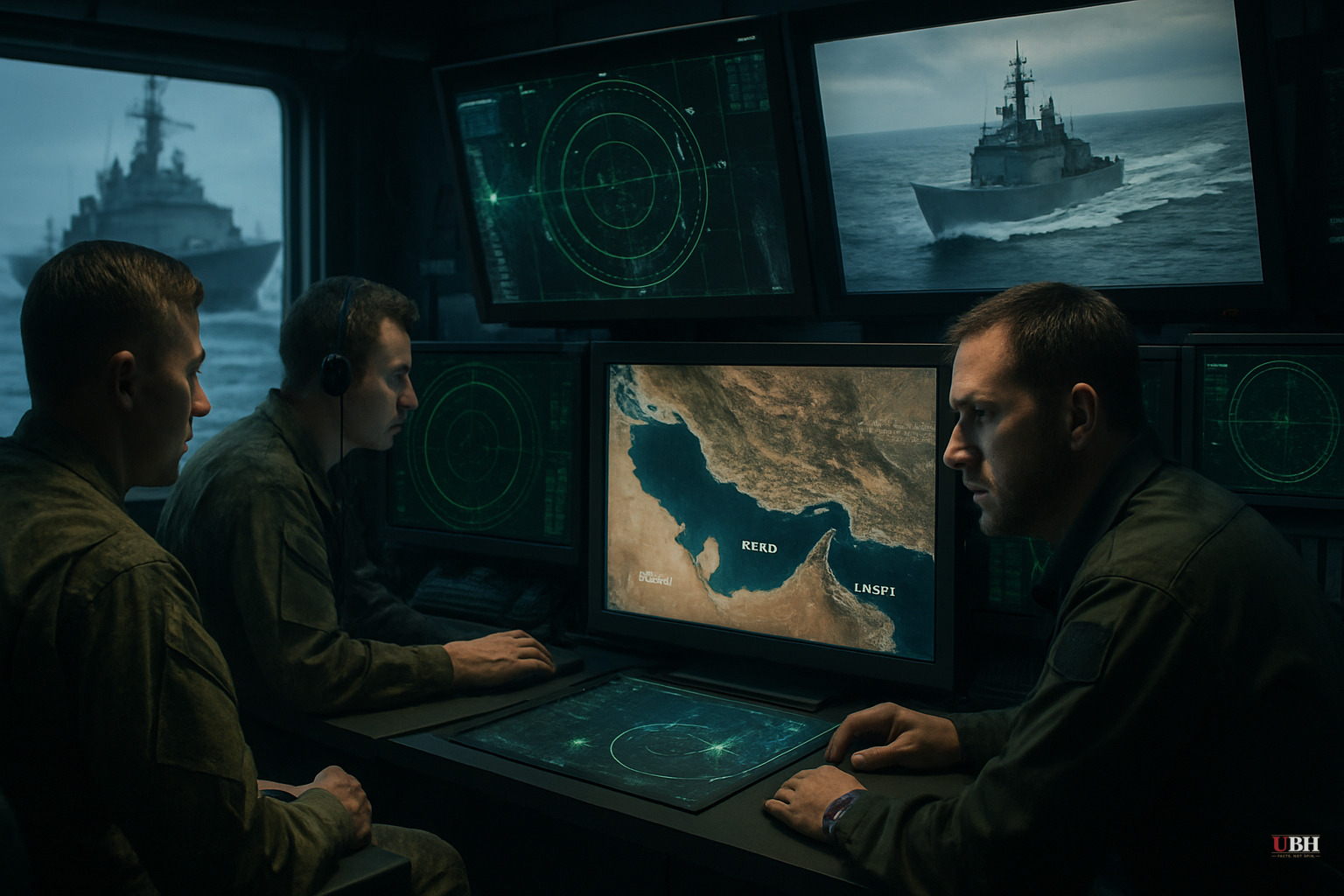
Since the overnight U.S. strike on Qeshm Island and Iran's retaliatory barrage across the Gulf — the most intense exchanges since April — the conflict has produced a jarring new development: Iran has put a formal four-stage peace proposal on the table, even as its own state media insists back-channel communication with Washington has stopped.
The contradiction is stark. Iran's leadership cannot agree on its own negotiating posture.
Iran's Four-Stage Proposal: What It Actually Says
Fars News Agency, Iran's state outlet, published the framework on Wednesday. According to ZeroHedge's translation of the Telegram post, the four phases are:
Phase 1: End hostilities and halt all military operations.
Phase 2: Tangible measures — Strait of Hormuz mechanisms, lifting the blockade, removing oil sanctions, releasing frozen Iranian assets.
Phase 3: Dedicated negotiations on sanctions relief and the nuclear file.
Phase 4: A supervisory committee to monitor implementation by all parties.
Fars also stated that indirect talks with Washington are "still ongoing" — directly contradicting the IRGC's own statement earlier this week that all back-channel communications had been frozen over Israeli operations in Lebanon.
Different factions inside Tehran are pulling in different directions.
Trump's Nuclear Claim Has a Serious Problem
In a Wednesday interview with the New York Post's "Pod Force One" podcast, President Trump said Iran has "already agreed" not to pursue a nuclear weapon. "That was the big thing," he said.
He also added they "can change their mind."
Iran's government, speaking to CNBC through an unnamed official not authorized to speak publicly, called Trump's framing "misleading." The official said Iran is a signatory to the Nuclear Non-Proliferation Treaty and has "never sought nuclear weapons" — therefore Trump's claim that Iran "agreed" implies they were previously pursuing them, which the official said "does not reflect reality."
Both sides are spinning. Iran IS an NPT signatory, but it's also been caught running covert enrichment programs that violated NPT commitments. Trump framing a baseline treaty obligation as a fresh diplomatic win oversells the agreement. Iran pretending its nuclear history is spotless is equally dishonest.
Secretary of State Marco Rubio told the Senate Foreign Relations Committee on Tuesday that the nuclear file is part of ongoing talks. That's more precise than Trump's podcast declaration of victory.
Netanyahu Does Damage Control
Israeli Prime Minister Benjamin Netanyahu sat down with CNBC's Sara Eisen in Jerusalem on Wednesday — the same day Trump was doing his New York Post podcast — and acknowledged "tactical disagreements" with Trump over the war.
This comes after reports that Trump cursed at Netanyahu in a phone call over Israel's continued military operations against Hezbollah in Lebanon, which Iran is using as justification to freeze the back-channel talks.
Netanyahu called Iran an existential threat to both Israel and the United States. He also said Israel's economy is projected to grow 3.8% in 2026 despite nearly three years of continuous conflict, per the Bank of Israel's own forecasts. He told investors to "buy anything in Israel."
Netanyahu isn't wrong that the Israeli economy has been remarkably resilient, even as a prime minister conducting investor relations during regional escalation sends a particular message.
The Oil Story Is the One Getting Buried
Most of the political coverage is focused on Trump's podcast and Netanyahu's CNBC interview. What deserves more attention is the compounding energy crisis.
Brent crude climbed 2.3% to just below $98 a barrel on Wednesday morning, according to ZeroHedge's markets coverage. WTI is at $96.35. The OPEC basket hit $101.60 two days ago, per OilPrice.com data.
Kuwait says its oil production will NOT recover for 10 to 12 weeks after the Strait of Hormuz reopens, according to OilPrice.com. This isn't a Hormuz problem alone. The physical infrastructure in Kuwait took damage. Restarting production isn't instantaneous.
Iraq is trying to compensate by tripling pipeline exports through the Ceyhan route in Turkey, targeting 770,000 barrels per day, according to OilPrice.com. But as a separate OilPrice.com analysis noted: "A barrel trapped behind Hormuz isn't spare capacity." Saudi Arabia and the UAE have reserves, but if they can't get product through the strait, those reserves are stranded.
South Korea has already moved — locking in Canadian crude and LNG in what OilPrice.com describes as a "sweeping supply overhaul." Asia is adapting faster than the Western political class is acknowledging.
Markets Are Starting to Crack
S&P 500 futures were down 0.1% Wednesday morning, halting what had been a nine-day rally, according to ZeroHedge's market coverage. The 10-year Treasury yield climbed four basis points to 4.48%. The dollar is on track for its strongest week since mid-May.
The Bloomberg headline said it plainly: the S&P rally "runs into a wall" following the overnight escalation. Nine days of gains wiped out in one night of missile exchanges.
Tech is holding up — Marvell is up another 12% after surging 33% Tuesday, and semiconductors are broadly bid. But cyclicals are lagging defensives, which is exactly what you'd expect when oil spikes and war risk escalates simultaneously.
What Comes Next
Iran has issued a four-stage proposal, but its own factions can't agree on whether talks are on or off. Trump is claiming a nuclear agreement that Iran says doesn't exist as described. Netanyahu is managing a public break with his most important ally while pitching foreign investors. Kuwait's oil infrastructure is broken for at least two and a half months post-ceasefire — IF there's a ceasefire.
Every American filling a gas tank is paying the price for this diplomatic theater right now.
Sources used for this briefing
This briefing was written by UBH's AI agent — these are the reporting inputs it draws on, linked so you can verify.


